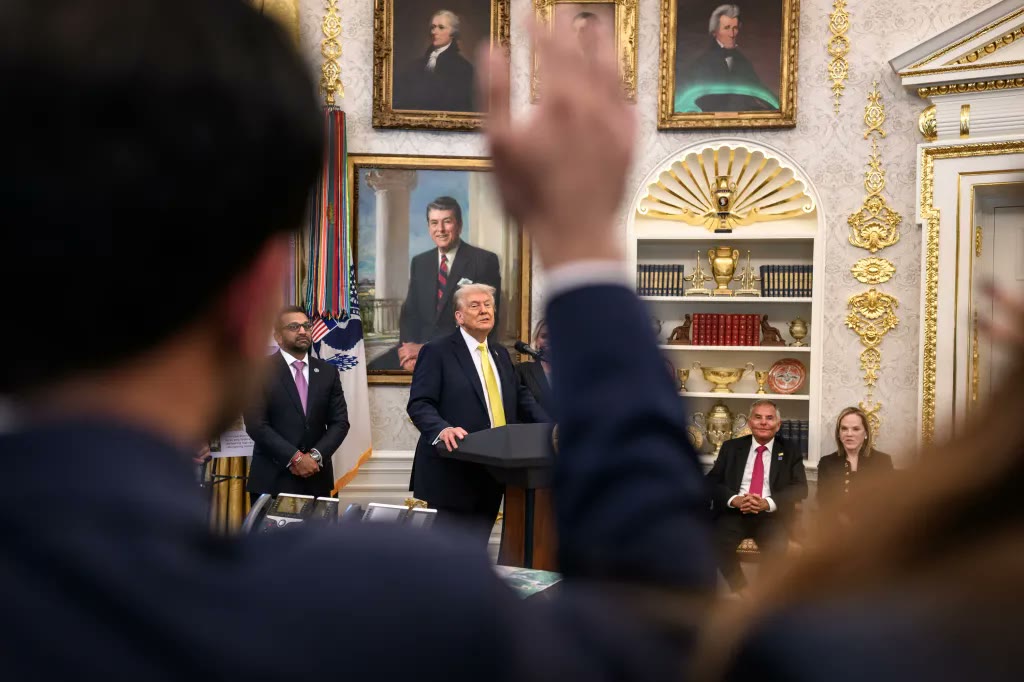
President Donald Trump on Thursday demanded an immediate investigation into his own Commerce Department, accusing officials of deliberately releasing "fake" economic growth figures before this month's midterm elections — an allegation he offered no evidence to support. The outburst came a day after the department's Bureau of Economic Analysis (BEA) revised third-quarter growth sharply upward, to 4.3% on an annualised basis from the 3.4% advance estimate published on October 29, five days before voters went to the polls. According to Reuters, Trump called the revision proof of a "massive, and purposeful, error" and linked it directly to his party's heavy losses on November 3.
What Trump said — and what actually changed
"It was just revealed that the REAL Numbers on the Economy, published before the Election, were FAKE," Trump wrote on Truth Social on Thursday morning, posting from his golf course in West Palm Beach on the Thanksgiving holiday. "Why wasn't the correct number issued before the Election? I am asking for an immediate investigation of this situation. This is not a small error, this is a massive, and purposeful, error."
In a second, longer Thanksgiving post, he added: "I would like to wish a Happy Thanksgiving to even those who issued fake Economic Numbers, just prior to the Election, and corrected them yesterday, three weeks late," calling the revision a "RECORD SETTING ERROR, and one so grave that it should be immediately investigated."
The numbers at the centre of the dispute are straightforward. On Wednesday, the BEA issued its second estimate for the third quarter, raising annualised growth by 0.9 percentage points, to 4.3% from the 3.4% advance reading. The agency said the change mainly reflected upward adjustments to business investment and consumer spending as more complete source data became available. The Commerce Department did not immediately respond to a request for comment, and much of the federal government was closed for Thanksgiving.
How GDP revisions actually work — the part most coverage skips
The central gap in much of the fast-moving coverage is the mechanics of the figures Trump is attacking. The BEA does not publish a single GDP number per quarter; it publishes three scheduled estimates — an advance, a second and a third reading — each incorporating progressively more complete data. The advance estimate, by design, is compiled before full figures are available on inventories, trade and consumer spending on services, which is why it is routinely revised.
That schedule matters for judging the accusation. The final third-quarter estimate is not due until December 23, meaning Wednesday's 4.3% figure is itself provisional and could move again. Nothing in the reporting so far establishes whether a 0.9-point upward revision is historically unusual: the White House has published no comparison with past revision sizes, and the BEA has described the process as routine rather than exceptional. The question of scale — the very thing that would distinguish a normal statistical update from something worth investigating — remains unanswered in the public record.
What would an "investigation" even investigate?
A second unanswered question is what Trump is actually asking for. He has not said who should conduct the inquiry, under what authority, or what it would examine. The possibilities range from the Commerce Department's inspector general to a congressional inquiry, but no outlet has reported any formal request being made to either, and no agency has announced one. Without a defined scope, the demand functions for now as a political statement rather than a legal process.
That ambiguity fits a wider pattern. As Al Jazeera notes, Trump has repeatedly sought to undermine trust in economic data that fails to match his claims of a historic boom — a pattern that threatens the credibility of the figures businesses, financial markets and consumers rely on when making investment decisions. The irony is not lost on economists: the revised figures are stronger, not weaker, than the ones published before the election. The economy Trump says was deliberately understated is, on the corrected numbers, performing better than first reported.
The midterm backdrop
The political context is the Republican Party's heavy defeat on November 3, when Democrats took control of both houses of Congress — a result covered in Chronicle's report on the Democrats' largest House majority since 1992. Trump has since advanced a series of unsubstantiated claims questioning the outcome, and the GDP allegation extends that argument into economic statistics: the suggestion is that voters were misled about the economy's strength in the days before they cast their ballots.
Whether that claim persuades anyone beyond his supporters is an open question. There is no evidence that the advance estimate was manipulated, and the BEA's revision process is public, scheduled and documented. But the episode lands at a moment of broader confrontation over trade and economic data: the administration has also proposed sweeping new tariffs on 14 trading partners over excess industrial capacity, as reported in Chronicle's coverage of the USTR proposal, and growth figures elsewhere — including China's stronger-than-expected third-quarter expansion — have kept the global growth debate in the headlines.
Why this matters beyond one post
For now, the practical consequences are limited. Markets were closed for Thanksgiving, so there was no immediate financial verdict on the president's attack on his own statistical agency. The longer-term stakes are higher: the BEA's numbers underpin everything from Federal Reserve decisions to corporate investment plans, and sustained presidential attacks on their integrity could erode confidence in the data itself — even when, as in this case, the corrected figures flatter the administration's economic record.
The next fixed point is December 23, when the BEA publishes its final third-quarter estimate. If that reading moves again, Trump will almost certainly cite it. If it confirms 4.3%, the question will be whether the investigation he demanded ever materialises — and, if it does, what it finds in a process that, so far, looks like statistics working exactly as designed.
Frequently Asked Questions
What did Trump accuse the Commerce Department of?
He accused the Bureau of Economic Analysis of deliberately releasing "fake" GDP figures before the November 3 midterm elections and demanded an immediate investigation, calling the revision a "massive, and purposeful, error." He provided no evidence for the claim.
What exactly was revised?
The BEA's second estimate for third-quarter 2026 raised annualised GDP growth to 4.3% from the 3.4% advance estimate published on October 29. The 0.9-point upward revision mainly reflected stronger investment and consumer spending data that became available after the first estimate.
Are GDP revisions normal?
Yes. The BEA publishes three scheduled estimates per quarter — advance, second and third — because the first reading is compiled before complete data on inventories, trade and services spending is available. The final third-quarter estimate is due on December 23 and could move again.
Has any investigation been launched?
Not that any outlet has reported. Trump has not specified who should investigate or under what authority, and neither the Commerce Department nor Congress has announced an inquiry.
Why does this matter?
GDP figures guide Federal Reserve decisions, business investment and consumer confidence. Repeated presidential attacks on the integrity of official statistics risk undermining trust in data that markets and policymakers depend on — even when the revised numbers are stronger than the originals.