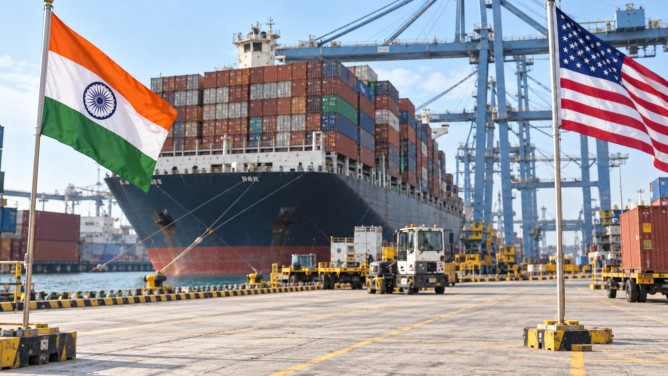
The United States has proposed tariffs of up to 25% on goods imported from India, after concluding an eight-month investigation into what Washington calls structural excess capacity in Indian manufacturing. The proposal, announced on Wednesday, November 25, 2026, by the office of the US Trade Representative (USTR), is the second-highest rate among the 14 economies covered by the latest action — behind only Vietnam at 35% — and it lands at a delicate moment, with the two countries already deep in negotiations over a bilateral trade agreement. The Hindu
Crucially, the tariffs are a proposal, not an immediate imposition. No new duties take effect yet: the USTR has issued a notice of determination and a request for comments, opening a public consultation before any final decision. And the order itself contains an escape hatch — if India reaches an agreement on reciprocal trade that addresses Washington's findings, the proposed rate would drop to 17%. The Indian Express
What Washington is alleging
The investigation was launched in March 2026 under Section 301 of the US Trade Act of 1974, a provision that allows the USTR to investigate foreign policies deemed harmful to American businesses and to respond with tariffs. This was the second of two separate probes into India; the first concerned goods produced using forced labour. The Hindu
In its report, the USTR concluded that India's acts, policies and practices "create, sustain, or contribute to structural excess capacity" that burdens or restricts US commerce — by harming American producers and exporters through unfair competition, costing the US lost exports, trade deficits and a diminished manufacturing sector, and creating economic security risks. In plain terms, Washington argues that Indian government support helps factories produce far more than domestic and foreign markets can absorb, and that the surplus is then exported at prices American firms cannot match. ABP Live
The USTR named six areas of concern: government-backed industrial plans to expand manufacturing; inadequate labour protections; financial policies that suppress interest rates; sustained market-access barriers; and rising imports and foreign direct investment from non-market economies. Specifically in the firing line are flagship Indian programmes — Make in India, the Production Linked Incentive (PLI) scheme and Atmanirbhar Bharat — which Washington says encourage overproduction. The Economic Times
The sectors named — and the 14-country picture
The USTR singled out five sectors where it says Indian policies particularly affect US commerce: pharmaceuticals and medical devices, steel, solar energy, and information and communications technology. These are not marginal industries for India: pharmaceuticals are among its largest exports to the United States, and solar manufacturing has been a centrepiece of its industrial policy. The Shillong Times
India is far from alone in Washington's sights. The probe covered 14 economies, and the proposed rates vary sharply: 15% for Japan, South Korea, Switzerland, Taiwan and the European Union; 18% for Indonesia, Malaysia and Thailand; up to 20% for Bangladesh, Cambodia, China and Singapore; and 35% for Vietnam. India's 25% sits near the top of that ladder — a signal of how seriously the administration views the scale of Indian manufacturing support, and of how much leverage it wants in the trade talks. The Economic Times
The proposed 25% would be net of existing Section 301 tariffs — it would not simply stack on top of the 10% duty imposed on India in June 2026, which was itself lower than the 12.5% rate proposed in March. The order also says the USTR will consider whether the new duties should be adjusted to account for existing Section 301 and Section 232 duties, and that certain goods would be exempted. The US already levies a separate 50% tariff on aluminium and steel imports from all countries under Section 232, which would not be added to. The Hindu
India's response: rejection, but the door stays open
New Delhi rejected the allegations outright. In a statement, the Ministry of Commerce and Industry said India had "engaged constructively throughout this investigation" and that, in the proceedings, the Department of Commerce had stated India "does not have structural excess capacity in any sector". The ministry said it had taken note of the notice and that it was under examination, while stressing that the two countries "are engaged in negotiations for a Bilateral Trade Agreement" and that India remains committed to an early conclusion of the deal. The Hindu
That negotiating track is where the 17% figure matters. The USTR order proposes a 17% tariff rate if India reaches an agreement on reciprocal trade responsive to the investigation's findings — a clear incentive for New Delhi to close the deal. Indian officials have previously said the US has assured India of comparative advantage over competitors such as China and ASEAN countries as a precondition for signing. The Indian Express
There are, however, red lines on the Indian side. Commerce and Industry Minister Piyush Goyal said on November 3 that India will not allow imports of genetically modified products or dairy products produced using calf meat, and that the dairy sector — never opened to any country — will stay closed. The US has been pushing for GM exports and has cited Indian dairy import rules as non-tariff barriers. The Indian Express
What is at stake for exporters
The stakes are substantial. The United States remained India's top export destination in the first seven months of this fiscal year, with outbound shipments of $59.52 billion, up from $52 billion in the same period of the previous year. A 25% tariff on all Indian goods — even net of existing duties — would hit exporters across the board, from drugmakers to steel producers to electronics assemblers, and would test whether India's manufacturing push can survive a much costlier route into its biggest market. The Economic Times
The broader context makes the timing sharper still. Under a separate 2026 law, the Lindsey O. Graham Sanctioning Russia and Iran Act, the US government is empowered to levy tariffs of up to 100% on countries, including India, that import large quantities of Russian oil. The tariff question is therefore only one front in a wider pressure campaign — and one reason New Delhi has been keen to settle the trade agreement quickly. The Hindu
The investigation is also part of a wider pattern. In the same week, the administration has moved on multiple trade fronts, and the US Senate has voted on ending the president's global tariff powers — a reminder that the tariff strategy faces pushback at home as well as abroad. Read more: US Senate votes to end Trump's global tariffs
What happens next
Three things will decide how this ends. First, the public comment period: businesses, trade groups and governments can respond to the USTR's notice before any final duties are set, and the shape of the final order — including exemptions and the treatment of existing tariffs — is still open. Second, the bilateral trade talks: the 17% off-ramp gives both sides a concrete reason to reach an agreement, and officials on both sides have described the deal as close. Read more: India–US trade deal reported 98% complete Third, the other 13 economies: the probe is not only about India, and how Japan, the EU, South Korea and others respond will shape whether the Section 301 campaign becomes a negotiated settlement or a broader trade confrontation. Read more: Trump tariffs hit 14 partners after excess-capacity probe
For now, the message from Washington is a proposal with a price attached — 25% if nothing changes, 17% if a deal is signed. Whether New Delhi treats that as pressure to concede or as a starting position to negotiate will determine the future of the world's largest bilateral trade relationship between two of its biggest economies.
Frequently Asked Questions
What tariffs has the US proposed on Indian goods?
The US Trade Representative has proposed tariffs of up to 25% on all goods imported from India, following an eight-month Section 301 investigation into structural excess capacity in Indian manufacturing. The rate would be net of existing Section 301 tariffs, with exemptions for certain goods.
Would the tariff drop to 17%?
Yes, under the USTR order. If India reaches an agreement on reciprocal trade that addresses the investigation's findings, the proposed tariff rate would fall to 17%. India and the US are currently negotiating a bilateral trade agreement.
Has the 25% tariff taken effect?
No. The announcement is a proposal accompanied by a notice of determination and a request for comments. No new duties are imposed immediately, and the final form of the tariffs — including exemptions and adjustments for existing duties — is still to be decided.
Which sectors did the US single out?
The USTR identified pharmaceuticals and medical devices, steel, solar energy, and information and communications technology as sectors where it says Indian policies particularly affect US commerce. It also put flagship programmes such as Make in India and the Production Linked Incentive scheme under scrutiny.
Why is India's rate higher than Japan's or the EU's?
India's proposed 25% is the second-highest among the 14 economies covered, behind only Vietnam at 35%. Japan, South Korea, Switzerland, Taiwan and the EU face 15%; Indonesia, Malaysia and Thailand face 18%; and Bangladesh, Cambodia, China and Singapore face up to 20%. The USTR's assessment of the scale of India's manufacturing support and excess capacity drove the higher figure.
What is Section 301?
Section 301 of the US Trade Act of 1974 allows the US Trade Representative to investigate foreign policies considered harmful to American businesses and to respond with measures including tariffs. The USTR launched two separate investigations into India in March 2026 — one on forced labour in supply chains and one on structural excess capacity.