The United States has taken the first formal step toward moving the data center into orbit. On Wednesday, the Federal Communications Commission authorized Elon Musk's SpaceX to deploy up to one million satellites designed to function as data centers in space, a constellation the company calls Starmind. The decision is the first authorization of its kind in American history — and, if the constellation is ever built in full, it would increase the number of active satellites around Earth roughly fiftyfold. Reuters
The FCC framed the approval as a move in the race for artificial intelligence. "At this pivotal time in America's development of super intelligence, the FCC is granting SpaceX authorisation to deploy 1,000,000 orbital compute modules to process massive amounts of data to be used back here on Earth," the agency said in its announcement. FCC Chairman Brendan Carr, who announced the decision on Wednesday, described it as a historic first and said the network would help extend America's lead in AI. Al Jazeera
What Starmind actually is
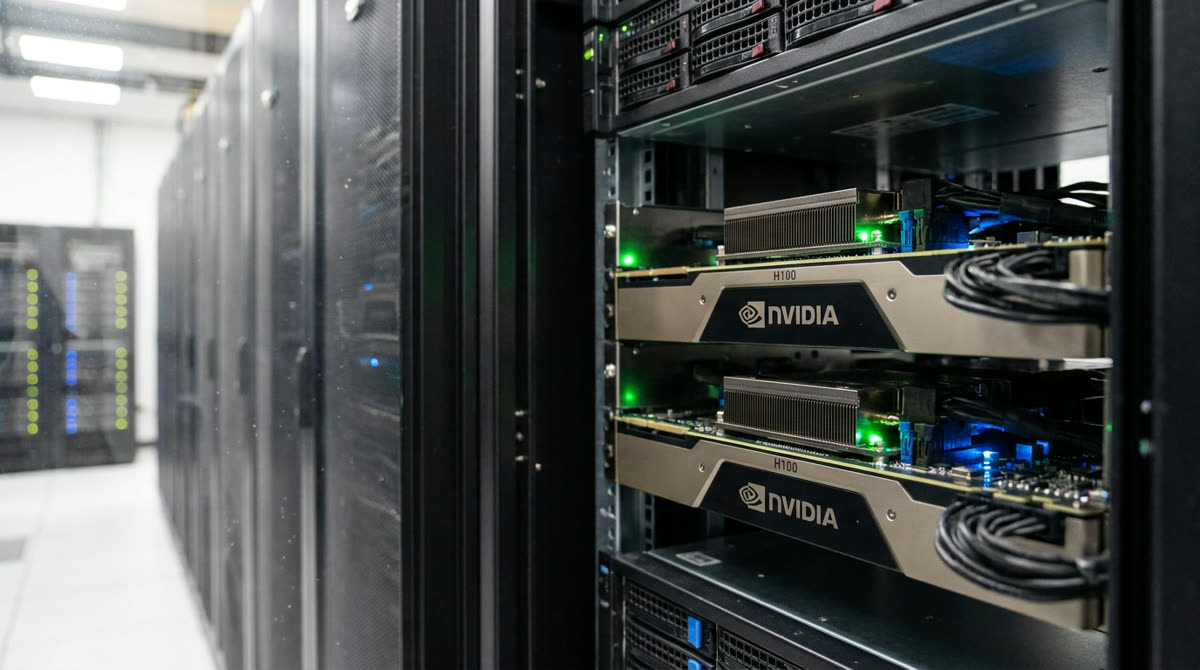
Starmind is not an internet constellation like Starlink. Each satellite would be an "orbital compute module" — a server rack in space, powered by solar panels, processing AI workloads above the atmosphere and beaming the results back to Earth. SpaceX describes the concept as "capturing solar energy in space to power low-cost, high-performance AI compute for Earth." The satellites would fly in six orbital shells at altitudes between 500 and 1,002 kilometres, connected by radio-frequency links used for backup telemetry, tracking and command. Gizmodo
The logic behind the idea is straightforward, at least on paper. In orbit, solar panels receive uninterrupted sunlight, and the cold of space offers a natural heat sink for the enormous amounts of heat that AI chips generate. On Earth, data centers are increasingly constrained by power grids, water for cooling and land. In space, the pitch goes, energy and cooling are effectively free — if you can get the hardware up there and keep it working.
SpaceX first revealed the concept in January 2026 and formally applied to the FCC on January 30. The company has said it plans to demonstrate its first orbital data-center technology in 2027, with broader deployment potentially beginning in 2028. USA Today
The scale, in context
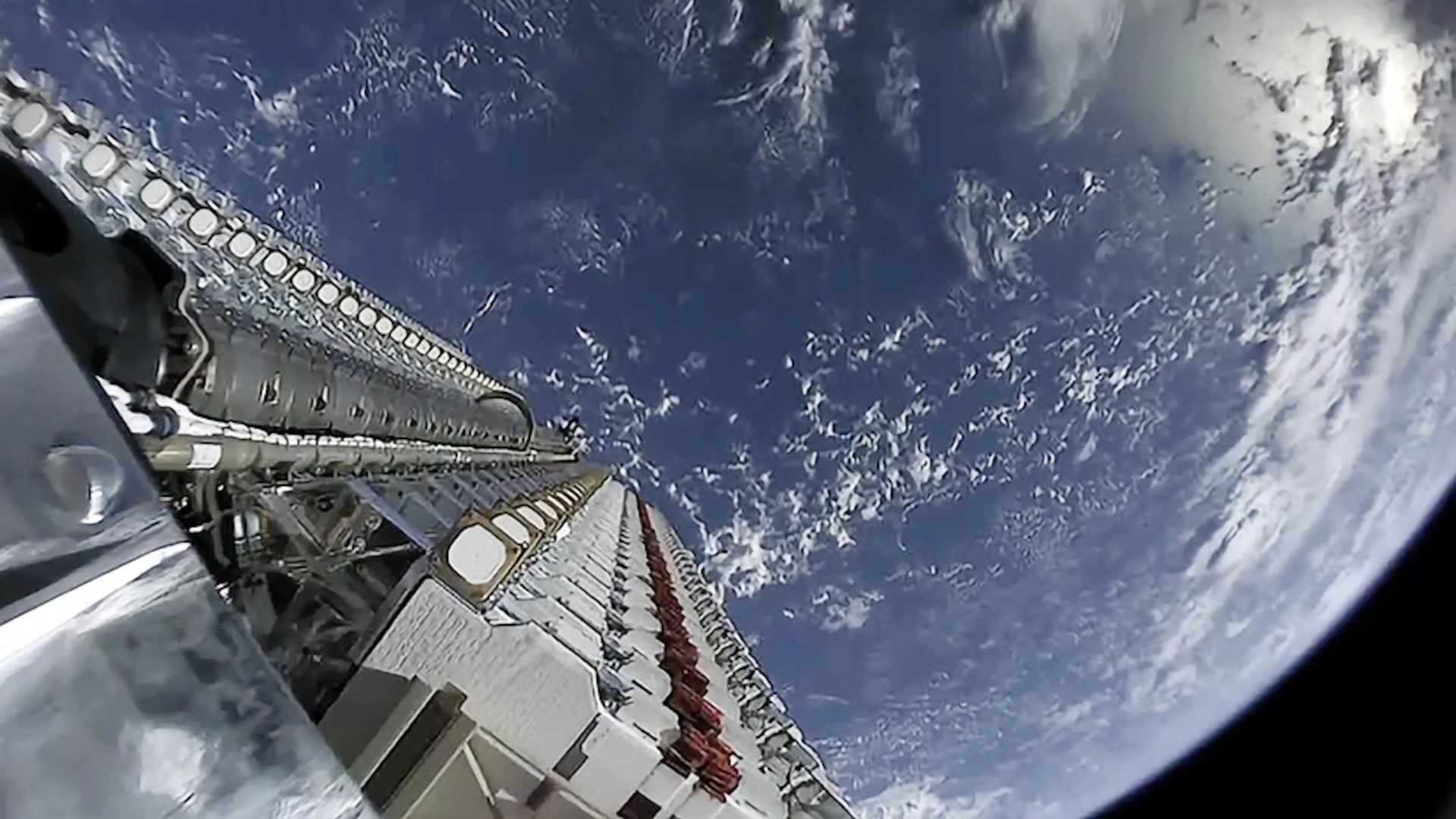
The headline number — one million — is so large that it is easy to miss what it means. There are currently only about 17,000 satellites in orbit around Earth, of which roughly 11,000 belong to SpaceX's own Starlink network. A full Starmind constellation would be nearly sixty times larger than everything humanity has ever put into orbit, combined. It would also dwarf Starlink's planned 42,000 satellites, and it sits alongside a separate military variant, Starshield. Space Policy Online
That scale is precisely why the approval comes with a long leash. Under the FCC's milestones, SpaceX must launch its first operational Starmind satellite by November 25, 2033, deploy 10 percent of the constellation by 2035, half by 2038, and the whole million by 2040. The fourteen-year window is standard practice: the FCC assigns spectrum and requires operators to use it within a set period so that unused frequencies are not hoarded. But it also means that the authorization is a permission slip, not a launch schedule. As one industry publication put it, approval for SpaceX "is in no way a roadmap to a million datacenter satellites." The Register
What the FCC did not approve
One of the least reported parts of the decision is what the agency refused to grant. SpaceX asked for a waiver of the FCC's rule requiring dead satellites in low orbit to be disposed of by burning up in the atmosphere, proposing instead to move satellites operating above 600 kilometres into so-called graveyard orbits at the end of their lives. The FCC said the company had not provided enough information to judge whether that alternative complies with the rules, and deferred the decision. SpaceX will have to file a new application with fuller justification if it wants the waiver. TechCrunch
That matters because debris is the central unresolved risk of the whole project. A million satellites, however reliable, will produce failures, collisions and fragments — and at altitudes up to 1,002 kilometres, debris lingers for decades rather than burning up quickly. Astronomers have already raised alarms about Starlink's effect on the night sky; a constellation fifty times larger would transform it further. Scientists quoted in coverage of the announcement were openly skeptical, both about the engineering and about the environmental cost. Arab News
A race, not a single project
SpaceX is not alone in eyeing orbit as a server room. Google and Blue Origin are among the companies pursuing orbital data centers of their own, and the FCC said it is continuing to review additional proposals and intends to rule on each. Carr's announcement pointedly noted those "competitor constellations" — but only SpaceX's application has been approved so far. The decision therefore gives Musk's company a head start in a contest that, if it matures, could reshape where computing happens and who controls it.
The timing also reflects the politics of the moment. The approval landed the same week the Trump administration moved to rebuild its global tariff wall under a new Section 301 investigation, and the FCC's language — "super intelligence," American leadership, the full power of the sun — echoes the administration's framing of AI as a strategic contest with China. The authorization is, in that sense, both a technical license and a political signal.
Why this is different from the October announcement
This is not the first time Starmind has made headlines. SpaceX unveiled the vision at the International Astronautical Congress in October, presenting a concept for a million-satellite network. Read more: SpaceX unveils orbital AI data center vision What changed on Wednesday is the legal status: a concept became a licensed constellation, with deadlines, altitude bands and spectrum attached. The gap between the two events is the gap between a slide deck and a regulator's order — and it is the order that competitors, investors and astronomers will now have to take seriously.
The commercial backdrop helps explain the urgency. SpaceX has been raising tens of billions of dollars this year, including a round tied to AI chip supply, as it positions itself less as a launch company and more as an infrastructure company for the AI era. Read more: SpaceX's $40 billion raise and the AI chip race Orbital compute is the most ambitious extension of that strategy — and the most uncertain.
What happens next
The practical test comes quickly. SpaceX's chief financial officer, Bret Johnsen, said last week that the company plans to launch its first data centers into space in 2027 and expand through 2029 — well ahead of the FCC's 2033 deadline for the first satellite. The Wall Street Journal Whether those early missions prove that AI chips can survive, cool themselves and communicate reliably in orbit will determine whether Starmind becomes an industry or remains a license on paper.
Meanwhile, the congestion problem is already visible. Low Earth orbit is crowded enough that a single launch failure can scatter debris across operational altitudes — as a recent Vulcan rocket failure showed when it destroyed dozens of satellites. Read more: Vulcan rocket failure destroys 40 Amazon satellites Adding a million more objects to that environment, even over fourteen years, will require debris rules that do not yet exist. The FCC's deferred waiver decision is a reminder that the hardest questions about Starmind have not been answered — only postponed.
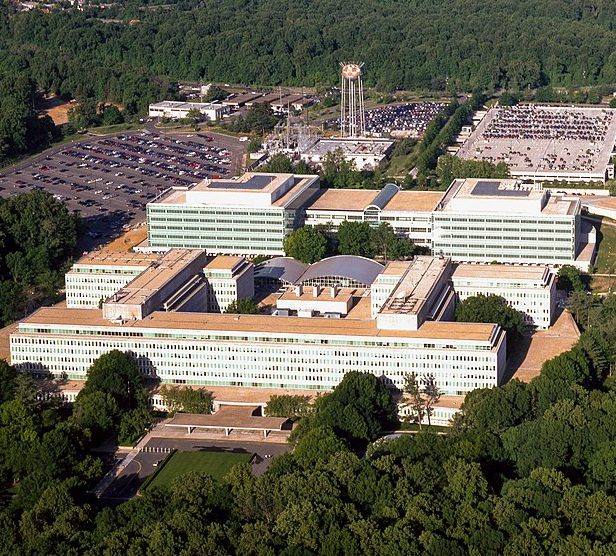
For now, the authorization stands as one of the most consequential regulatory decisions in the history of spaceflight: a bet that the future of computing is not in a warehouse in Virginia or Nevada, but in a ring of servers circling the planet. Whether that bet pays off will be decided not in Washington, but in orbit — one launch at a time, over the next fourteen years.
Frequently Asked Questions
What is SpaceX's Starmind constellation?
Starmind is SpaceX's planned network of up to one million satellites that would function as data centers in orbit, processing AI workloads using solar power and sending the results back to Earth. The FCC authorized the constellation on November 25, 2026 — the first US approval for a space-based data-center network.
When will the first Starmind satellites launch?
SpaceX says it aims to demonstrate its first orbital data-center technology in 2027, with broader deployment possibly starting in 2028. Under the FCC license, the company must have at least one operational satellite in orbit by November 2033, 10 percent of the constellation by 2035, half by 2038, and the full million by 2040.
How many satellites are currently in orbit?
About 17,000 satellites are in orbit today, including roughly 11,000 Starlink satellites operated by SpaceX. A complete Starmind constellation of one million satellites would be nearly sixty times larger than everything currently in orbit.
Did the FCC approve everything SpaceX asked for?
No. The FCC declined, for now, to waive its rule requiring dead satellites to burn up in the atmosphere. SpaceX had asked to move satellites operating above 600 kilometres into graveyard orbits instead. The agency said the company had not provided enough information and deferred the decision.
Are other companies building orbital data centers?
Yes. Google and Blue Origin are among the companies pursuing similar projects, and the FCC said it is reviewing additional orbital data-center proposals. SpaceX's Starmind is the first to receive approval.