Indonesia's navy has seized a cargo ship sailing from China to Bangladesh after finding 405 tonnes of a chemical used in rocket and missile propellants — enough, naval officials said, to build up to 100 missiles — along with millions of unregistered blank mobile phone SIM cards. The seizure, disclosed on November 20, has raised urgent questions about who ordered the cargo, who was meant to receive it, and how a vessel with suspended registration papers was sailing the region's sea lanes.
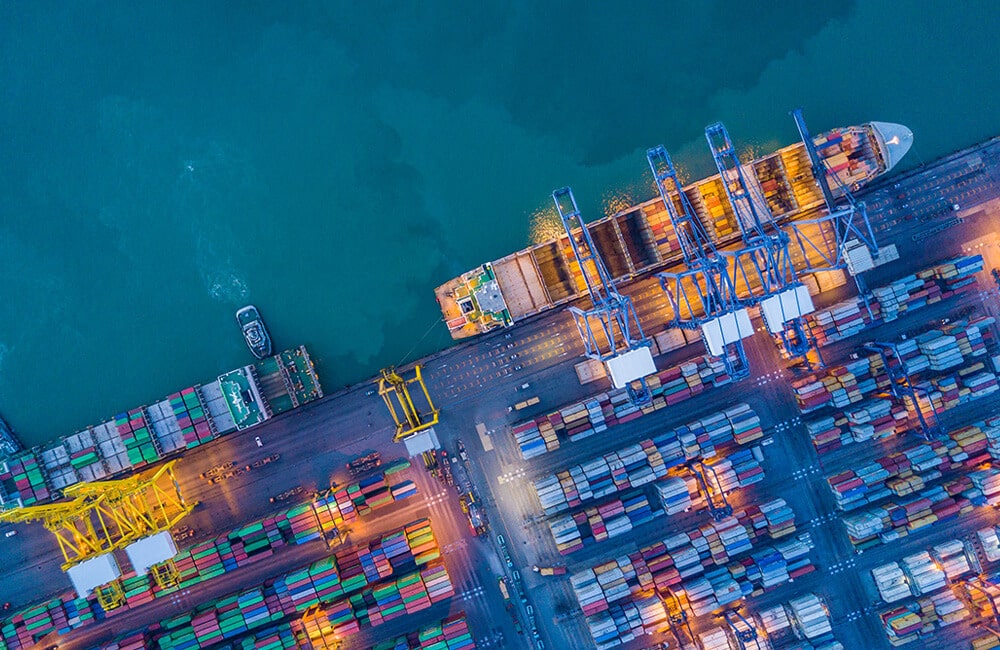
The Comoros-flagged general cargo vessel MV Star Line (IMO: 8356962) was travelling from Lianyungang Port in China to Mongla Port in Bangladesh when it was intercepted in Indonesian waters off Belawan, North Sumatra, on November 7, according to TBS News. The Indonesian Navy made the seizure public on November 20 at a press briefing at the headquarters of Naval Regional Command I in Belawan.
How the ship was caught
The patrol vessel KRI Sigalu-857 intercepted the MV Star Line after detecting irregularities in its navigation patterns, naval officials said. The ship had reportedly made an unscheduled stop in Indonesian waters, claiming it needed to refuel, and failed to respond to radio communications before being boarded, according to Firstpost.
A search of the vessel's 36 containers found 15 carrying 405 tonnes of sodium perchlorate, plus 54 pallets containing millions of unregistered blank 4G LTE SIM cards. The ship's papers listed a validity date extending to October 2027, but its registration status was recorded as suspended — a discrepancy investigators are now examining. The interception comes just weeks after a Ukrainian drone strike sank a Russian corvette at a Libyan port, another reminder of how contested the region's shipping lanes have become (see our report on the Benghazi strike).
Rear Admiral Deny Septian, commander of Naval Regional Command I, described sodium perchlorate as a strategic oxidising agent used in the production of rocket and missile propellants. He told reporters the seized quantity could potentially provide material for the production of up to 100 missiles, a figure repeated across several reports of the seizure.
What sodium perchlorate is — and is not
The "100 missiles" figure needs careful reading. Sodium perchlorate (NaClO₄) is a powerful oxidiser, not itself an explosive or a fuel. It supplies oxygen that supports combustion, making it a key ingredient in some solid rocket propellant formulations, as well as in explosives and pyrotechnic products. On its own, it cannot power a missile — turning it into a weapon requires a full propellant production chain, moulding and casting facilities, and other components that were not reported aboard the ship.
That distinction matters for two reasons. First, it explains why the chemical has legitimate industrial uses and can move through ordinary trade. Second, it is precisely why the quantity, the destination and the paperwork matter more than the chemistry alone: 405 tonnes is far beyond what a small industrial buyer would need, and the consignment was travelling under a suspended registration with no named importer.
The SIM cards: the second half of the mystery
Much of the early coverage has focused on the chemical, but the millions of blank, unregistered 4G SIM cards may be just as significant. Unregistered SIM cards are a staple of untraceable communications: they can be activated without an identity check, making them useful for fraud, smuggling networks and covert coordination — and difficult for investigators to trace back to a buyer.
Indonesian authorities have not said whether the two cargoes are linked, or whether they share a consignee. The identity of the importer, the shipping company and the intended recipients has not been disclosed, and the navy says it is examining the crew, the shipping documentation and the cargo manifest. As of the November 20 briefing, no arrests or charges had been publicly announced.
An echo of 2004
The seizure has an uncomfortable precedent in Bangladesh. In 2004, authorities in Chittagong intercepted a massive haul of arms and ammunition — ten truckloads — that had been smuggled into the country by sea, one of the largest arms seizures in South Asian history. The case, still unresolved in parts, has shaped how Bangladeshi and regional security agencies view suspicious maritime cargo ever since, and Firstpost drew the parallel explicitly in its reporting of the MV Star Line seizure.
Whether the comparison holds will depend on what the investigation finds. The 2004 haul was weapons; this is a dual-use chemical and communications equipment. But the pattern — a foreign-flagged vessel, opaque paperwork, a Bangladeshi port as destination — is similar enough that investigators in Dhaka and Jakarta will be under pressure to establish the full chain of custody.
What happens next
The vessel was due to reach Mongla Port on November 8, the day after it was intercepted. Indonesian authorities are continuing to question the crew and audit the documentation, while the cargo remains in custody. Neither the Chinese shipper nor any Bangladeshi importer has been publicly identified, and neither Beijing nor Dhaka has issued a detailed statement on the seizure. Bangladesh is already in a volatile security climate, with paramilitary deployments and unrest around the possible return of former prime minister Sheikh Hasina (see our coverage), which makes the unanswered questions about the cargo's intended recipient all the more sensitive. Indonesia, for its part, has been deepening its trade ties in the region, signing a major economic partnership with the EU earlier this month (see our report).
Three questions now frame the investigation: who arranged the shipment, who was supposed to receive the chemical and the SIM cards, and whether the two cargoes were destined for the same hands. Until those are answered, the MV Star Line will remain less a closed case than an open one — a 405-tonne reminder that the region's shipping lanes carry far more than declared cargo.
Frequently Asked Questions
What did Indonesia seize aboard the MV Star Line?
Indonesian naval personnel found 405 tonnes of sodium perchlorate in 15 of the ship's 36 containers, plus 54 pallets containing millions of unregistered blank 4G LTE SIM cards. The Comoros-flagged vessel was sailing from Lianyungang in China to Mongla in Bangladesh when it was intercepted off Belawan, North Sumatra, on November 7.
What is sodium perchlorate used for?
Sodium perchlorate is a strong oxidising agent used in the manufacture of solid rocket propellants, explosives and pyrotechnic products. It is not itself an explosive or a fuel, but it supplies the oxygen that makes propellant burn. Indonesian naval officials said the seized quantity could potentially supply material for up to 100 missiles.
Who was the cargo meant for?
That is still unknown. Indonesian authorities have not publicly identified the importer, the shipping company or the intended recipients, and are examining the crew, the cargo manifest and the vessel's documentation. The ship's registration was listed as suspended despite papers showing validity until October 2027.
Why do the blank SIM cards matter?
Millions of unregistered blank SIM cards can be activated without identity checks, making them useful for untraceable communications, fraud and smuggling networks. Investigators have not said whether the SIM cards and the chemical shared a consignee.
Has anything like this happened before?
In 2004, Bangladeshi authorities seized ten truckloads of smuggled arms and ammunition at Chittagong port, one of the largest arms hauls in the region's history. Commentators have drawn parallels with the MV Star Line case because of the similar pattern of a foreign-flagged vessel, opaque paperwork and a Bangladeshi port as the destination, though the cargoes differ.