Two Russian cruise missiles and a jet-powered drone crashed in south-eastern Poland in the early hours of Friday, during Moscow's largest overnight bombardment of Ukraine this year, in an incursion Warsaw denounced as a deliberate provocation and NATO's secretary general answered with a public guarantee to defend Polish soil.
No one was injured and no buildings were damaged, Polish officials said, but the wreckage — including a confirmed Russian Kh-101 cruise missile built only weeks ago — has turned a border incident into the alliance's most serious test since drones began straying across NATO's eastern flank.
What happened in the early hours of Friday
At about 6.30am on Friday, three objects came down in fields in the villages of Molodycz, Rudnik nad Sanem and Nowy Lipowiec, in Poland's south-east, between 30 and 50 kilometres from the Ukrainian border. Polish Defence Minister Wladyslaw Kosiniak-Kamysz confirmed three violations of Polish airspace and said NATO jets were scrambled in response.
The Polish public prosecutor's office confirmed on Saturday that one of the objects was indeed a Russian Kh-101 cruise missile. Investigators recovered propulsion and guidance components at the crash site in Nowy Lipowiec, and the spokesman for the investigating authorities in Lublin said the weapon was manufactured in the fourth quarter of this year — evidence that the missile was not stray Soviet-era stock but a recently produced weapon. Investigations at the other two crash sites were still under way.
The incursion unfolded during a Russian attack on Ukraine involving more than 110 missiles and over 400 drones, according to Ukrainian and Western accounts, with some Polish military assessments putting the drone count above 500. Seven Russian bombers took part, firing 26 Kalibr cruise missiles and 72 Kh-101s. Major General Ireneusz Nowak, commander of Poland's operational command, said as many as 11 objects had been identified as posing a danger to Polish airspace that night.
The scale of the night forced an unprecedented step at Rzeszow-Jasionka airport, the international passenger hub and the main transit point for military aid to Ukraine: air traffic control was briefly evacuated, for the first time since Russia's full-scale invasion began in 2022.
Why Poland calls it a deliberate provocation
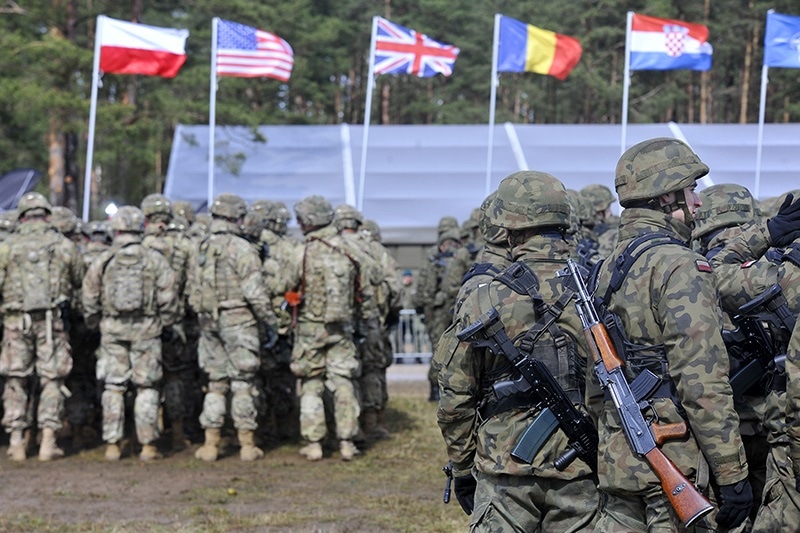
Prime Minister Donald Tusk described the incident as an "intentional provocation" by Moscow and said it was no coincidence that it happened on the eve of a major Western military exercise. Poland is currently hosting the first manoeuvres of the so-called Coalition of the Willing, with 2,800 soldiers from 11 countries taking part in drills at Nowa Deba, less than 60 miles from where the missiles fell. The exercise, led by the United Kingdom and France and intended to test how a lasting peace in Ukraine could be secured, runs until 22 November.
"It seems more than a coincidence that those airspace violations took place at the same time as the multinational force for Ukraine exercise," Britain's Defence Secretary Wes Streeting said on Saturday. Streeting was in Kyiv the day after the incident, alongside the chief of the defence staff, Sir Richard Knighton, and called the strikes an "outrageous provocation". He added there could be "absolutely no suggestion that these provocations, and the state-sponsored terrorism that Putin is waging throughout Europe, will be rewarded by weakness on our continent."
The Institute for the Study of War, a US think tank, assessed that Russia had "intentionally fired missiles and drones into Polish airspace", timed to coincide with the exercises. Tusk said Warsaw would ask NATO to strengthen its detection and surveillance systems over Poland, noting that Russia frequently launches waves of missiles and drones at western Ukraine, near the Polish border.
The timing also followed Ukrainian strikes on the Kerch Bridge, after which President Vladimir Putin had vowed retaliation, and coincided with diplomatic efforts involving Ukraine, Russia and the United States, including recent talks in Moscow between US envoys Steve Witkoff and Jared Kushner and the Russian president, as reported in US envoys meet Putin in Moscow.
NATO's response: a guarantee, and a meeting on Monday
NATO Secretary General Mark Rutte travelled to Warsaw on Saturday, a day after the incursion, and met Tusk. "I can guarantee that NATO will defend every inch of Polish territory," Rutte said, according to the Polish Press Agency. He described the incident as "clearly dangerous" and said NATO commanders were "constantly assessing our deterrence and defence" and would do everything necessary to identify threats and implement adjustments.
Rutte said the head of NATO forces in Europe, General Alexus Grynkewich, would do everything necessary to identify any vulnerabilities in defence and deterrence capabilities and implement appropriate adjustments if needed. The alliance's main political decision-making body, the North Atlantic Council, will discuss the incident in Brussels on Monday as part of regular consultations among allies.
Poland has chosen not to invoke Article 4 of the North Atlantic Treaty, which allows a member to request consultations when it believes its territorial integrity, political independence or security is threatened. Nor is Article 5 — the collective defence clause under which an armed attack on one member is treated as an attack on all — on the table. Invoking it requires political consensus among all 32 members, and analysts say the incident, while serious, does not meet the threshold for collective military action. An airspace violation, however deliberate, is not automatically an armed attack, and the alliance will have to assess the circumstances and agree on a proportionate response.
That distinction matters. Drones have repeatedly strayed into the airspace of countries on NATO's eastern flank during the war, fuelling tension and stoking fears that the conflict could spread. What makes Friday different is the combination: cruise missiles rather than drones, a confirmed Russian weapon manufactured weeks ago, and the proximity to a live multinational exercise involving troops from 11 nations.
The wider pattern: a war spilling past Ukraine's borders
The same overnight barrage that sent missiles into Poland was the largest Russian attack on Ukraine this year, and it struck far beyond the front lines. On the same night, Russian missiles hit President Volodymyr Zelenskyy's home town of Kryvyi Rih in a triple-tap strike that killed a seven-year-old boy and a young paramedic, and a Russian-linked cargo ship caught fire in the Gulf of Finland after a drone attack, as reported in Russian cargo ship ablaze after drone strike.
Zelenskyy, who met Streeting in Kyiv on Saturday, has called Putin a "killer" and described Ukraine's strike on the Crimea Bridge as a fair response, while US President Donald Trump has referred to Putin as a friend who wants to end the war — a gap in tone that underlines how differently the war's endgame is being read in Kyiv and Washington.
For Poland, the immediate questions are practical: whether NATO will upgrade radar coverage and air defences along the border, what Monday's council meeting produces, and whether Moscow repeats the test. For the alliance, the question is strategic: how to answer a provocation calibrated to fall just short of an armed attack, without either ignoring it or overreacting to it. Rutte's guarantee was the first answer. Monday's meeting will show whether it is backed by new deployments.
Frequently Asked Questions
What exactly fell in Poland on Friday?
Two missiles and a jet-powered drone crashed in the villages of Molodycz, Rudnik nad Sanem and Nowy Lipowiec in south-eastern Poland at about 6.30am on Friday 20 November, during a massive Russian overnight attack on Ukraine. Polish prosecutors confirmed one of the missiles was a Russian Kh-101 cruise missile, manufactured in the fourth quarter of 2026. No injuries or structural damage were reported.
Did NATO invoke Article 5?
No. Poland has not invoked Article 4 (consultations) or Article 5 (collective defence). NATO Secretary General Mark Rutte guaranteed the defence of Polish territory and the North Atlantic Council will discuss the incident in Brussels on Monday. Analysts say an airspace violation does not automatically meet the threshold for collective military action, which requires consensus among all 32 members.
Why does Poland believe the incursion was deliberate?
Prime Minister Donald Tusk called it an "intentional provocation". The missiles fell less than 60 miles from Nowa Deba, where 2,800 troops from 11 countries were conducting the Coalition of the Willing exercise, and the Institute for the Study of War assessed that Russia intentionally fired the weapons into Polish airspace to coincide with the drills. The recovered Kh-101 was manufactured in the last quarter of 2026.
How big was the Russian attack on Ukraine that night?
Russia launched more than 110 missiles and over 400 drones at Ukraine — its largest overnight attack this year — with seven bombers firing 26 Kalibr and 72 Kh-101 cruise missiles. Polish military commanders said as many as 11 objects posed a danger to Polish airspace, and air traffic control at Rzeszow-Jasionka airport was briefly evacuated for the first time since the full-scale invasion began.