A fire that began in a bread oven raced through six beachfront hotels on Zanzibar's Nungwi Beach on Saturday afternoon, forcing about 180 tourists to flee and injuring several hotel workers — a blaze that has now triggered a formal investigation and a fire-safety review of one of East Africa's most popular resort strips, according to the Associated Press.
No deaths were reported, and officials said every guest was accounted for after the evacuation. But the speed of the fire — which consumed six hotels, four restaurants and around 40 shops in about three hours — has raised difficult questions about the thatched makuti roofs that give Nungwi its postcard look and, in a strong wind, act as kindling.
Table of Contents
- What happened on Nungwi Beach?
- Why did the fire spread so fast?
- Where did the evacuated tourists go?
- What happens now: inquiry and safety reviews
- Why Nungwi matters to Zanzibar's economy
- Frequently Asked Questions
What happened on Nungwi Beach?
The fire broke out on Saturday afternoon, 21 November, at the Makofi Hotel on Nungwi Beach, at the northern tip of Unguja, Zanzibar's main island. Driven by strong winds, it spread with startling speed to neighbouring properties. The affected hotels were named as Makofi, Z Hotel, Nungwi Garden, BR, Pasha and Sand Beach, according to QNC News.
Dramatic footage shared on social media showed tourists running from burning beachfront structures as flames moved across thatched rooftops and smoke rose over the strip. Firefighters battled the blaze for about three hours before bringing it under control.
Several hotel workers were injured, though authorities have not given a precise number or described the severity of their injuries. The tourists — about 180 according to the authorities, with some reports putting the figure at 183 — were all safely evacuated.
Preliminary accounts suggest the blaze may have started in an oven used to bake bread at the Makofi Hotel. Officials have cautioned against speculation while investigators work to establish the cause, and no final determination has been announced.
Why did the fire spread so fast?
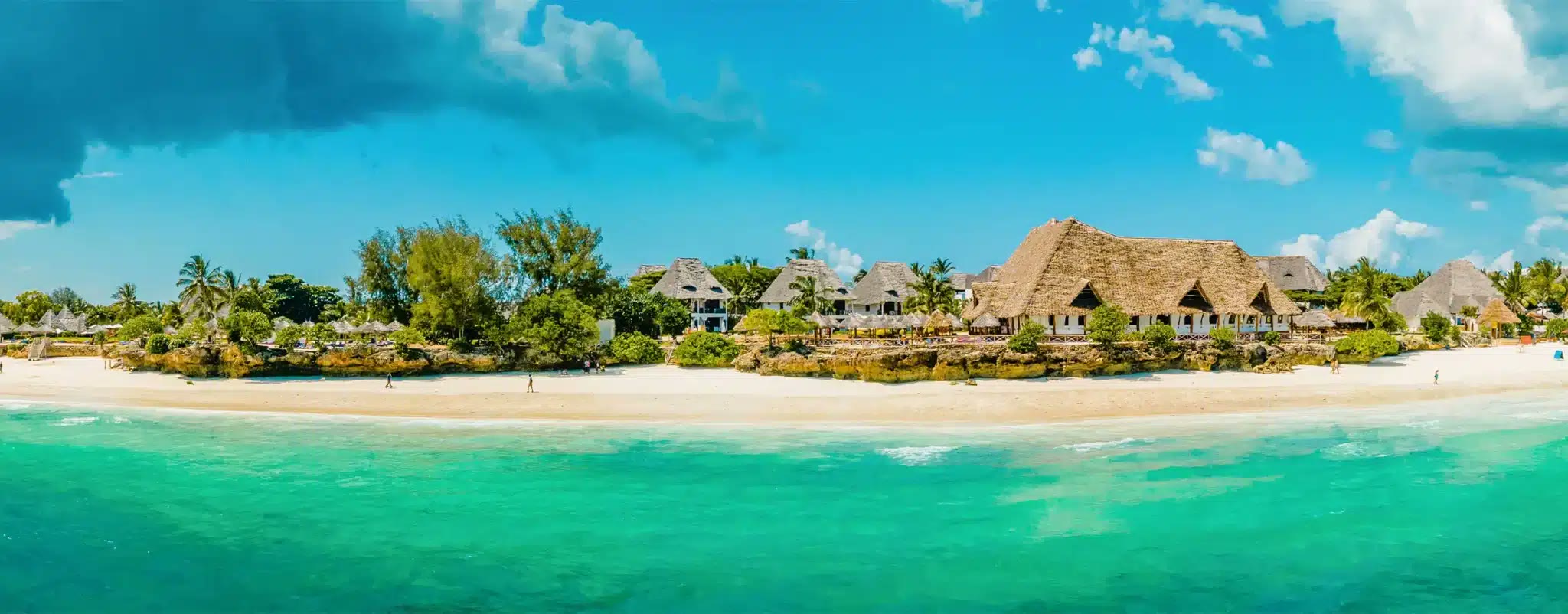
The same features that make Nungwi photogenic made it vulnerable. Much of the beachfront is covered in makuti — palm-thatch roofing — and the properties sit close together along a narrow strip. In a strong sea wind, a fire in one thatched roof can leap from building to building faster than firefighters can respond, a pattern familiar from resort fires elsewhere in the tropics. Chronicle previously reported a resort fire in Bangladesh's Cox's Bazar that killed ten people, a reminder that the risk is not unique to Zanzibar — see our report on the Cox's Bazar resort fire.
The investigation now under way will have to answer whether the spacing of buildings, the roofing material, and the availability of firefighting water and equipment on the strip all played a role. What is already clear is that the blaze moved faster than the response: three hours to bring under control, after six hotels were already lost.
Where did the evacuated tourists go?
The evacuated guests were moved to more than 20 other hotels in the Mchangani and Matemwe areas, many of them offered free of charge by fellow operators — a rapid, informal rescue effort by an industry that competes fiercely in normal times and closed ranks in a crisis.
The tourism ministry has been working with foreign embassies to help travellers who lost passports and belongings in the rush to escape. Replacing travel documents is now the most pressing practical problem for many of those evacuated, and it is the detail most of the early coverage barely mentioned: a holiday interrupted is one thing; being stranded abroad without a passport is another.
Tourism and Antiquities Minister Nasra Nassor Omar said on Saturday that the government would carry out a rapid assessment and confirm what happened before taking further measures. Tourism authorities have ordered fire safety reviews and inspections across Nungwi.
What happens now: inquiry and safety reviews
An investigation was under way on Monday, 23 November, into the cause of the fire. The inquiry's findings will matter beyond the six destroyed hotels: they will determine whether Nungwi's building practices change, whether thatched roofs face new restrictions or fire-retardant requirements, and whether the strip's firefighting capacity is upgraded before the next dry, windy season.
The minister's promise of a "rapid assessment" will be tested in the coming days. Zanzibar's government has an incentive to move quickly — every day of uncertainty is a day in which prospective visitors weigh whether to book — but also to get the cause right, since a wrongly attributed cause could leave the real risk unaddressed.
Why Nungwi matters to Zanzibar's economy
Nungwi is not just another beach. It is the resort area at the northern tip of Unguja, the most developed and best-known stretch of coastline in the semi-autonomous Tanzanian archipelago, and a pillar of an economy in which tourism is the main source of foreign earnings and one of the largest employers. The island's recovery from the pandemic-era collapse in travel has been built, in large part, on exactly this strip of white sand, turquoise water and thatched-roof hotels.
A fire that destroys six hotels and dozens of shops in an afternoon is therefore not only a human story but an economic one: rooms lost at the start of the high season, staff out of work, and a reputation for safety that must now be rebuilt alongside the buildings. Tanzania has faced its own recent tragedies on the road, including a bus-truck crash in Morogoro that killed 28 people — but the Nungwi fire strikes at the industry the island depends on most.
The coming weeks will show whether the response — the inquiry, the inspections, and the help for stranded tourists — matches the scale of the damage. For now, the island can count one piece of good fortune: in a fire that consumed six hotels, nobody died.
Frequently Asked Questions
How many hotels were destroyed in the Zanzibar fire?
Six beachfront hotels on Nungwi Beach were destroyed — Makofi, Z Hotel, Nungwi Garden, BR, Pasha and Sand Beach — along with four restaurants and about 40 shops.
Were any tourists killed or injured?
No deaths were reported, and all guests were accounted for after the evacuation of about 180 tourists. Several hotel workers were injured, though the exact number has not been confirmed.
What caused the fire?
Preliminary reports suggest it may have started in an oven used to bake bread at the Makofi Hotel, where the blaze broke out on Saturday afternoon. Officials have cautioned against speculation, and an investigation is under way to establish the cause.
Where did the evacuated tourists go?
They were relocated to more than 20 other hotels in the Mchangani and Matemwe areas, many offered free of charge by fellow operators. The tourism ministry is working with foreign embassies to help travellers who lost passports and belongings.
Why did the fire spread so quickly?
Strong winds and the thatched makuti roofs that cover much of the beachfront, combined with closely spaced buildings along the strip, allowed the flames to move rapidly from property to property. Firefighters took about three hours to bring the blaze under control.