Her concert had no audience, no stage lights beyond a single Persian carpet, and no live venue at all — it was filmed in an empty desert caravanserai and posted to YouTube. Nearly two years later, the punishment for it was carried out in person. Iranian singer Parastoo Ahmadi, 29, was lashed 74 times on Monday in the holy city of Qom, alongside four members of her production team, for a performance in which she sang without wearing the mandatory hijab. Al Jazeera
What happened in Qom
The sentence was carried out at the Sentence Enforcement Unit of the Qom Prosecutor's Office, her lawyer Mostafa Nili told the Iranian news website Emtedad, in comments also reported by the ISNA news agency. Nili said the defence had tried to delay enforcement, but the prosecutor's office insisted on carrying it out immediately.
Alongside Ahmadi, four men received the same punishment: musicians Soheil Faghih-Nasiri, Amin Taheri and Amir-Ali Pirnia, and concert organiser Mohsen Lashkari. Each of the five received 74 lashes. CNN
The flogging was not the end of the sentence. All five were also banned for two years from taking part in artistic and musical activities, and from leaving Iran — a professional and personal freeze that, for a working singer, amounts to a career sentence on top of a corporal one.
The concert that triggered the case
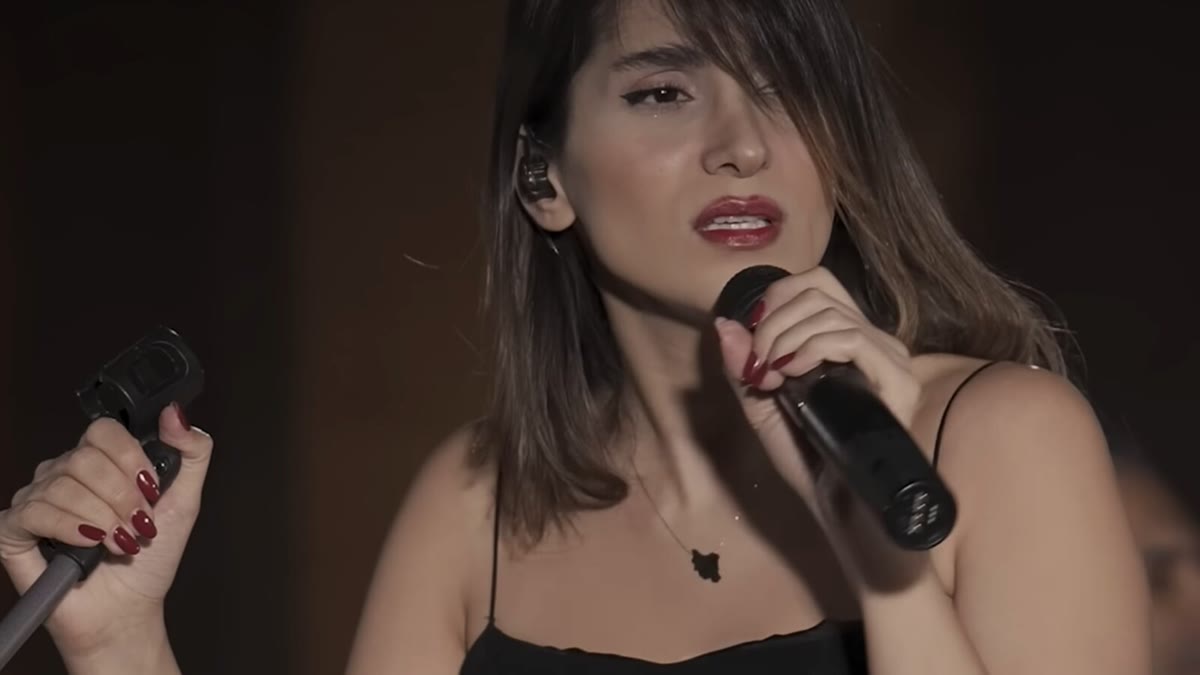
The case goes back to December 2024, when Ahmadi released the "Caravanserai Concert" on her YouTube channel. It was filmed at the historic Deir-e Gachin Caravanserai near Qom — a Shiite holy city home to numerous Islamic seminaries and a bastion of religious conservatism — and featured Ahmadi singing mournful, slow songs alongside male musicians, her hair and shoulders uncovered, in a long strappy gown and deep red lipstick.
There was no live audience. Ahmadi herself called it an "imaginary concert": a dimly lit stage, a single large Persian carpet, and a camera. It eventually reached 3.3 million viewers.
Within days of its release, the judiciary-affiliated Mizan News Agency said authorities had opened a case against Ahmadi and her team over what it called an "illegal concert". Ahmadi was arrested shortly afterwards. In June 2026, a criminal court in Qom convicted the group of "offending public decency" and of producing and publishing "obscene and immoral content" online. An appeals court upheld the sentences in September, and the case was referred for enforcement.
The law behind the sentence
The prosecution relied on two statutes that human rights lawyers say are routinely used to police culture in Iran: Article 638 of the Islamic Penal Code, which criminalises acts deemed to offend public decency, and Article 743 of the Computer Crimes Law, which extends that liability to content published online. The Jerusalem Post
That combination matters. Ahmadi was not punished for a public performance — there was no public present. She was punished for a recording, watched on screens, under a law that treats digital publication as a public act. For Iranian artists, the message is that the internet offers no safer stage than the street.
The questions the coverage leaves open
One detail remains unresolved in the reporting: how many people were actually sentenced. Some outlets report that nine people — Ahmadi plus eight production staff — received 74 lashes in June, and it is unclear whether the sentences against the four beyond the five flogged on Monday have been carried out. The discrepancy has not been clarified by the judiciary, and the families of the remaining defendants have not spoken publicly.
Nor is it clear why the sentence was enforced now, almost two years after the video appeared and two months after the appeal was rejected. Amnesty International protested in early October when the sentence was confirmed on appeal, urging Iran to "abandon any plans to carry out flogging sentences" — a call the authorities ignored.
A double standard on display
The timing sharpened the sense of injustice for many Iranians. Just two days before Ahmadi's flogging, male singers were honoured on stage at the Hafez arts ceremony in Tehran, receiving awards in front of an audience. Ahmadi, meanwhile, was punished for singing at all — women are banned from singing solo in public in Iran, and from appearing unveiled in any published image or video.
Iran's House of Music, the country's professional musicians' association, condemned the floggings and called for an immediate and transparent examination of the case. It said it had previously sought an explanation from the judiciary, only to be told the sentences were not yet final and that an official announcement would follow if they became so. No such announcement came before the lashes were carried out.
"Her concert was virtual, but the lashes on her body were real," human rights activist Zeinab Zaman wrote on X — a line that has since been shared widely by Iranians inside and outside the country.
Part of a wider crackdown
Ahmadi's case is not an isolated prosecution. It lands in the middle of a renewed enforcement drive against women who defy the dress code, with workplaces and businesses facing punishment for serving unveiled customers and schoolgirls elsewhere in the region caught in parallel battles over the hijab. More than four years after the death of Mahsa Amini in morality-police custody ignited the "Woman, Life, Freedom" protests, the Iranian state is still answering defiance with the lash — and still treating a song as a crime.
For Ahmadi, the immediate future is now defined by the two-year bans: no performances, no recordings, no travel. Whether the international condemnation that followed Monday's flogging changes anything for her — or for the next singer who picks up a microphone — remains to be seen.
Key takeaways
- Parastoo Ahmadi, 29, and four members of her production team each received 74 lashes in Qom on Monday, 23 November 2026.
- The punishment was for a December 2024 YouTube concert filmed without a live audience, in which Ahmadi sang unveiled alongside male musicians.
- All five also face two-year bans on artistic activity and on leaving Iran.
- Amnesty International had urged Iran in October not to carry out the sentences; Iran's House of Music condemned the floggings.
- It remains unclear whether four further people sentenced in June have also been flogged.
Frequently Asked Questions
Who is Parastoo Ahmadi?
Parastoo Ahmadi is a 29-year-old Iranian singer and film school graduate. She became known internationally in December 2024 when she released the "Caravanserai Concert", a filmed performance in which she sang without a hijab at the historic Deir-e Gachin Caravanserai near Qom.
Why was she flogged?
A Qom criminal court convicted her in June 2026 of "offending public decency" and producing "obscene and immoral content" online, under Article 638 of the Islamic Penal Code and Article 743 of the Computer Crimes Law. The sentence — 74 lashes — was upheld on appeal in September and carried out on 23 November 2026.
Who else was punished?
Four members of her production team received 74 lashes each: musicians Soheil Faghih-Nasiri, Amin Taheri and Amir-Ali Pirnia, and organiser Mohsen Lashkari. Reports differ on whether additional production staff sentenced in June have also been flogged.
What else does the sentence include?
Beyond the flogging, all five face two-year bans on taking part in artistic and musical activities and on leaving Iran.
Is flogging still used as a punishment in Iran?
Yes. Flogging remains a lawful punishment under Iran's penal code for offences including "offending public decency", and human rights groups have repeatedly documented its use against women, artists and protesters, despite international condemnation.