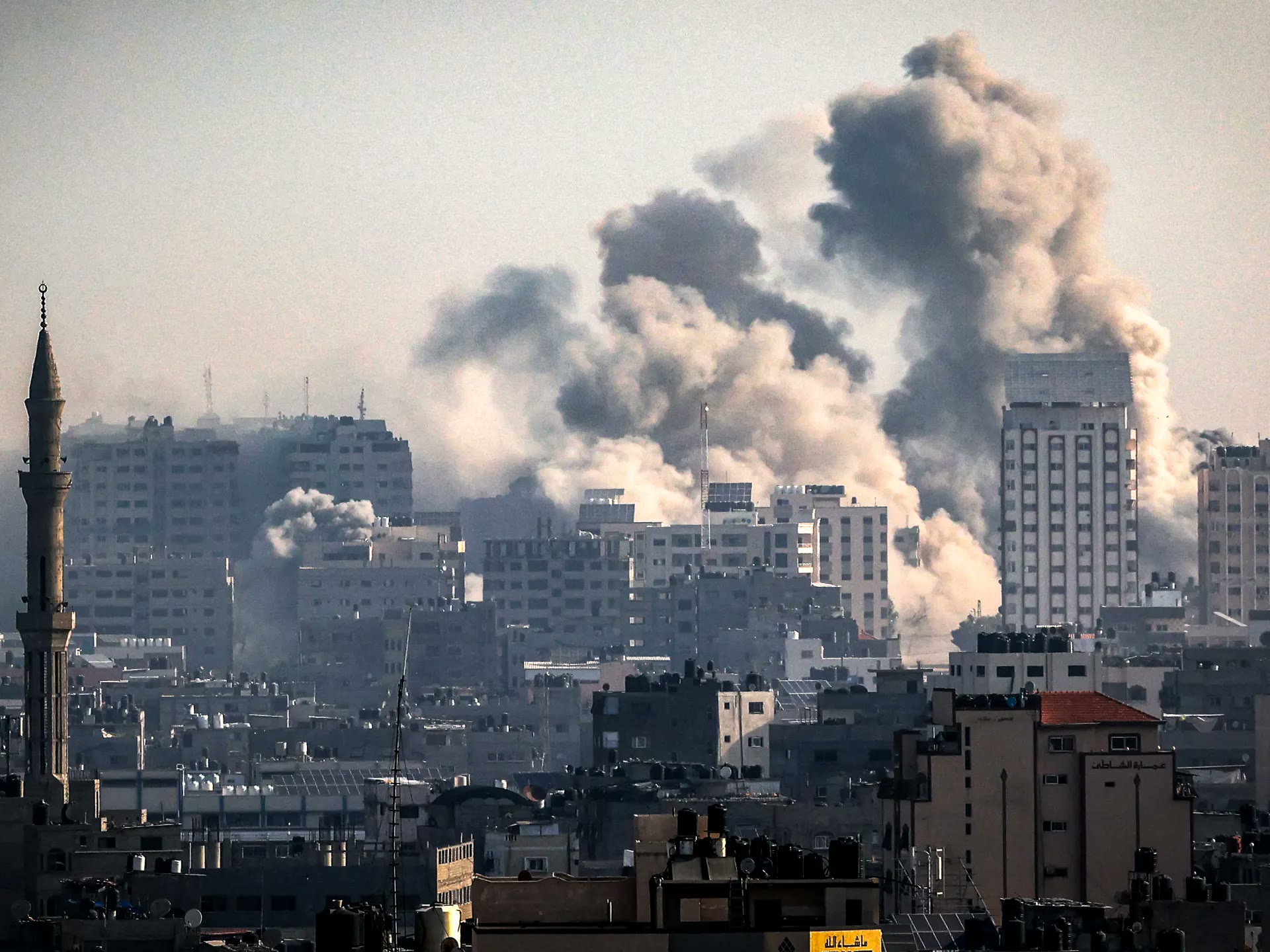
Naeem Abu Nahel, the director of Hamas's internal security apparatus in Gaza, was killed in an Israeli airstrike in western Gaza City on Tuesday, in the latest targeted killing of a senior Hamas figure despite a ceasefire that has formally been in place for more than a year.
Abu Nahel, a brigadier general also known as Naim Muhammad Ashour Abu Nahal, was struck in the Ansar area of southwestern Gaza City, according to Palestinian officials and medics. Gaza's Hamas-run interior ministry announced his death, and the Israeli military and the Shin Bet security agency confirmed the strike in a joint statement. Prime Minister Benjamin Netanyahu and Defence Minister Israel Katz later confirmed the killing themselves.
The strike killed at least seven people across the Gaza Strip on Tuesday, medics and police told AFP, including two police officers. Haaretz reported at least eight people killed. Three people, including a child, were killed in a strike on a police post west of Khan Younis, according to Gaza's rescue services, and several people were in critical condition after the Gaza City strike that killed Abu Nahel, civil defence spokesman Mahmoud Bassal said.
A chief who held the job for two months
Abu Nahel had led Hamas's internal security apparatus for only about two months. He took over in September after his predecessor, Muein al-Arabid, was captured by Israeli forces in Gaza City — a detail Netanyahu and Katz underlined in their joint statement, noting that Abu Nahel was killed after "his predecessor in the position was captured by our forces in a daring operation three months ago."
It is a short tenure that fits a pattern. Abu Nahel was a founding member of the internal security apparatus and had previously served as its deputy head, according to The Times of Israel. Palestinian media cited by Ynet reported that he had been accused by Fatah of involvement in torture and killings. His rapid rise to the top job — and his rapid death in it — shows how quickly Israel is working through Hamas's command structure, even in roles that sit far from the battlefield.
The Israeli military published footage of the strike, showing Abu Nahel being targeted as he walked down a street. The same tactic — a drone strike on a senior figure on foot, filmed and released — was used earlier this month against Hamas's Rafah Brigade commander, as reported in Hamas Rafah Brigade Commander Samir Abu Younis Killed in Israeli Strike in Southern Gaza. Abu Younis, too, had held his post for only about two months after his predecessor was killed.
What the internal security apparatus actually does
Most reporting on Tuesday's strike described Abu Nahel's title and moved on. But the internal security apparatus is one of the most consequential — and least understood — parts of Hamas's organisation, and that is precisely why its chief was a target.
The apparatus is responsible for counterespionage, for protecting senior Hamas officials and vital facilities, and for investigations relating to Gaza's security and public order, according to Haaretz. In practice, that makes it the body that guards Hamas's leadership against infiltration and assassination, and the body that polices dissent inside Gaza. Its chief holds the files on who talks to whom — including, reportedly, information on suspected collaborators with Israel.
The Israeli military said Abu Nahel had been "advancing attacks on Israeli troops and civilians" and working to restore Hamas's capabilities "while systematically violating the ceasefire," and that his killing "deals a blow to the apparatus's management capabilities." The framing matters: Israel is presenting the strike not as a breach of the truce but as enforcement of it — the removal of a man it says was using the ceasefire to rebuild.
Hamas has not yet announced a successor. Whoever takes the job will inherit an apparatus whose last two leaders were captured and killed within three months of each other, and a role that now appears to carry one of the shortest life expectancies in the organisation.
A ceasefire that keeps absorbing killings
The strike lands on a ceasefire that has been in effect since October 2025, after two years of war triggered by the October 7, 2023 attack on Israel. Both sides have accused each other of violating the agreement ever since, and the truce has been punctuated by Israeli strikes on senior Hamas figures, by ground operations inside Gaza, and by accusations that Hamas is rebuilding its forces.
The pattern was visible only weeks ago, when Israeli tanks pushed into central Gaza in what the military described as operations against Hamas infrastructure, as reported in Israel Launches Ground Operation in Central Gaza as Ceasefire Strains. Tuesday's killing fits the same logic: a war that is formally paused but in which senior commanders are still being hunted, and in which each strike is justified as a response to the other side's violations.
For Gazans, the distinction between a paused war and a slow-burning one has become hard to draw. The ceasefire has not stopped the deaths — Tuesday's toll included police officers and a child killed far from the strike on Abu Nahel — and each high-profile killing raises the same question about how much more the truce can absorb before it collapses outright. The broader picture, a year into the truce, remains one of promises unkept, as reported in Gaza Ceasefire, One Year On: Promises Unfulfilled.
What happens next
The immediate question is who Hamas appoints to replace Abu Nahel, and whether the next chief survives any longer than the last two. The deeper question is whether the ceasefire can survive a campaign of targeted killings that neither side is willing to call a resumption of war.
Hamas has so far not announced retaliation for Tuesday's strike, and the ceasefire remains formally in place. But with the internal security apparatus now leaderless for the second time in three months, and with Israel signalling that it will continue to strike figures it accuses of rebuilding Hamas's capabilities, the truce's survival depends on both sides continuing to treat assassinations as something other than war. That fiction is wearing thinner with every strike.
Frequently Asked Questions
Who was Naeem Abu Nahel?
Naeem Abu Nahel — also spelled Naim Muhammad Ashour Abu Nahal — was a brigadier general and the director of Hamas's internal security apparatus in Gaza. He was a founding member of the apparatus and had served as its deputy head before taking over as chief in September 2026, after his predecessor, Muein al-Arabid, was captured by Israeli forces.
How was he killed?
He was killed in an Israeli airstrike on Tuesday, November 24, 2026, in the Ansar area of southwestern Gaza City. The Israeli military and the Shin Bet security agency confirmed the strike and published footage showing him being targeted as he walked down a street.
How many people were killed in Tuesday's strikes?
Medics and police told AFP that Israeli strikes killed seven people across Gaza on Tuesday, including Abu Nahel and two police officers. Haaretz reported at least eight killed, including three people — among them a child — in a strike on a police post west of Khan Younis.
What does Hamas's internal security apparatus do?
The apparatus handles counterespionage, protects senior Hamas officials and vital facilities, and investigates matters relating to Gaza's security and public order. It is the body that guards Hamas's leadership against infiltration and polices dissent inside the territory.
Is there still a ceasefire in Gaza?
A ceasefire has formally been in effect since October 2025. Both Israel and Hamas have accused each other of violating it, and Israeli strikes on senior Hamas figures have continued throughout the truce. The ceasefire remains formally in place despite Tuesday's killing.