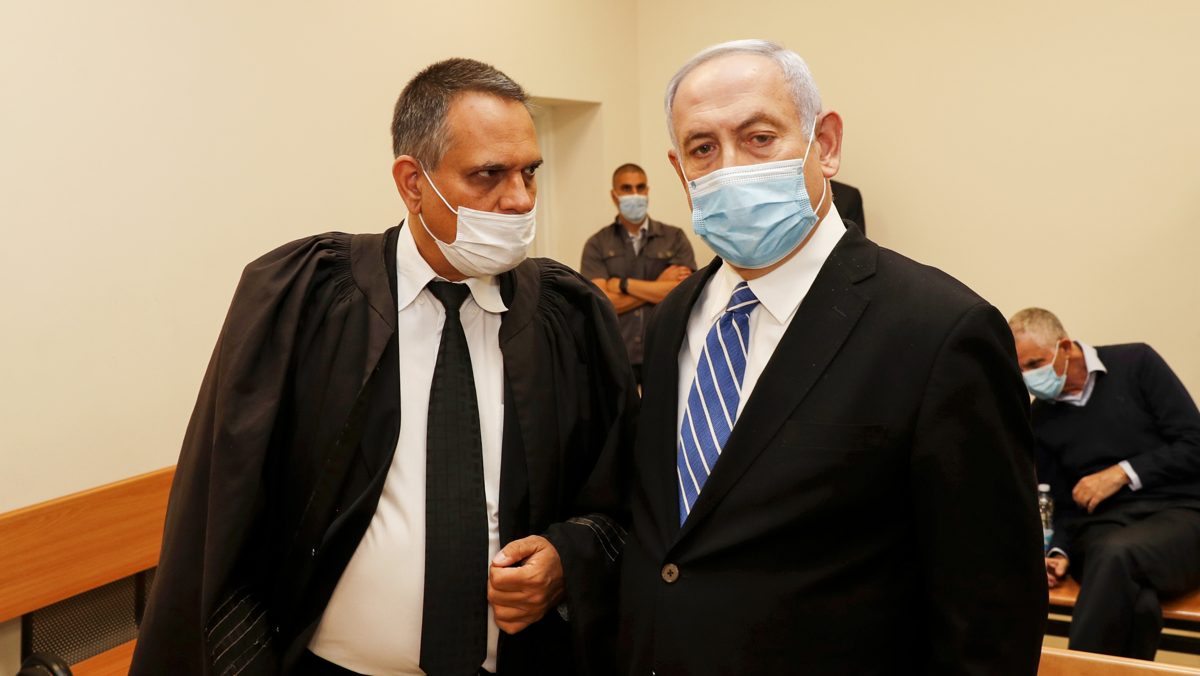
After more than six years in the dock, Benjamin Netanyahu may be closer than ever to walking away from his corruption trial. On Wednesday, the three judges hearing the case told prosecutors they should drop the most serious charge against him — bribery — reconsider a second case and settle the third through an agreement. Hours later, the caretaker prime minister stood before the cameras and declared the trial over in all but name. "Today, the trial fell apart," he said. "This trial must end immediately." Al Jazeera
The hearing in the Jerusalem District Court was not a verdict. The judges were careful to say their remarks reflected only their impressions so far, not a judgment, and that they had not yet heard the testimony of the other defendants. But the direction of travel was unmistakable — and everyone in the room understood it. Attorney-General Gali Baharav-Miara, who does not normally attend the trial, had been summoned by the court to hear the recommendations in person.
What the judges said
The panel — Judge Rivka Friedman-Feldman, Judge Moshe Bar-Am and Judge Oded Shaham — addressed each of the three cases in turn, and their assessment was bleak for the prosecution on almost every front.
In Case 4000, the most serious of the three, Netanyahu is accused of bribery, fraud and breach of trust. Prosecutors allege he granted regulatory benefits worth more than 1 billion shekels — roughly $300 million — to his friend Shaul Elovitch, whose telecommunications company Bezeq owned the Walla news website, in exchange for favourable coverage. Friedman-Feldman told the court the bribery charge presented "considerable difficulties" and that there was serious doubt whether the evidence supported it. The judges indicated there was little chance of a conviction and recommended the case be dropped. CNN
In Case 2000, Netanyahu is accused of fraud and breach of trust over an alleged deal with Arnon "Noni" Mozes, owner of the Yedioth Ahronoth newspaper: favourable coverage in exchange for curbs on the rival Israel Hayom. The judges questioned whether the alleged conduct even constituted a criminal offence and recommended the case be reconsidered.
In Case 1000, the so-called gifts case, Netanyahu is accused of fraud and breach of trust over luxury gifts — cigars, champagne and jewellery — allegedly received from wealthy businessmen in exchange for favours. Here the judges saw more substance, suggesting there could be grounds for a conviction on some offence, though not necessarily breach of trust as charged. They proposed finding a procedural route to conclude the case, most likely through a negotiated agreement.
"In our view, the public interest requires a rethink," Friedman-Feldman said, according to The Jerusalem Post. The judges noted that Netanyahu had now finished testifying, bringing the proceedings to a point where a fresh assessment of how to conclude them was needed.
A trial that has shadowed a decade of Israeli politics
Netanyahu's trial opened in May 2020, but its roots run deeper. The investigations began in 2016, and the charges have hung over Israeli politics ever since — through five elections between 2019 and 2022, through the formation and collapse of governments, and through the inconclusive election of October 27, 2026, in which neither Netanyahu's bloc nor his rivals secured a majority.
That history is why Wednesday's hearing matters far beyond the courtroom. Netanyahu, Israel's longest-serving prime minister, has spent a decade insisting the cases were fabricated as part of a political plot to remove him from power. "Ten years ago, I said, 'There will be nothing because there was nothing.' But it took 10 years for this truth to be revealed to everyone," he said in his televised address on Wednesday evening. He also claimed the trial had "tore the people apart", blaming it for the hatred, incitement and division in Israeli society — and for the cycle of repeat elections that paralysed the country's politics for years. The Times of Israel
His allies were quick to celebrate. Defence Minister Israel Katz, a close Netanyahu ally, said in a statement that "after years of persecution against Prime Minister Benjamin Netanyahu, the time has come to put an end to a trial that was tainted from the outset, divides Israeli society, and exacts a heavy price from the country."
The judges have signalled their doubts before. In June 2023, and again in June 2026, they recommended that prosecutors drop the bribery count in Case 4000. What changed on Wednesday is the scope: the panel's doubts now extend across all three cases, and they were delivered with the attorney-general present in the courtroom.
The political stakes
The timing could hardly be more charged. Israel is in the middle of coalition negotiations after last month's inconclusive election. Netanyahu's main rival, former military chief Gadi Eisenkot, has been tasked with forming a government, and Netanyahu himself has been appealing for a unity government with the opposition. Read more: Herzog picks Eisenkot over Netanyahu to form government
If Netanyahu is no longer prime minister, he loses a layer of political leverage that has helped him manage the legal threat. A criminal conviction — or even a plea agreement carrying a finding of moral turpitude — could end his political career. Conversely, the collapse of the trial would remove the single greatest obstacle to his remaining at the centre of Israeli politics, and it would strengthen his hand in the coalition talks now under way. The judges did not link their proposals to those negotiations, but the prospect of a deal ending the trial now carries obvious political significance. Read more: Netanyahu urges Eisenkot to join unity government
That is also why the attorney-general's response matters so much. Baharav-Miara told the court she would "carefully review" the judges' recommendations with her team, and outlined the two ways the case can end: a verdict, or "an appropriate plea agreement that reflects the nature of the acts and offenses". She added that a deal was "the quickest route, and it is open to us at any stage."
Netanyahu's lawyer, Amit Hadad, called for criminal mediation — closed-door talks with the attorney-general at the courthouse to discuss a possible agreement.
What happens next
Several practical constraints will shape the coming months. The panel's presiding judge, Friedman-Feldman, is due to retire in March 2028, and with defence testimony still under way, time is needed for closing arguments and the writing of any verdict — adding urgency to the effort to bring the proceedings to a conclusion. The judges also stressed that their comments concerned Netanyahu alone, since they have not yet heard the other defendants' testimony — Elovitch and his wife Iris in Case 4000, and Mozes in Case 2000.
For the prosecution, the options are narrowing. It can accept the judges' invitation and drop or settle the cases, fight on through a verdict that the bench has now signalled would be difficult to win, or negotiate a plea agreement — the path both the judges and the attorney-general appear to be pointing toward. Any agreement would likely involve Netanyahu admitting to a lesser offence, and the question of whether it carries a finding of moral turpitude — which would bar him from public office for seven years — would be central to the negotiation.
What is already clear is that the trial that has defined Israeli politics for a decade is entering its endgame. Whether it ends with a dropped case, a negotiated deal or a verdict, the outcome will shape not only Netanyahu's future but the government that emerges from the current coalition talks — and the country that has lived under the shadow of the proceedings for ten years. Read more: Israel election ends in deadlock with no majority for either bloc
Frequently Asked Questions
What are the three cases against Benjamin Netanyahu?
Case 4000 accuses Netanyahu of bribery, fraud and breach of trust over alleged regulatory favours for Bezeq owner Shaul Elovitch in exchange for favourable coverage on the Walla news site. Case 2000 alleges fraud and breach of trust over a deal with Yedioth Ahronoth owner Noni Mozes. Case 1000, the gifts case, alleges fraud and breach of trust over luxury gifts from wealthy businessmen.
What did the judges recommend on November 25, 2026?
The Jerusalem District Court panel recommended dropping the bribery charge in Case 4000, reconsidering Case 2000 on the grounds that the alleged conduct may not constitute a crime, and resolving Case 1000 through a negotiated agreement. The judges stressed these were recommendations based on their impressions so far, not a verdict.
Has Netanyahu been convicted of anything?
No. Netanyahu has not been convicted of any offence and is presumed innocent. He has repeatedly denied all wrongdoing and described the cases as a politically motivated plot against him.
Why does the trial matter for Israel's government formation?
Netanyahu is caretaker prime minister after the inconclusive October 2026 election, while his rival Gadi Eisenkot has been tasked with forming a government. If Netanyahu loses office, he loses political leverage over his legal fate, while the collapse of the trial would strengthen his position in coalition talks.
What happens next in the trial?
Attorney-General Gali Baharav-Miara said she would review the judges' recommendations with the prosecution team. The case can end with a verdict or a plea agreement, and Netanyahu's lawyer has proposed criminal mediation. The presiding judge retires in March 2028, adding time pressure to reach a conclusion.