Ukraine insisted on Tuesday that its drone attack on Russian ships in Libyan waters at the weekend was a legitimate act of self-defence, invoking Article 51 of the United Nations Charter, after Libya's Tripoli-based government condemned the operation that sank the Russian corvette Merkury in the port of Benghazi, Reuters reported.
Foreign Minister Andrii Sybiha said both Russian naval vessels and cargo ships transporting military equipment were valid targets, and that Ukraine's right to self-defence was enshrined in the UN Charter. "We emphasize that Ukraine's actions are aimed at countering Russian armed aggression and are not intended to harm Libya or its people," he said.
The statement is Kyiv's most detailed legal defence yet of an operation that has pushed the Russia-Ukraine war into a new theatre — the southern Mediterranean — and drawn a divided Libya, two rival governments, and the United Nations into the argument over whether the strike was lawful at all.
What happened in Benghazi
On Sunday, Ukrainian forces launched seven domestically produced naval drones at the Russian corvette Merkury, moored at the naval base in Benghazi in eastern Libya, and at the cargo vessel MV Angara nearby. President Volodymyr Zelenskyy confirmed on Monday that the Merkury had sunk, a Russian Ka-27 combat helicopter aboard it had been destroyed, and the Angara had been hit. Satellite imagery showed most of the corvette capsized, with only its bow still visible above the water.
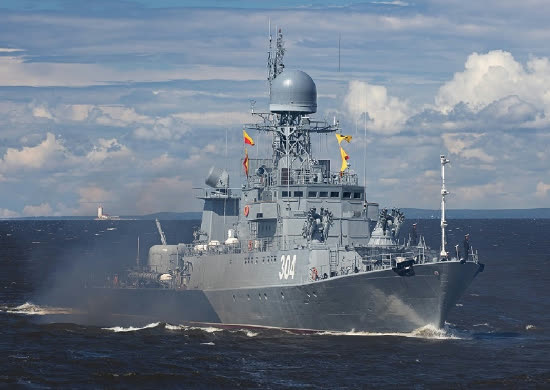
The Merkury, a Steregushchiy-class corvette commissioned in 2023 and one of the newest ships in Russia's Black Sea Fleet, had stopped in Benghazi for several days to refuel and resupply under a maritime cooperation agreement with Libya's eastern government, escorting cargo ships carrying military supplies en route to Russia, according to the Institute for the Study of War. Chronicle previously reported the sinking in detail in Ukraine sinks Russian corvette Merkury off Libya.
But the facts of the attack remain contested. Local authorities told Al Jazeera that at least 10 Libyan and Russian crew members were killed, while officials cited by the Associated Press said the Merkury was only heavily damaged — a discrepancy no independent authority has yet resolved. Zelenskyy said the drones were launched from a "mother ship" in the region; unnamed sources told AP they were launched from a military base run by Ukrainian forces in western Libya.
A divided Libya responds
The strike has exposed Libya's fracture. The Tripoli-based Government of National Unity condemned the Ukrainian operation on Monday, calling the sinking of a vessel in Libyan waters an attack on its sovereignty. The eastern government in Benghazi, which hosts the Russian ships, said its preliminary investigation indicated the naval drones were launched from western Libya and asked the United Nations to investigate allegations that Ukraine has deployed military experts there.
The UN Support Mission in Libya (UNSMIL) has called for an immediate and independent investigation into the Benghazi attacks, including the explosion on the Russian vessel and a drone strike on a Maltese-flagged ship in the same waters.
That demand places Libya — a country that is not a party to the Russia-Ukraine war — at the centre of a legal and political dispute it did not choose. Libya hosts Russian warships under a cooperation agreement with its eastern authorities, yet now finds foreign military operations conducted in its ports and waters without its consent. As Chronicle reported in its coverage of Libya's unity talks and drone attacks, the country's two rival governments already struggle to present a single position on any security question; the Merkury affair has made that split visible to the world.
The legal argument — and its limits
Sybiha's invocation of Article 51 is the sharpest part of Kyiv's case. The article preserves the right of self-defence if an armed attack occurs, and Ukraine argues that Russian warships and the cargo vessels supplying Moscow's war effort are legitimate military targets wherever they are found.
But the argument has limits that most of the fast coverage has left unexamined. Article 51 was written for attacks on a state's own territory, and strikes conducted inside a third state's waters raise questions about that state's sovereignty — questions Tripoli is now asking loudly. International lawyers will also note that the Charter's self-defence provision sits alongside the UN Security Council's authority, and that Ukraine's claim rests on its own characterisation of the Angara as a weapons carrier, a claim Moscow has not confirmed.
The precedent question matters beyond Libya. If Ukraine can lawfully strike Russian military assets in a third country's port, the same logic could extend to any harbour where Russian ships refuel — a prospect that will alarm coastal states across the Mediterranean and the Baltic alike. Moscow, for its part, has not formally responded to Kyiv's claim of responsibility, though it has previously accused Ukraine of aggression in the region; its own record of invoking self-defence to justify the 2022 invasion makes its legal standing to object a difficult one.
A campaign, not an incident
The Benghazi strike was not isolated. A day earlier, on Saturday, a drone set fire to the Russian cargo vessel Sparta II in the Gulf of Finland, and Zelenskyy confirmed in an interview published on Tuesday that Ukraine was responsible for that attack too, saying the vessel was carrying weapons and was a legitimate target. Finnish authorities led a maritime rescue operation after the ship drifted into their waters.
At least four Russian vessels have been targeted in November alone, and the pattern reaches back further: Russia said in March that Ukrainian naval drones launched from Libya attacked the Arctic Metagaz, a liquefied natural gas carrier, and the vessel later sank between Libya and Malta after catching fire. A US-sanctioned cargo ship, the Lady Maria, was targeted between Cyprus and Crete in September.
The campaign is aimed at what analysts call Russia's "shadow fleet" — the network of vessels that helps Moscow move oil and weapons around Western sanctions. Each ship struck or deterred raises insurance and shipping costs for Moscow and narrows its room to manoeuvre. The Black Sea Fleet has already lost more than 20 vessels since the invasion began, according to the Wall Street Journal, and has pulled most of its ships from Crimean bases to more distant ports. Benghazi shows that even those distant ports are no longer safe.
What comes next
Three questions now hang over the affair. First, will the UN investigation UNSMIL has demanded actually happen, and will it establish who launched the drones and from where — the fact that could settle, or inflame, the sovereignty dispute? Second, will Moscow retaliate, and how, given that it has forces on the ground in eastern Libya and a cooperation agreement with the authorities there? Russia has shown acute sensitivity to threats on its periphery, as in its recent accusation that Estonia's actions verge on triggering open war, and a response in the Mediterranean cannot be ruled out.
Third, will the campaign widen? Zelenskyy said Ukraine would "continue operations in designated waters," and the Sparta II strike in the Baltic shows the geography of the campaign is already broad. For coastal states, the message is uncomfortable: the war that began in eastern Europe now reaches their ports, and their waters can become a battlefield without their consent.
For Libya, the immediate consequence is the most concrete. A country split between two governments, already hosting foreign forces it cannot fully control, must now manage a UN investigation, a Russian demand for answers, a Ukrainian legal claim, and a wrecked warship in one of its main ports — all while insisting, as Tripoli did on Monday, that it is not a party to anyone's war.
Frequently Asked Questions
Why does Ukraine say the Libya strike was self-defence?
Foreign Minister Andrii Sybiha said Russian naval vessels and cargo ships carrying military equipment are valid targets, and that Ukraine's right to self-defence is enshrined in Article 51 of the UN Charter. Kyiv argues the Merkury and the Angara directly supported Russia's war effort, making them legitimate military targets.
What did Libya's governments say about the attack?
Tripoli's Government of National Unity condemned the operation, while the eastern government in Benghazi said its preliminary investigation suggested the drones were launched from western Libya and asked the UN to investigate allegations that Ukraine has deployed military experts there. The two responses underline Libya's political division.
What is the UN doing about the Benghazi attacks?
The UN Support Mission in Libya (UNSMIL) has called for an immediate and independent investigation into the attacks in Benghazi, including the explosion on the Russian vessel and a drone strike on a Maltese-flagged ship.
How many people were killed in the attack?
The casualty toll is disputed. Local authorities told Al Jazeera that at least 10 Libyan and Russian crew members were killed, while other reports said there were no confirmed deaths. No independent authority has verified the figures.
Was the Benghazi strike an isolated incident?
No. A day earlier, a drone struck the Russian cargo vessel Sparta II in the Gulf of Finland, an attack Zelenskyy also claimed. At least four Russian vessels have been targeted in November, as part of a Ukrainian campaign against Russian ships and the "shadow fleet" that helps Moscow evade sanctions.
What is the Merkury?
A Steregushchiy-class corvette, one of Russia's newest warships, commissioned in 2023 and assigned to the Black Sea Fleet. It was in Benghazi to refuel and resupply under a cooperation agreement with Libya's eastern government before returning to Russia, according to the Institute for the Study of War.