Seven Ukrainian sea drones crossed nearly 1,000 nautical miles of Mediterranean water, slipped into a Libyan naval base in the early hours of Sunday, and sank a modern Russian warship at its moorings. The sinking of the corvette Merkury in Benghazi — and a second Ukrainian strike the same weekend on a Russian cargo ship in the Gulf of Finland — marks the boldest expansion yet of a war that began on Ukraine's own shores and now reaches into two seas at once. Reuters
Two Libyan naval officers died on Tuesday evening from wounds sustained in the Benghazi attack, Libya's eastern military command said, and at least ten people — Libyans and Russians — were wounded. The human cost, the diplomatic fallout, and the military message are all still unfolding.
What happened in Benghazi
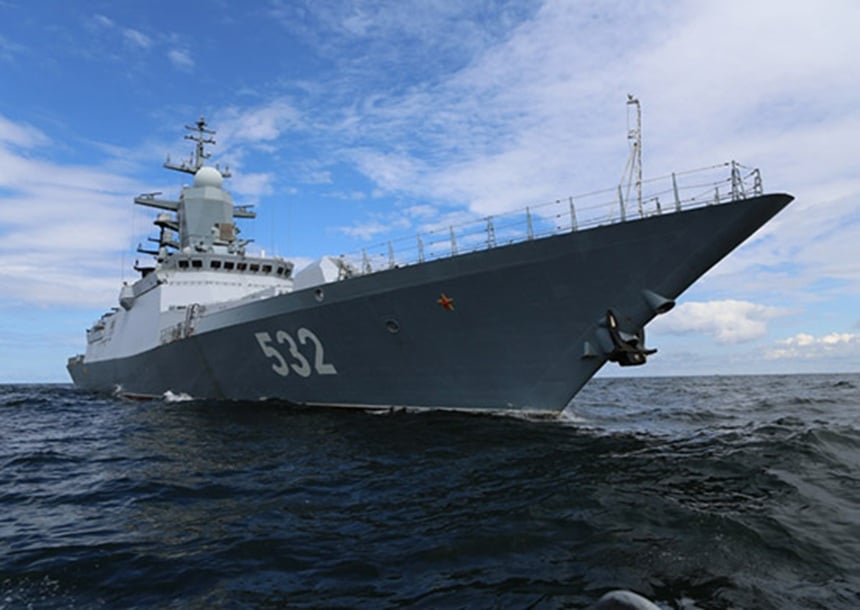
According to Ukraine's SBU security service, seven Ukrainian-built uncrewed surface vessels, launched from a "mothership," targeted two Russian vessels at the Benghazi naval base early on Sunday. The Merkury, a Steregushchy-class corvette commissioned only in 2023, was struck twice and sank against the dock; satellite images later showed it submerged and slumped beside the pier, with a Ka-27 anti-submarine helicopter destroyed aboard it. A second vessel, the cargo ship MV Angara, was disabled nearby.
Video released by President Volodymyr Zelenskyy showed a drone boat speeding toward the burning warship as a Russian missile skimmed across the water in front of it, then a fireball engulfing the dock. Libyan officials said at least four of the drones were intercepted and destroyed before two got through.
The corvette had stopped in Benghazi for several days to refuel and resupply under a cooperation agreement, according to the Institute for the Study of War, while escorting cargo ships capable of carrying military supplies to Russia. That escort role is the key to why it was targeted: the Merkury and the Angara were part of the logistics chain supplying Russia's Africa Corps, the Kremlin-controlled force operating in Libya, Mali, Sudan and the Central African Republic. The same supply network has already exacted a heavy price on Moscow's forces in the Sahel — leaked Russian records recently revealed 349 Russian fighters killed in Mali alone between 2023 and 2026. Read more: leaked records reveal 349 Russian deaths in Mali
A second strike, 2,000 miles away
The Benghazi attack was not an isolated operation. In an interview published on Tuesday, Zelenskyy confirmed that Ukraine was also behind a separate drone strike on Saturday on the Russian cargo vessel Sparta II in international waters in the Gulf of Finland. He said the ship was a legitimate target because it was carrying weapons; Russia's Transport Ministry said the damaged vessel was towed back to St. Petersburg.
Two strikes, in two seas, on the same weekend, against the same logistics network — the pattern is deliberate. Ukraine has been refining its naval drone campaign since August 2023, when its uncrewed boats hit the landing ship Olenegorsky Gornyak at Novorossiysk and the tanker Sig south of the Kerch Strait. What changed in Benghazi is the range and the audacity: an attack inside a foreign port, a thousand nautical miles from the Ukrainian coast, against a warship at anchor.
Kyiv's defence: self-defence under Article 51
Ukraine's foreign minister, Andrii Sybiha, said on Tuesday that the attack was a legitimate act of self-defence, rejecting criticism from Libya's internationally recognised government in Tripoli. Russian naval vessels and cargo ships transporting military equipment were valid targets, he argued, and Ukraine's right to self-defence was enshrined in Article 51 of the United Nations Charter — a right that applied in international waters as well.
"Ukraine respects the sovereignty and territorial integrity of Libya. We emphasize that Ukraine's actions are aimed at countering Russian armed aggression and are not intended to harm Libya or its people," Sybiha wrote. Reuters
Libya, split in two, responds in two voices
The reaction from Libya exposed the country's division. The Tripoli-based Government of National Unity condemned the operation on Monday, after the Merkury sank in the eastern port, and rejected any attempt to draw Libya into the Russia-Ukraine war.
In the east, the Libyan National Army — which controls Benghazi — announced the deaths of its two soldiers, vowed to retaliate "at the appropriate time and place, and by the appropriate means," and asked the United Nations to investigate allegations that Ukraine had deployed military experts in western Libya, where it suspects the drones were launched. An initial investigation found indications the drones were launched from a base operated by Ukrainian forces in western Libya, according to officials briefed on it. Arab News
Russia's defence minister has not commented publicly on the attack. Moscow has, however, spent the past two years building Benghazi into a logistics hub for its African operations, and the loss of a brand-new corvette there — along with the exposure of the supply route it was guarding — is a strategic blow as much as a material one.
Why this matters beyond Libya
The strike lands in a week when the contest over maritime chokepoints and supply routes is intensifying on several fronts at once. In the Red Sea, a Saudi-led coalition has been striking Houthi positions and intercepting drones over the Gulf, underscoring how vulnerable shipping lanes have become to cheap uncrewed weapons. Read more: coalition strikes on Hodeidah and the threat to Jeddah
The same logic of great-power competition is reshaping the Pacific, where Australia and Solomon Islands signed a sweeping security treaty this week in a move widely read as a counter to China. Read more: Australia's Solomon Islands treaty
Three conclusions stand out from Benghazi:
First, distance no longer protects a fleet. A navy that once had to sail to its enemy can now be struck in a third country's port by weapons launched from a mothership hundreds of miles away. The cost asymmetry — a handful of expendable drones against a corvette commissioned in 2023 — will force every navy operating far from home to rethink how it protects ships at anchor.
Second, the war's geography has changed. Ukraine is no longer fighting only to hold its own territory; it is systematically attacking the logistics that sustain Russia's operations on another continent. The Africa Corps depends on exactly the ships Ukraine is now sinking.
Third, third countries are being pulled in. Libya did not choose this fight, yet two of its officers are dead, its ports are now a theatre of the Russia-Ukraine war, and its two rival governments are blaming different parties. Tripoli's condemnation and Benghazi's threat of retaliation point in opposite directions — and neither can control what happens next in its own waters.
What to watch next
Whether Russia attempts a retaliatory strike, and where, is the immediate question. The United Nations investigation requested by Benghazi's government could establish how the drones were launched — and from where. And the fate of the Sparta II, towed back to St. Petersburg, will show whether Ukraine's two-theatre operation has permanently disrupted the Baltic leg of the same supply chain.
For now, one fact is settled: a war that began in the Black Sea has reached the Mediterranean — and it arrived by drone.
Frequently Asked Questions
What happened to the Russian corvette Merkury?
Ukrainian naval drones struck the Merkury, a Steregushchy-class corvette commissioned in 2023, while it was moored at the Benghazi naval base in eastern Libya early on Sunday. The ship was hit twice, sank against the dock, and a Ka-27 helicopter aboard it was destroyed. A second vessel, the cargo ship MV Angara, was also disabled.
Why did Ukraine attack a Russian ship in Libya?
Kyiv says the Merkury was escorting cargo ships carrying military supplies for Russia's Africa Corps, which operates in Libya, Mali, Sudan and the Central African Republic. Ukraine's foreign minister called the strike legitimate self-defence under Article 51 of the UN Charter, arguing that Russian vessels transporting military equipment are valid targets wherever they are.
Were Libyans killed in the attack?
Yes. Two Libyan naval officers died on Tuesday evening from wounds sustained in the attack, and at least ten people — including Libyans and Russians — were wounded, according to Libyan authorities.
Was there a second Ukrainian strike that weekend?
Yes. President Zelenskyy confirmed that Ukraine also struck the Russian cargo vessel Sparta II in international waters in the Gulf of Finland on Saturday, saying it was carrying weapons. The damaged ship was towed back to St. Petersburg.
How did Ukraine's drones reach Libya?
Ukraine's SBU security service said seven domestically produced sea drones were launched from a "mothership" and travelled nearly 1,000 nautical miles to Benghazi. Libyan officials say their initial investigation found indications the drones were launched from a base in western Libya.