A car bomb exploded outside the governor's office in Villavicencio late on Monday, tearing through the government complex in the Colombian city's central square and injuring dozens of people. No fatalities had been reported by Tuesday morning — but the attack, in the heart of a departmental capital, was a stark reminder that Colombia's armed groups can still strike at the state itself.
Table of contents
- The blast at Plaza Los Libertadores
- A casualty count that does not yet agree
- The president blames drug traffickers
- Why Meta matters
- A region under pressure
- Key takeaways
- Frequently Asked Questions
- Sources
- Read more
The blast at Plaza Los Libertadores
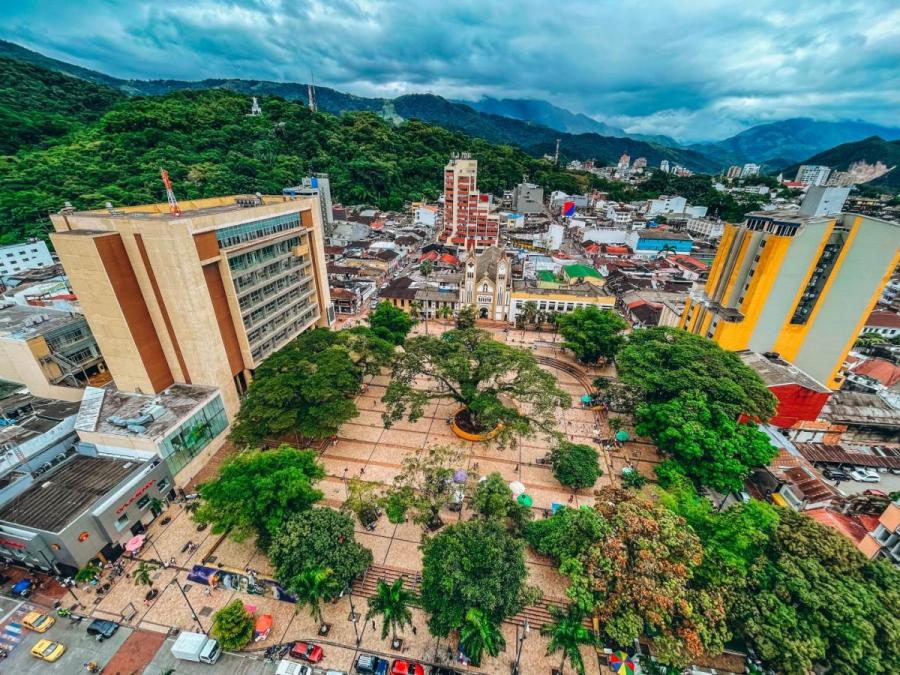
The explosion struck late on Monday evening at the government complex in Villavicencio's central park, Plaza Los Libertadores, the capital of the Meta department southeast of Bogotá. According to Al Jazeera, the blast caused extensive damage to the governor's office and nearby buildings. Malay Mail, citing AFP journalists at the scene, reported a large crater at the site and residents sheltering in streets strewn with rubble and wreckage.
The damage radius was wide. Villavicencio's security adviser, Colonel Germán Ayala, told Blu Radio that the blast wave caused material damage within a perimeter of about 500 metres, seriously damaging the façade and windows of the departmental government building and nearby structures, and completely destroying two commercial establishments — among them a two-storey café that collapsed — and at least three vehicles, according to Demócrata, citing El Tiempo.
A casualty count that does not yet agree
One of the most striking features of the first hours after the attack is how widely the reported casualty figures diverge — a common pattern in the chaotic aftermath of a bombing, and a reason to treat any single number with caution.
Xinhua, citing the National Police, reported at least 19 people wounded, with no fatalities. NewsBytes put the figure at 23 injured, including a minor. Other outlets, citing local authorities, reported 12 injured. Several international wires described the toll simply as "dozens". What the reports agree on: five security guards working at the government headquarters were among the injured, and as of Tuesday morning no deaths had been reported. Most of the injured were members of the building's security staff, and early reports indicated none had life-threatening injuries.
The discrepancy is not unusual — hospitals, police and local officials count at different speeds, and some counts include people treated for shock or minor cuts at the scene. The figure that matters most, for now, is the one every source shares: nobody was killed.
The president blames drug traffickers
President Abelardo de la Espriella confirmed the explosion on social media within hours, writing: "They have just carried out a bombing attack on the Meta Governor's Office." He added, "Thanks be to God, so far there are no reported fatalities in the terrorist attack perpetrated in Villavicencio," and warned that those responsible would be held accountable.
De la Espriella blamed drug trafficking groups, which he described as "narcoterrorists" — but he did not name a specific organisation, and no group had claimed responsibility by Tuesday morning. Meta Governor Rafaela Cortes said she was coordinating emergency and security measures with the army and police.
The absence of a named suspect is significant. In Colombia, car bombs against state targets have historically been the work of guerrilla groups, dissident factions or drug cartels — and attributing an attack before an investigation concludes is politically loaded. The president's framing points squarely at the drug trade, and away from the country's remaining insurgencies.
Why Meta matters
Meta is not a peripheral department. Villavicencio is the gateway to the Llanos Orientales, the vast eastern plains, and the department sits on corridors used to move cocaine, cattle, fuel and contraband between Colombia's interior, Venezuela and Brazil. Control of those routes is worth killing for — and the state has never fully held the territory.
That geography explains the target. A car bomb at the governor's office is not an attack on a remote outpost; it is a message delivered in the centre of the department's capital, in front of the building that symbolises the state's authority in Meta. The choice of Plaza Los Libertadores — a public square, in the evening, with civilians around — also fits a pattern of attacks designed for maximum visibility as much as maximum damage.
Colombia's armed conflict has lasted more than six decades, and while the FARC demobilised in 2016, the violence never ended — it fragmented. The ELN, the country's largest remaining rebel group, continues to fight over drug routes and illegal mines, and Colombian courts are still handing down sentences for its crimes, including the recent sentencing of 11 ELN commanders for recruiting child soldiers. Dissident FARC factions and criminal gangs contest the same territory.
A region under pressure
The bombing also lands in a wider regional moment. Just days earlier, Mexican special forces captured Fausto Isidro Meza Flores, known as "El Chapo Isidro" — one of the FBI's ten most wanted fugitives — in a raid in Sinaloa that left 11 people dead. That operation, carried out with US intelligence support, was the latest in a series of high-profile blows against cartel leadership across Latin America. Read more in our coverage of the capture of El Chapo Isidro in Mexico.
The pressure on trafficking organisations has a predictable corollary: groups under attack often answer with spectacular violence, and state buildings are the most symbolic targets available. Whether the Villavicencio bombing is retaliation, a territorial warning, or something else entirely, investigators have not yet said. What is clear is that the drug war's front line runs through city centres, not just jungle camps — and that civilians in places like Villavicencio are the ones who live on it.
For now, the immediate questions are practical: who planted the bomb, how it reached the heart of the city undetected, and whether more attacks are planned. The crater in Plaza Los Libertadores will be repaired. The answers may take much longer.
Key takeaways
- The attack: a car bomb detonated late on Monday, November 23, outside the Meta governor's office at Plaza Los Libertadores in central Villavicencio, Colombia.
- The toll: casualty reports conflict — 12, 19 and 23 injured have all been reported, with several outlets saying "dozens". Five security guards were among the injured; no deaths were reported as of Tuesday morning.
- The damage: the governor's office façade was destroyed, buildings within about 500 metres were damaged, a two-storey café collapsed, and at least three vehicles were destroyed. A large crater was left at the site.
- The blame: President Abelardo de la Espriella blamed drug trafficking groups, calling them "narcoterrorists", but named no specific organisation. No group has claimed responsibility.
- The context: Meta is a strategic corridor for drug trafficking routes in eastern Colombia; the attack comes days after Mexico captured the cartel boss known as "El Chapo Isidro" with US intelligence support.
Frequently Asked Questions
Where exactly did the car bomb explode in Villavicencio?
The bomb detonated outside the Meta department governor's office at Plaza Los Libertadores, the central square in downtown Villavicencio, the capital of Meta department in central Colombia, southeast of Bogotá.
How many people were injured in the Villavicencio car bomb?
Reports conflict: Xinhua, citing police, reported at least 19 wounded; other outlets reported 12 or 23 injured, and several described the toll as "dozens". Five security guards at the government headquarters were among the injured. No fatalities had been reported as of Tuesday morning, November 24.
Who is blamed for the bombing?
President Abelardo de la Espriella blamed drug trafficking groups, describing them as "narcoterrorists", but did not name a specific organisation, and no group had claimed responsibility by Tuesday morning.
Why is the Meta department significant?
Meta is the gateway to Colombia's eastern plains and sits on trafficking corridors used to move cocaine and contraband between the interior, Venezuela and Brazil. Control of those routes is contested by the ELN, dissident FARC factions and criminal gangs.
Has Colombia seen attacks like this before?
Yes. Car bombs against state targets have a long history in Colombia's six-decade armed conflict. Although the FARC demobilised in 2016, the ELN and other armed groups continue to fight over drug routes, extortion and illegal mining in areas where the state has limited presence.
Sources
- Al Jazeera — "Car bomb strikes governor's office in Meta, Colombia" (November 24, 2026).
- Xinhua — "19 wounded in central Colombia bomb attack" (November 24, 2026).
- Malay Mail / AFP — "Car bomb destroys governor's office in Colombia's Villavicencio, president vows to hunt down 'narco-terrorists'" (November 24, 2026).
- Demócrata — "Bomb car at the Governor's Office of Meta leaves twelve injured" (November 24, 2026).
Read more
- Colombia Sentences 11 ELN Commanders to Up to 20 Years for Recruiting Child Soldiers — the ELN's crimes and the war that reinvented itself after the FARC peace deal.
- Mexico Captures FBI Most-Wanted Cartel Boss 'El Chapo Isidro' in Sinaloa Raid — the high-profile cartel arrest days before the Villavicencio bombing.