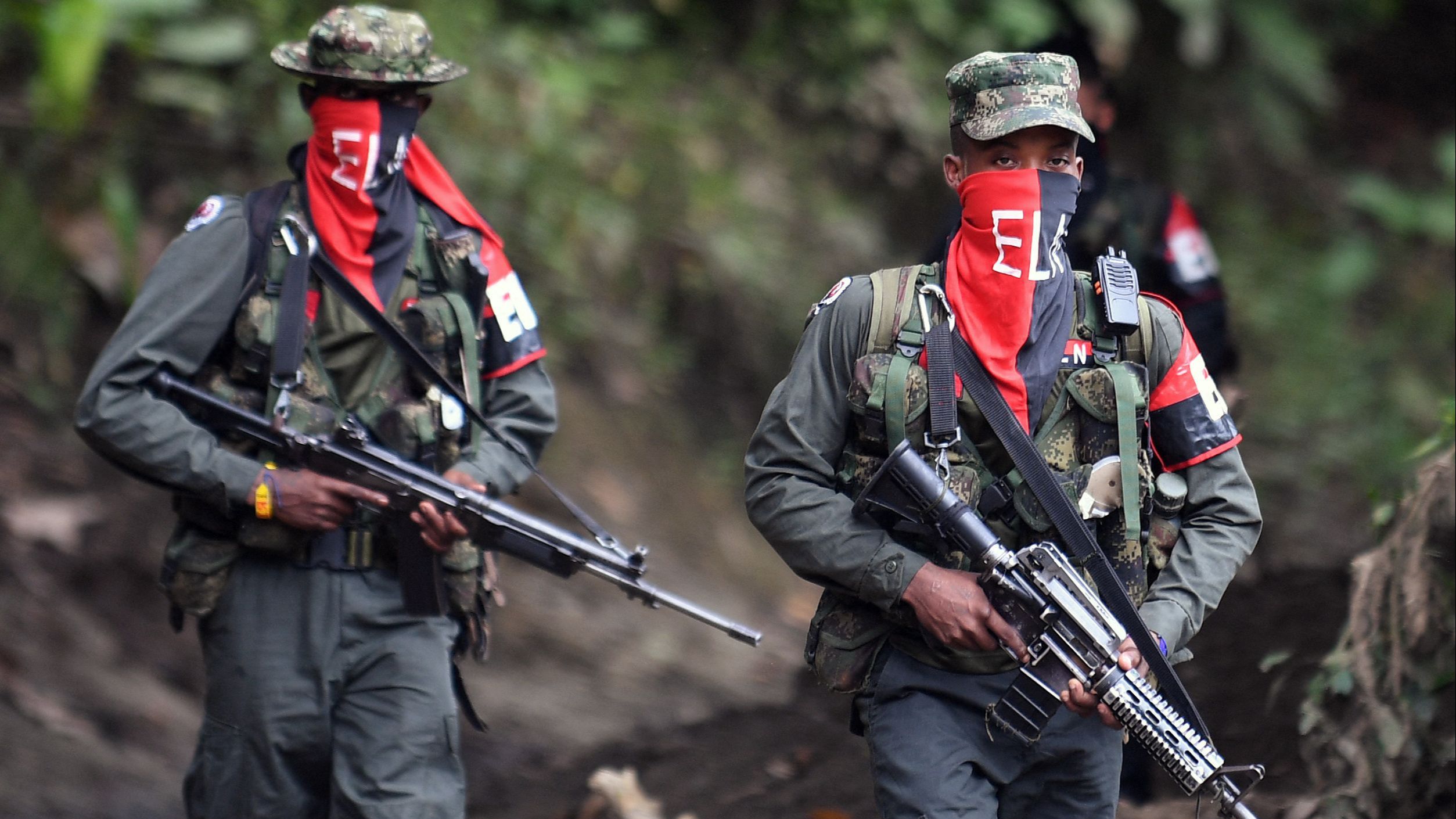
A Colombian judge has sentenced 11 commanders of the National Liberation Army (ELN) to prison in absentia for recruiting 60 children as young as eight into their ranks between 2004 and 2018. The verdict, handed down on Monday, closes one of the most significant cases on child recruitment in Colombia's six-decade armed conflict — and underlines how much the war has changed, and how much it hasn't.
Table of contents
- The verdict: 20 years for the ELN's top command
- What the children endured
- Tried in absentia: justice without defendants
- The peace talks that collapsed
- A war that reinvented itself
- Key takeaways
- Sources
- Read more
The verdict: 20 years for the ELN's top command
According to the Associated Press, the special criminal court in Antioquia found the ELN commanders guilty of recruiting boys and girls between the ages of 8 and 17 across five departments: Antioquia, Bolívar, Chocó, Risaralda and Valle del Cauca. Sentences ranged from 11 years to 20 years in prison, with the group's most senior figures — Nicolás Rodríguez Bautista, alias "Gabino"; Eliécer Herlindo Chamorro Acosta, alias "Antonio García"; Israel Ramírez Pineda, alias "Pablo Beltrán"; and Gustavo Aníbal Giraldo Quinchía, alias "Pablito" — receiving 20 years and four months.
The judgment arrived with a stark asymmetry: the court spoke at length about the victims, while none of the convicted commanders were in the courtroom. Because they have never been captured by Colombia's government, the trial was conducted in absentia — a legal format that punishes without imprisoning.
What the children endured
Prosecutors documented what "recruitment" actually meant for the 60 minors. Once taken, the children were put to guard duty, cooking, patrolling, carrying firewood and performing heavy labor. Some became radio operators; others were sent into combat, collected extortion payments or planted explosives.
The indictment also detailed systematic violence: punishment, armed training, threats, injuries — and sexual abuse. Prosecutors said that some of the girls among the recruited children were sexually assaulted. Three of the minors died while serving in the ELN.
The United Nations described the ruling as an important step in the global fight against the use of child soldiers, underlining the significance of holding commanders personally accountable for crimes against children. Human rights groups have long warned that the recruitment of minors by armed groups and criminal gangs remains one of Colombia's most persistent — and least visible — humanitarian problems.
Tried in absentia: justice without defendants
The absentia format reflects Colombia's hard reality: the convicted men are still at large. One of them, Israel Ramírez Pineda — better known as "Pablo Beltrán" — now lives in Cuba and recently led an ELN delegation in peace talks with the Colombian government. The image of a man negotiating peace at the table while a court sentences him to two decades behind bars captures the contradictions of Colombia's war.
Trials in absentia are controversial: they satisfy the formal demand for justice but cannot deliver its physical form. Their power lies elsewhere — in freezing suspects' assets, in limiting their travel, in converting moral condemnation into legal fact. For the 60 victims, the court's recognition may be the closest thing to accountability they will ever receive.
The peace talks that collapsed
The sentences land on a fragile political moment. The Colombian government canceled its peace negotiations with the ELN last year after the group staged a series of attacks in the northeastern Catatumbo region in which at least 80 people were killed. The ELN is now the country's largest remaining rebel group — the Revolutionary Armed Forces of Colombia (FARC), once far larger, laid down its weapons in 2016, when nearly 14,000 fighters demobilized under a peace deal.
That deal was supposed to end the war. Instead, the war mutated. The ELN, along with dissident FARC factions and criminal gangs, has fought to seize control of drug trafficking routes, extortion rackets and illegal mines abandoned by the FARC — precisely in rural areas where the Colombian state has little presence.
A war that reinvented itself
The most sobering detail in the prosecutors' case may be the dates: 2004 to 2018. The crimes predate the FARC peace deal, but the practice continues. Human rights organizations report that armed groups are now using social media to lure young people into their ranks — the same platforms Colombian teenagers use for school and entertainment, repurposed as recruitment tools.
Colombia's conflict has lasted more than 60 years. It began as an ideological insurgency and has become a criminal economy wrapped in revolutionary rhetoric. The court's ruling in Antioquia does not change that structure — but it does something rarer: it names the people at the top, assigns them numbers in years, and writes the children's suffering into the public record.
Key takeaways
- The sentence: 11 ELN commanders sentenced in absentia to 11–20 years in prison for recruiting 60 children aged 8–17 between 2004 and 2018.
- The top tier: Gabino, Antonio García, Pablo Beltrán and Pablito received 20 years and four months; Beltrán now lives in Cuba and recently led ELN peace negotiators.
- The victims' ordeal: forced into guard duty, combat, extortion collection and bomb planting; some girls were sexually abused; three children died in ELN service.
- The context: peace talks with the ELN were canceled last year after Catatumbo attacks killed at least 80; the FARC demobilized in 2016, but violence has resurfaced where the state is absent.
- The ongoing threat: armed groups now use social media to recruit youth, and the UN has welcomed the verdict as a milestone in the fight against child soldiers.
Sources
- Associated Press — "Colombia issues lengthy sentences against ELN rebel leaders for recruiting children" (September 28, 2026).
- Focus Noticias (Colombia) — details of the ruling by the Antioquia special criminal court against the ELN's Central Command leadership.
Read more
- Tigray Offensive: Mekelle Under Pressure as Ethiopia–Eritrea Rupture Deepens ——armed conflict and civilian suffering in the Horn of Africa.
- Yemen's Taiz Escalation and the Red Sea Flashpoint ——another long war, another civilian cost.