The Trump administration approved the sale of nearly 900,000 advanced artificial-intelligence chips made by Nvidia and AMD to Chinese companies over a six-month period, the US House Foreign Affairs Committee revealed on Thursday — a disclosure that lays bare the scale of America's AI hardware trade with its chief technological rival, even as Washington tightens the screws on Beijing. The Commerce Department signed off on 879,000 chips between December 2025 and May 2026, including 150,000 for Tencent, 75,000 for Alibaba, 43,000 for Baidu and 4,000 for the electric-vehicle maker BYD, according to Reuters.
The release is extraordinary for a subject Washington normally guards closely. Committee chair Brian Mast, a Republican from Florida, said he had "exercised his authorities under the Export Control Reform Act to publicly reveal export control license application information regarding NVIDIA and AMD's AI chip licenses for the People's Republic of China". He called it "the most detailed public disclosure in the history of the Export Control Reform Act", the 2018 law that expanded the Commerce Department's power to restrict sensitive technology on national-security grounds.
What the numbers actually show
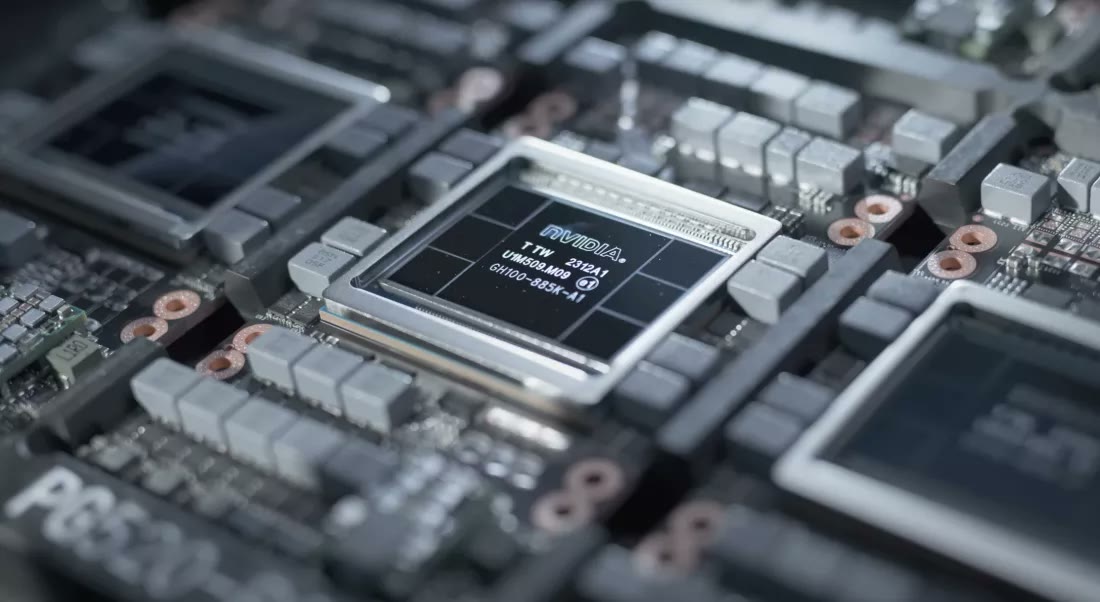
The headline figure needs careful reading. Companies had sought permission to ship more than 3.4 million AI chips to China during the six-month window; the Commerce Department's Bureau of Industry and Security (BIS) approved roughly a quarter of them. The approvals covered Nvidia's H200 and AMD's equivalent MI325X — powerful data-centre accelerators designed to sit just inside the performance limits of US export rules, after earlier, faster chips were banned outright.
But an approval is not a shipment. It remains unclear how many of the 879,000 licensed chips actually reached China. In May, Reuters reported that the US had cleared about 10 companies to buy the H200 but that no deliveries had taken place. When a senior Commerce official, Jeffrey Kessler, testified before the committee in July, he said shipments had begun but there had been "very few". That gap — between a large approval number and a small number of actual deliveries — is the central unanswered question in the disclosure, and it is the figure the committee's release does not resolve.
Nvidia, for its part, stressed the limits. The company said the approvals were "subject to strict conditions and limited volumes" and added that "despite receiving some licenses, we have since stopped shipping H200s to China". AMD said it "complies with applicable US export control laws and regulations and maintains rigorous processes to ensure compliance across our global operations", according to Al Jazeera.
The Pentagon list — and why the buyers matter
What makes the disclosure politically charged is not only the volume, but the identity of the buyers. All four companies named in the committee's figures — Alibaba, Tencent, Baidu and BYD — sit on the Pentagon's list of alleged Chinese military-backed companies, a designation the US Department of War uses for firms it says operate with links to China's armed forces. Inclusion on that list does not by itself ban a company from buying American technology, but it signals that Washington's own defence establishment considers these firms part of China's military-industrial ecosystem.
That distinction is precisely what critics of the approvals are seizing on. For years, the argument for export controls has been that advanced AI chips are dual-use: the same processors that train chatbots and recommendation engines can also train military AI, run surveillance systems and model weapons. Approving hundreds of thousands of them for companies the Pentagon itself flags as military-linked, critics say, undercuts the logic of the control regime — even if the chips involved are deliberately downgraded versions of Nvidia's most powerful hardware.
Why the data was released now
The timing of the release is no accident. It comes as the Trump administration faces intensified scrutiny over revelations about former Nvidia chief executive Jensen Huang's affair with an alleged Chinese spy — a scandal that has already cost Huang his job and fuelled renewed calls in Washington for a tougher stance on China. Huang has since agreed to testify before Congress about the affair, and the episode has turned Nvidia's China business into a live political issue rather than a trade-policy abstraction.
The disclosure also lands in the same week that Presidents Trump, Xi Jinping and Vladimir Putin held their unprecedented trilateral summit in Shenzhen, where the three leaders issued a joint declaration on nuclear risks and global stability. The juxtaposition captures the contradiction at the heart of US China policy in 2026: high-level diplomacy and trade engagement running alongside an escalating technology war in which the same administration approves, restricts and debates chip sales almost simultaneously.
The committee's move also reflects a longer-running frustration in Congress that licensing decisions have been made behind closed doors. By publishing the data, Mast has effectively invited the public — and Beijing — to judge the administration's record for themselves. It is a precedent other committees may now follow, and it makes future licensing decisions harder to keep quiet.
The wider export-control puzzle
The H200 approvals sit inside a control regime that has been tightened, loosened and re-tightened repeatedly. Washington has moved to block remote access to AI chips in China, closing a loophole that let Chinese firms use American hardware from afar, while Beijing has answered with its own export controls on AI models, chips and agents. Each side is trying to slow the other's AI development while protecting its own industry's revenues — Nvidia alone sells billions of dollars of hardware in China, and a full ban would cost it one of its largest markets.
That tension explains the pattern the committee's data reveals: an administration that talks tough on China while its Commerce Department keeps approving large volumes of licences, and a Congress that responds by dragging the numbers into the open. The 879,000 approvals are, in that sense, less a verdict than a starting point for a debate that is only just beginning — over how many chips were actually delivered, what they are being used for, and whether the line between commercial AI and military AI can still be drawn at all.
What happens next
The immediate question is whether the disclosure triggers new restrictions. Lawmakers who favour a harder line are likely to press for a lower approval rate, or for a ban on sales to Pentagon-listed companies altogether. The administration, meanwhile, must decide whether to defend the licences as carefully conditioned and limited — as Nvidia has argued — or to quietly tighten the tap.
For the chipmakers, the stakes are commercial as well as political. Nvidia has already stopped shipping H200s to China, and the company is now led by an interim chief executive after Huang's resignation. AMD, whose MI325X was also named in the disclosure, faces the same uncertainty. And for Beijing, the data confirms what it has long suspected: that even at the height of the tech war, American hardware keeps flowing — in large numbers, through official channels, with Washington's own stamp of approval.
Frequently Asked Questions
How many AI chips did the US approve for China?
The Commerce Department approved exports of 879,000 advanced AI chips made by Nvidia and AMD for Chinese companies between December 2025 and May 2026, according to the House Foreign Affairs Committee. Companies had applied to ship more than 3.4 million chips in total during the period.
Which Chinese companies received the approved chips?
The committee named four: Tencent (150,000 chips), Alibaba (75,000), Baidu (43,000) and BYD (4,000). All four are on the Pentagon's list of alleged Chinese military-backed companies.
Which chips were involved?
The approvals covered Nvidia's H200 and AMD's MI325X — powerful data-centre AI accelerators designed to comply with US export-performance limits, after faster chips were banned from sale to China.
Did all 879,000 chips actually reach China?
That is unclear. The committee's data covers approvals, not deliveries. A Commerce official testified in July that shipments had begun but were "very few", and Nvidia says it has since stopped shipping H200s to China.
Why was this data made public?
Committee chair Brian Mast used his authority under the Export Control Reform Act to release the licensing information, calling it the most detailed public disclosure in the law's history. The release comes amid heightened scrutiny of Nvidia following revelations about former CEO Jensen Huang's affair with an alleged Chinese spy.
What did Nvidia and AMD say?
Nvidia said the approvals were "subject to strict conditions and limited volumes" and that it has stopped shipping H200s to China. AMD said it complies with applicable US export control laws and maintains rigorous compliance processes.