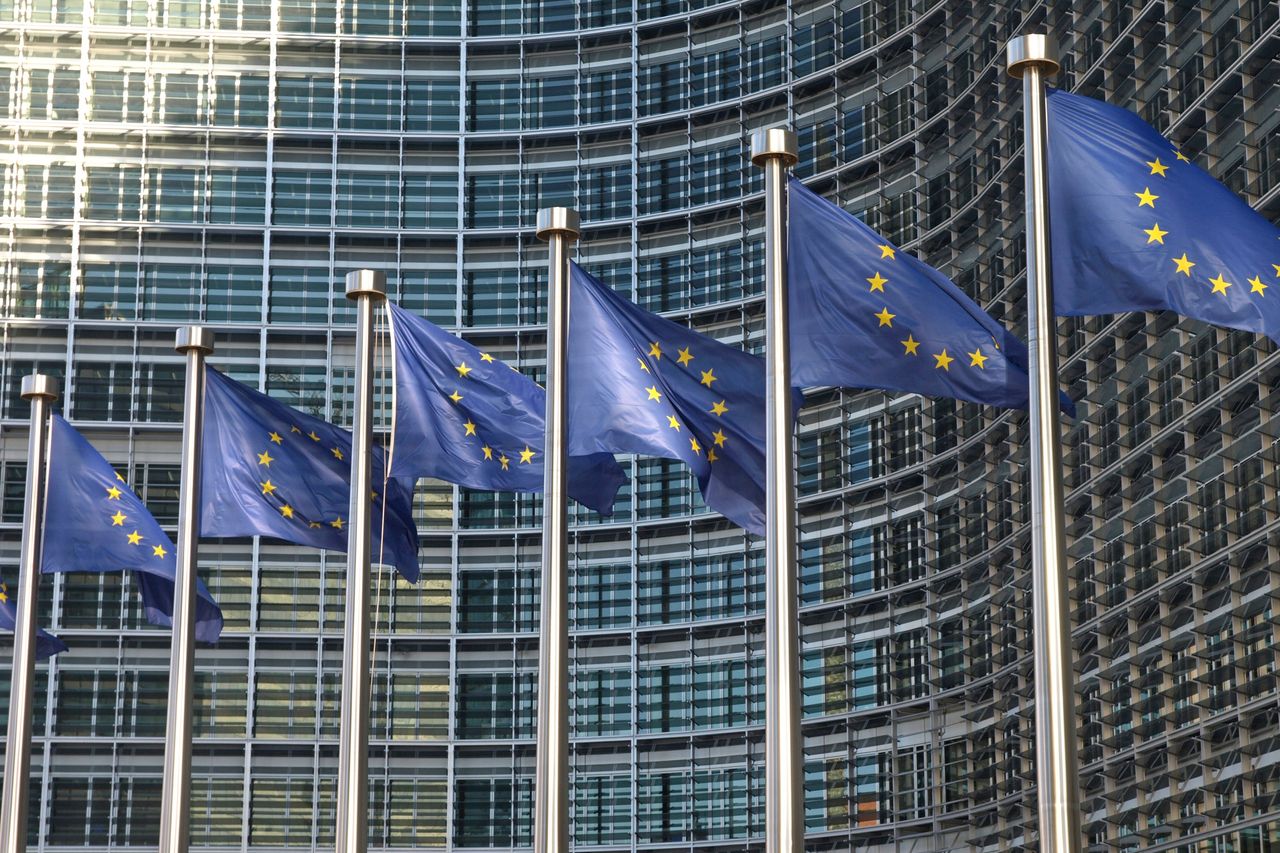
The Council of Europe has warned the five European Union states planning to send rejected asylum seekers to a "return hub" in Rwanda that the scheme must comply with the European Convention on Human Rights — and that individual cases will inevitably be challenged before the Strasbourg court (Council of Europe).
Secretary General Alain Berset issued the warning to the Council's Committee of Ministers, which includes representatives of the governments of Austria, Denmark, Germany, Greece and the Netherlands — the five countries that announced the Rwanda deal on 16 November. The intervention is the first formal caution from Europe's main human rights body since the plan was unveiled, and it sets up a legal confrontation that could decide whether the pilot ever operates as intended.
"So-called 'return hubs' may help ease pressure on asylum systems. But security and legality go hand in hand," Berset said. "These measures must be consistent with international law, in particular the European Convention on Human Rights."
Table of Contents
- What the five countries are planning
- The Strasbourg warning — and the court cases to come
- The price tag: €20 million for 40 people
- Rwanda's record on asylum and refoulement
- The UK precedent the five governments want to avoid
- What happens next
- Frequently Asked Questions
What the five countries are planning
The five governments announced the agreement in Vienna on 16 November, on the sidelines of a migration conference attended by a Rwandan delegation. Under the plan, adults whose asylum claims have been rejected — and who cannot be returned to their country of origin — would be sent to a centre in Rwanda, where they could either integrate into Rwandan society or move to another third country willing to accept them. Minors are excluded. The pilot is due to open in 2027.
The scheme is the first concrete use of the EU's newly agreed returns law, which for the first time explicitly allows member states to send people who have exhausted all avenues of appeal against their removal to facilities in third countries. The five governments presented it as a practical answer to low deportation rates across the bloc: only a minority of people ordered to leave the EU are actually removed, largely because their countries of origin refuse to take them back or because return is legally impossible.
The announcement was immediately condemned by 47 aid and rights groups, which urged the five governments to drop the plan. The UN refugee agency and Human Rights Watch raised concerns, while France declined to join the scheme and Spain's prime minister criticised it. For the background to the deal itself, see our earlier report on the five countries' Rwanda announcement.
The Strasbourg warning — and the court cases to come
Berset's message was carefully balanced: he reiterated that governments have the right to define their own migration policies, and noted that the Chișinău Declaration — adopted by Council of Europe member states — accepts that states can explore different approaches to deter irregular migration. But he was blunt about the legal limits.
Individual cases would inevitably come before the European Court of Human Rights, Berset said, which would then assess the scheme's compatibility with the Convention. That is not a hypothetical risk. The Court has repeatedly blocked removals where it found a real risk of ill-treatment or an absence of effective legal safeguards, and any person transferred to Rwanda would be able to petition it directly.
Crucially, Berset also offered the Council of Europe's help in making the measures compliant — a door the five governments can walk through, but also a signal that Strasbourg expects to be consulted before, not after, the pilot opens. He regretted that Council of Europe guidance had not been sought on the matter in the first place.
The price tag: €20 million for 40 people
One figure that has received far less attention than the legal debate is the cost. Germany alone has budgeted €20 million for the pilot's first 40 migrants — roughly €500,000 per person. That is many times the cost of processing an asylum claim inside the EU, and it raises an obvious question the five governments have yet to answer: if the pilot is meant to be a model for wider use, how could it ever be scaled at that price?
Supporters argue the deterrent effect is the point, not the per-person cost — that the existence of a return hub will discourage people from travelling to Europe in the first place. Critics reply that the same argument was made for Britain's Rwanda scheme, which spent hundreds of millions of pounds without ever sending a single person to Kigali. The economics, they say, only make sense if the numbers stay tiny — which would make the scheme symbolic rather than a solution to deportation rates.
Rwanda's record on asylum and refoulement
Berset's warning also pointed directly at Rwanda's own record. The country, he noted, has a poor human-rights record, with serious and systematic defects in its procedures and institutions for processing asylum claims, and a record of failure to comply with the non-refoulement principle — the cornerstone rule of international refugee law that forbids returning people to a country where they face persecution, torture or other serious harm.
That record matters because the entire legal basis of a return hub depends on the third country being safe. If the European Court of Human Rights finds that Rwanda's asylum system cannot reliably protect people sent there, transfers could be blocked one by one — the same mechanism that unravelled the British scheme. The five governments insist their version is different: a small pilot, adults only, with integration in Rwanda as an option rather than detention. But the Court will judge the scheme on its operation, not its press release.
The UK precedent the five governments want to avoid
Britain's attempt to send asylum seekers to Rwanda, launched in 2022, ended in failure after the UK Supreme Court ruled in November 2023 that Rwanda was not a safe third country, citing precisely the defects in its asylum system that Berset has now highlighted. The scheme was abandoned by the incoming government in 2024, having cost more than £700 million without a single deportation flight taking off.
The five EU governments have studied that failure closely. Their scheme is deliberately narrower — a pilot of dozens rather than thousands, framed as a return mechanism for people whose claims have already failed, rather than an offshore processing system for new arrivals. Whether that distinction survives contact with the Strasbourg court is the central legal question of the next year, and the answer will shape migration policy across the continent.
What happens next
The pilot is not due to open until 2027, which gives both sides time to prepare. The five governments must now decide whether to take up Berset's offer of Council of Europe assistance and redesign the scheme to withstand legal challenge — or press ahead and defend it case by case in Strasbourg. Rights groups, meanwhile, are expected to support individual legal challenges as soon as the first transfers are attempted.
The episode also illustrates a broader shift in how international courts are policing state action. Days earlier, the International Court of Justice ruled that Myanmar committed genocide against the Rohingya — a reminder, in a very different context, that international law is increasingly being tested against state conduct in real time. Read our report on that ruling.
For now, the return hub exists on paper. Whether it ever operates — and at what cost, in money and in legal credibility — will be decided in Strasbourg as much as in Vienna or Kigali.
Frequently Asked Questions
What are the EU's Rwanda "return hubs"?
Five EU countries — Germany, Austria, the Netherlands, Denmark and Greece — plan to open a centre in Rwanda for adults whose asylum claims have been rejected and who cannot be returned to their country of origin. The pilot is due to open in 2027 with a small number of people, who could integrate in Rwanda or move to another willing third country.
What did the Council of Europe warn?
Secretary General Alain Berset warned the five governments that "return hubs" must be compatible with the European Convention on Human Rights, and that individual cases will inevitably come before the European Court of Human Rights, which will assess the scheme's legality. He also offered the Council of Europe's help in making the measures compliant.
Why is Rwanda's human-rights record relevant?
The legality of sending people to a third country depends on that country being safe. Berset noted Rwanda's poor human-rights record, serious defects in its asylum procedures, and a record of failing to respect the non-refoulement principle — the rule against returning people to face persecution or harm. These were among the reasons the UK Supreme Court blocked Britain's Rwanda scheme in 2023.
How much will the pilot cost?
Germany has budgeted €20 million for the first 40 migrants — about €500,000 per person. Critics question whether such a scheme can ever be scaled, while supporters argue its purpose is deterrence rather than volume.
Which countries are involved, and who declined?
Germany, Austria, the Netherlands, Denmark and Greece are the five states behind the plan. France declined to join, and Spain's prime minister criticised it. Forty-seven aid and rights groups have urged the five governments to abandon the scheme.