The latest draft of the COP31 cover text has eliminated references to phasing out fossil fuels and to net-zero dates — and it has also deleted the $120 billion adaptation-finance target that developing countries had been demanding as a legally binding obligation on wealthy nations, leaving the most ambitious demands of both the developed and developing blocs out of the deal as the summit in Antalya enters its final hours. (The Hindu)
The deletions, contained in the newest iteration of the draft circulated on Thursday, amount to a symmetrical retreat: the language on ending fossil fuels that climate-vulnerable countries and the European Union had pressed for is gone, and so is the hard finance number that the Global South had made its own red line. What remains is a text that neither side can call a victory — and that, in the judgement of many observers, would mark a step backwards from the language agreed at previous summits.
A retreat from Glasgow and Dubai
The significance of the deletions lies in what came before. At COP26 in Glasgow in 2021, nearly 200 countries agreed for the first time to "phase down" unabated coal power. At COP28 in Dubai in 2023, governments went further, committing to "transitioning away from fossil fuels in energy systems" — a phrase that, however carefully negotiated, was hailed as the beginning of the end of the fossil fuel era.
A final COP31 text without any reference to a fossil fuel phase-out or to net-zero dates would not merely fail to advance that language; it would leave the Antalya summit as the first COP in five years to move the energy transition backwards in the official record. That is the gap the draft exposes, and it is the question negotiators will have to answer in the closing hours: whether the cover decision can still recover language that two previous summits treated as settled.
The timing makes the retreat harder to defend. The summit opened with the United Nations Environment Programme warning that the planet is on course for around 2.6°C of warming this century even if every country fully implements its current climate pledges — far above the Paris Agreement's 1.5°C goal. National climate plans submitted by 154 countries, covering about 71% of 2019 global emissions, point to only a 6% cut in emissions by 2035 compared with 2019 levels.
The $120 billion that vanished with it
The second deletion may matter even more to the countries most exposed to climate change. Developing nations had asked for a firm $120 billion adaptation-finance target, framed as legally binding financial obligations on developed countries. The latest draft removes it entirely.
The number was not plucked from the air. UNEP's Adaptation Gap report, published on 4 November, estimated annual adaptation needs at roughly $305 billion, against only $85 billion to $120 billion that could be mobilised even if current finance were tripled. For the low-lying Pacific states, the African nations facing desertification and the South Asian countries battered by cyclones and floods, adaptation money is not an abstraction — it is seawalls, early-warning systems, drought-resistant crops and the difference between a community that survives the next storm and one that does not.
By deleting both the phase-out language and the adaptation number, the draft effectively asks the most vulnerable countries to accept a deal that gives them neither a faster end to the emissions that cause their suffering nor the money to live with the consequences. That is why the finance question, more than any other, has been the hardest fight of the fortnight in Antalya.
Two presidencies, one deadline
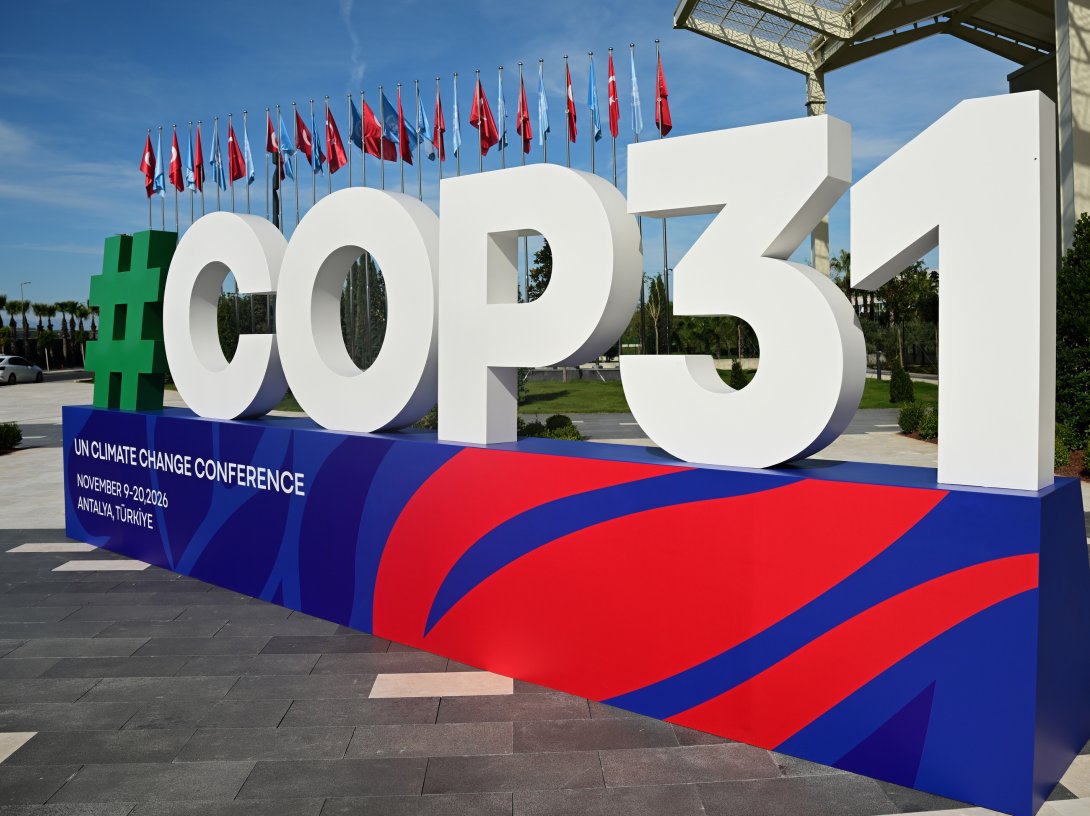
COP31 has been an unusual summit from the start. Türkiye holds the presidency formally, with Environment Minister Murat Kurum as COP president, while Australia's Climate Change and Energy Minister Chris Bowen leads the negotiations — the first joint presidency in the history of the climate talks, agreed after Ankara and Canberra competed to host the summit. The gathering, which opened on 9 November at the Antalya Expo Centre with delegations from around 200 countries, was billed by its Turkish hosts as the "implementation COP", with the slogan "the summit of the future — the summit of implementation".
That framing always carried a risk: a summit that promises delivery rather than new pledges is judged on what it actually delivers. The presidency's own agenda centred on raising electricity's share of global energy demand to 35% by 2035, cutting methane, climate-resilient cities, green manufacturing, food security and ocean protection. None of those ambitions is settled by a cover text that sidesteps both the energy transition and the money.
The summit is scheduled to close on Friday, 20 November, and climate negotiations almost never end on schedule. Draft texts at this stage are negotiating instruments, not final decisions: language that has been deleted can return, and numbers that have vanished can reappear, if ministers decide the political cost of a weak outcome is higher than the cost of compromise. The presidency still holds the pen, and the final plenary — often stretching deep into the night — is where the real bargaining happens.
The counterweight from Belém
One document that may shape those final hours did not come from Antalya at all. On 3 November, Brazil — which presided over COP30 in Belém — published the first global roadmap for moving away from fossil fuels, giving negotiators a concrete reference point for what a transition plan could look like. Its existence makes it harder for the COP31 text to pretend the question does not exist, and it gives the countries pushing for phase-out language something to point to when they argue that the groundwork has already been done.
The absence hanging over the whole summit is also part of the story. The United States is not at the negotiating table: its withdrawal from the Paris Agreement took effect on 27 January 2026, removing the world's second-largest emitter from the talks and complicating the finance arithmetic for everyone else. The remaining delegations have spent the fortnight working around that gap — and the draft text's thinness is, in part, a measure of how much harder consensus becomes when one of the biggest players is missing.
What to watch in the final hours
Three things will decide whether the summit is remembered as a setback or a salvage operation. First, whether any reference to fossil fuels returns to the cover text — even a weaker formulation would matter, because it would preserve the trajectory set in Glasgow and Dubai. Second, whether the adaptation-finance question is resolved with a number, a process or a promise to decide later — each carries very different weight for the countries waiting on the money. And third, whether the presidency can hold the talks together long enough to reach consensus at all, since COP decisions require the agreement of every party and a single objection can block the text.
Chronicle previously covered the opening of COP31 in Antalya and the European Union's pre-summit climate deal, as well as the Pacific island states' push for stronger action before the summit. Those preparations all pointed in the same direction: a summit expected to convert promises into measurable results. The draft now on the table does the opposite — it removes the promises and leaves the results to be negotiated in the final hours.
Frequently Asked Questions
What has been removed from the COP31 draft text?
The latest draft of the cover text removes references to phasing out fossil fuels and to net-zero dates, and it also deletes the $120 billion adaptation-finance target that developing countries had sought as a legally binding obligation on developed nations. (The Hindu)
Why does the fossil fuel language matter?
At COP26 in Glasgow, countries agreed to "phase down" unabated coal, and at COP28 in Dubai they committed to "transitioning away from fossil fuels". A final COP31 text without fossil fuel language would be the first in five years to move backwards from those commitments.
What is the $120 billion adaptation-finance target?
It is the firm adaptation-finance figure developing countries wanted as a binding obligation on wealthy nations. UNEP estimates annual adaptation needs at about $305 billion, while even tripling current finance would mobilise only $85 billion to $120 billion.
When does COP31 end?
The summit in Antalya, Türkiye, opened on 9 November 2026 and is scheduled to close on 20 November, though climate negotiations frequently run past their deadline as ministers bargain over the final text.
Who is leading the COP31 negotiations?
Türkiye holds the presidency, with Environment Minister Murat Kurum as COP president, while Australia's Chris Bowen leads the negotiations — the first joint presidency in the history of the climate talks.