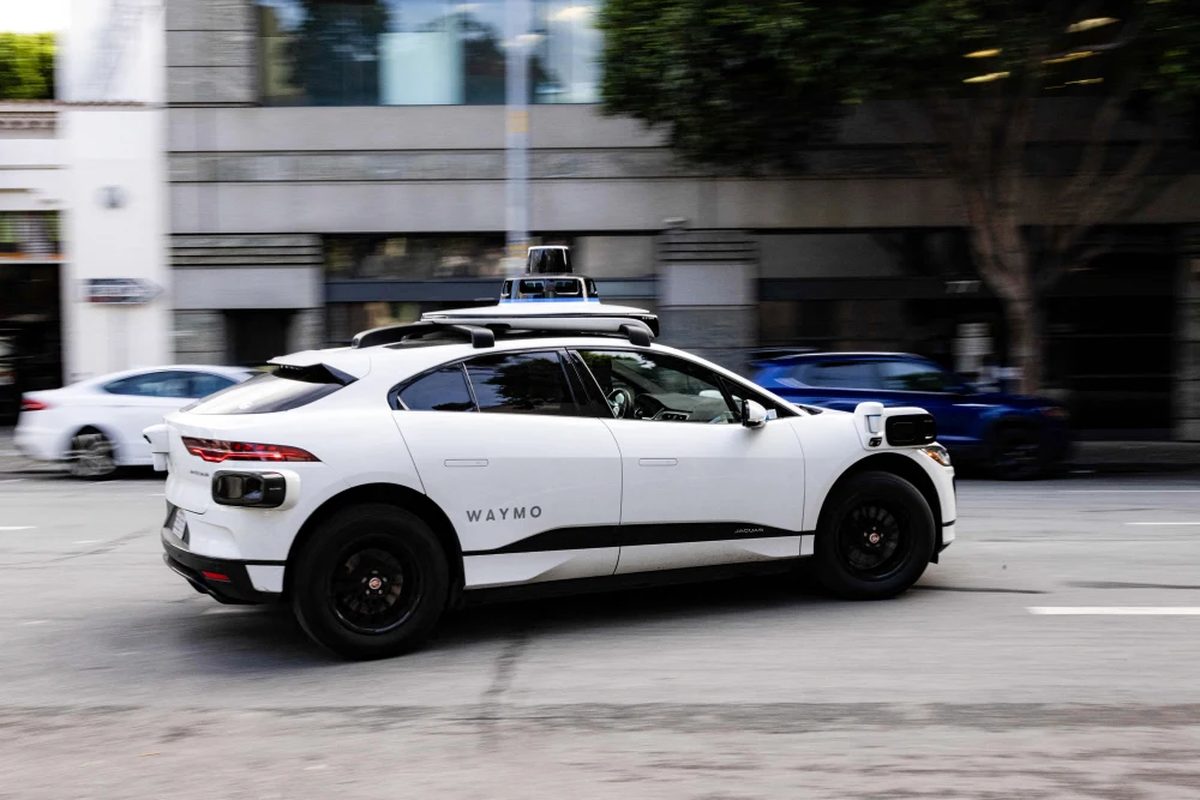
Waymo has suspended driverless taxi rides on freeways across the United States after California's Department of Motor Vehicles barred its robotaxis from the state's highways, declaring that the company's driverless freeway operations pose an "imminent hazard to public safety." The Alphabet-owned company has voluntarily extended the restriction to every US market where it offers freeway rides, turning a California enforcement action into a nationwide setback for the world's most advanced robotaxi service. (Al Jazeera)
What happened on the freeway
The immediate trigger came in early November. On November 5, three Waymo vehicles drove into an active construction closure on US Route 101 near Burlingame, in the San Francisco Bay Area — a zone where workers, vehicles and equipment were present. A day later, a separate incident on Highway 280 in San Francisco involved a Waymo vehicle attempting to pass a California Highway Patrol car that was slowing traffic.
California's DMV, which regulates the testing and deployment of autonomous vehicles in the state, imposed its restriction on November 11. The department said Waymo's driverless freeway operations posed an imminent hazard "due to recurring incursions by its vehicles into active construction zones where construction workers, vehicles and equipment are present, despite a prior restriction and corrective actions implemented following similar incidents that occurred on May 18, 2026." (TechCrunch)
The restrictions cover both driverless operation and driverless testing on California freeways, and they will remain in place until Waymo demonstrates that it has taken "effective corrective actions" to address the deficiencies. The DMV has not specified a timeline or the exact metrics that would satisfy it.
A nationwide pause, not just a California one
Waymo did not limit its response to California. The company said it has "temporarily restricted commercial freeway rides in all markets where we operate that service," while continuing freeway testing with trained autonomous specialists behind the wheel. Alongside California, the pause covers highway services in Phoenix, Austin and Miami; freeway rides had previously been available in the San Francisco Bay Area and Los Angeles as well.
Waymo currently operates commercially in 15 US cities, but offered freeway rides in only a few of them. Surface-street service continues everywhere, and the company says the pause will let it "evaluate our performance" following the California incidents. The suspension began last Wednesday, according to a company spokesperson, who did not say how long it would last. (Reuters)
This is a pattern, not a one-off
What makes the DMV's language so striking is that it is not describing a single mistake. Waymo had already voluntarily paused freeway service in May after similar construction-zone incidents, and it later recalled 3,800 vehicles in June. The November incidents show the same failure mode recurring after those corrective actions — which is precisely why the regulator escalated from a voluntary pause to a formal restriction framed as a public-safety hazard.
That history is the gap most first reports leave thin. The question is no longer whether a robotaxi can misread a construction zone once, but why the failure keeps returning in the same setting: temporary lane closures, cones, flaggers and altered road markings are among the hardest scenarios for an autonomous system, because they override the map the vehicle was trained to trust. Until Waymo can show the DMV a fix that holds, its freeway ambitions are on hold.
The scrutiny is not limited to freeways. In the same week, a Waymo taxi in San Diego was reported to have crashed through a railway crossing gate as a train approached, adding to the pressure on the company's safety record.
What riders lose — and what rivals gain
Freeway access mattered. Waymo began offering freeway rides in late 2025 and expanded its service area across Sacramento, the Bay Area and San Diego in August 2026. For Bay Area riders, freeway routes cut Peninsula travel times sharply compared with surface streets, and airport trips depended on them. Losing freeway access makes the service slower and less useful for exactly the longer journeys where a robotaxi competes with a human-driven car.
The pause also lands at a delicate moment for the wider industry. Waymo is the clear leader in commercial driverless rides, and its expansion has been the proof point that robotaxis can scale. A regulator publicly branding its operations an "imminent hazard" hands ammunition to sceptics and gives rivals — from Tesla's robotaxi effort to Amazon's Zoox — a window to argue their own approach is safer, even as they face the same construction-zone problem. The episode also underlines how exposed the whole sector is to a single state's regulator: California's decision effectively set policy for Phoenix, Austin and Miami too, because Waymo chose to apply the restriction nationally rather than run a patchwork service.
That dynamic echoes a broader regulatory turn in American technology policy. Just this week, Washington moved to block Chinese companies from remotely accessing advanced AI chips through data centres in third countries, and the race for AI chip capacity has become a matter of national strategy. Autonomous driving sits at the intersection of both trends: it is an AI product deployed on public roads, and its safety failures are judged by regulators, not by the market alone.
What Waymo must prove next
The path back to the freeway runs through the DMV, and the department has set a high bar. Waymo must demonstrate "effective corrective actions" — not merely promise them. That is likely to mean new software validated against construction-zone scenarios, evidence from supervised testing with safety drivers, and data showing the failure mode has been eliminated rather than reduced.
Meanwhile, the company's driverless trucks programme shows the same technology is being pushed onto highways in another form: Aurora's driverless trucks are already running on US highways, where a construction-zone error would carry far greater consequences. Regulators watching Waymo's case will be watching that one too.
For now, the robotaxi revolution is confined to city streets. Waymo's cars still pick up passengers across 15 cities — but the fastest roads in America are, for the time being, closed to them.
Frequently Asked Questions
Why did California ban Waymo from freeways?
California's DMV barred Waymo's driverless vehicles from state freeways after three robotaxis entered an active construction closure on US Route 101 on November 5, and a separate incident involving Highway Patrol vehicles the next day. The department said the operations posed an "imminent hazard to public safety" because of recurring incursions into construction zones despite earlier corrective actions.
Does the suspension apply outside California?
Yes. Waymo voluntarily extended the restriction to all US markets where it offers freeway rides, including Phoenix, Austin, Miami and Los Angeles. Surface-street rides continue everywhere, and freeway testing continues with trained specialists behind the wheel.
Has this happened before?
Yes. Waymo voluntarily paused freeway service in May 2026 after similar construction-zone incidents, and recalled 3,800 vehicles in June. The DMV cited the recurrence of the same failure mode as the reason for its formal restriction.
When will freeway rides resume?
There is no timeline. The DMV's restrictions remain in place until Waymo demonstrates it has taken effective corrective actions, and the department has not specified what metrics would satisfy that requirement.
Is Waymo still operating at all?
Yes. The company continues to run its robotaxi service on city streets in 15 US cities, and says the freeway pause is temporary while it evaluates its performance.