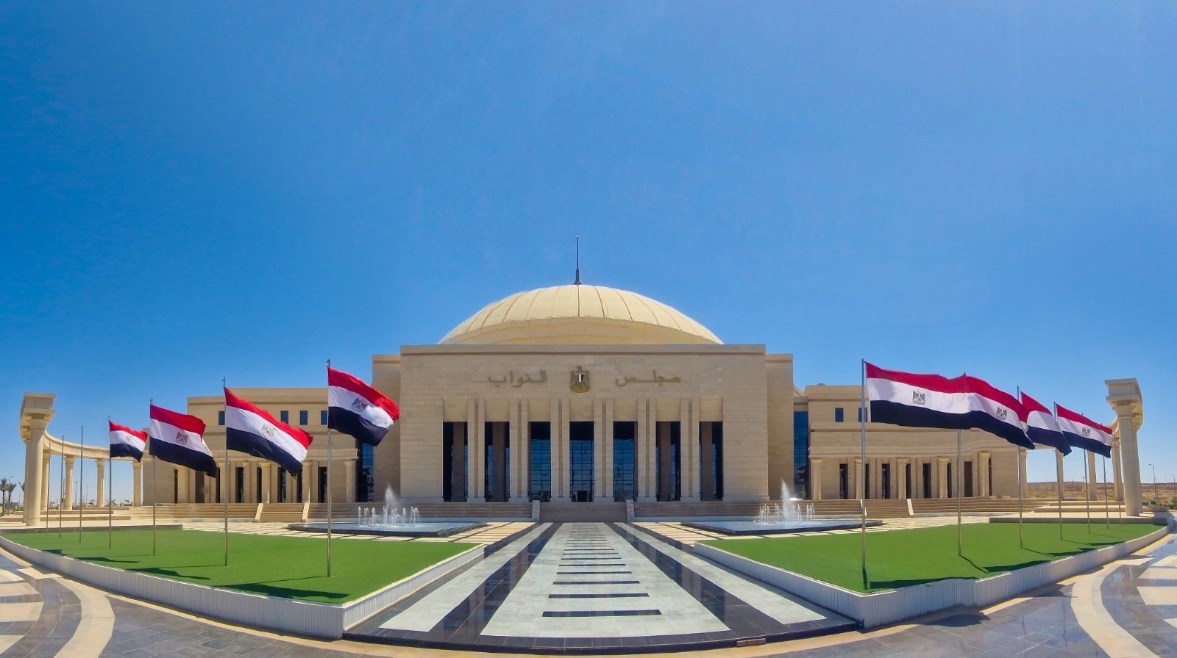
Egypt's parliament has handed President Abdel Fattah el-Sisi the legal authority to send troops to defend Saudi Arabia. The House of Representatives voted on Monday, October 26, by the constitutionally required two-thirds majority, authorising the president to take "the necessary measures" to defend the kingdom's territory, sovereignty and holy sites against external aggression, following coordination with Riyadh. The vote completes a process that began more than a week ago, when el-Sisi publicly asked parliament for the mandate — but it does not mean Egyptian soldiers are about to deploy.
Cairo has been careful to frame the authorisation as defensive and conditional. El-Sisi, as supreme commander of the armed forces, now holds the legal power to act, but he has said Egypt will move only if Saudi Arabia formally requests help. No such request has been announced. The distinction matters: it lets Egypt signal solidarity with its most important Gulf ally while keeping its distance from a war it has long been reluctant to enter.
A vote held behind closed doors
The vote was taken by roll call in a closed session, and parliament has not published an exact tally. Under Article 152 of Egypt's constitution, sending the army on a combat mission abroad requires the backing of two-thirds of the 596-member house — at least 398 votes. The National reported that the authorisation was granted in accordance with a resolution by the National Defence Council dated October 18.
The road to the vote was unusually drawn out. El-Sisi made his request on October 17, at a graduation ceremony at the Egyptian Military Academy, saying it was inconceivable that Saudi Arabia's security would be harmed. The National Defence Council, which he chairs, met the following day and pledged "all necessary and possible forms of support" to the kingdom, without specifying their form, size or duration. Parliament then met in two closed sessions on October 18 and 19, adjourned for a week, and only returned to vote on October 26.
That delay was itself revealing. MPs were expected to approve the request quickly — the four main pro-government parties hold 403 of the 568 elected seats — but the deputy speaker, Assem El Gazzar, said nearly 500 MPs had asked to speak on the issue, more than he had seen on any other matter. One MP, Medhat Rekaby al-Mansourawy, told Agence France-Presse that discussions of the potential operation were "surface-level without details", though lawmakers had received assurances it would be defensive in nature. The Social Democratic Party, which holds 11 seats, abstained after requesting "specific objectives, clear information" on the mission's scope and duration, and "an accurate assessment of the potential risks to the lives of our soldiers".
Why now: the Houthi campaign against the kingdom
The authorisation comes as Houthi attacks on Saudi Arabia have sharply intensified. The Iran-aligned group, which controls Yemen's capital Sanaa, has struck Riyadh's King Khalid International Airport and facilities belonging to the state oil company Aramco, disrupting flights and oil exports. Al Jazeera reported that the parliamentary move raises the prospect of Egypt becoming more directly involved in a conflict that has consumed the Gulf and the Red Sea in recent weeks.
An attack on Riyadh's airport on October 10 killed 12 people and wounded more than 300, according to Saudi Arabia's civil aviation authority, and the Saudi-led coalition has counted 19 dead and 364 injured across Saudi airports since early October. On the same day parliament voted, the Houthis claimed unconfirmed strikes on pumping stations along the kingdom's East-West crude pipeline and on the Riyadh airport. The Houthis have also warned Cairo directly: Yahya Al Raei, speaker of the Houthi-run parliament in Sanaa, wrote to Egyptian Speaker Hisham Badawi last week that joining the conflict "would pose a grave danger" to Egypt's national security.
What Egyptian forces could — and could not — do
What form any Egyptian support would take remains undefined, and that ambiguity appears deliberate. El-Sisi has said Egyptian backing would be confined to defending Saudi territory and borders, and would not include attacks inside Yemen. In a letter to Saudi Crown Prince Mohammed bin Salman, he stressed that Egyptian help would defend Saudi territory and borders "without reaching into Yemen", and Senate Speaker Essam Farid described the stance as "purely defensive" — Egypt as "a shield that protects, not a sword that attacks".
Egypt fields the Arab world's largest military, with hundreds of thousands of active personnel, fighter jets and complex air defences sourced from the United States, China, France and Russia. Its most plausible contribution would be air defence and protection of Red Sea shipping and Saudi infrastructure, rather than ground combat in Yemen — a war Egypt pointedly avoided joining when the Saudi-led coalition intervened in 2015, despite Riyadh's requests at the time. Cairo's wariness is rooted in its own history: Egypt's 1960s intervention in Yemen's civil war became a costly quagmire that still shapes its military thinking.
The vote also sits within a wider regional realignment. Just days earlier, reports emerged that Saudi Arabia had offered the Houthis $1 billion in an Iran-brokered deal to halt attacks on the kingdom, a reminder that Riyadh is pursuing diplomacy and deterrence in parallel. Egypt's parliamentary authorisation strengthens Riyadh's hand in both tracks: it raises the cost for the Houthis of continuing their campaign, while giving Cairo a formal say in any future Gulf security arrangement.
What happens next
For now, the authorisation changes the legal position, not the facts on the ground. Three questions will determine whether it ever becomes a deployment. First, will Riyadh formally ask? Saudi officials have so far said nothing about requesting Egyptian forces, and may prefer to keep the authorisation as a deterrent rather than use it. Second, what exactly would Egypt be asked to do — and would parliament's demand for detail, voiced by the abstaining Social Democrats, be answered before any troops move? Third, how do the Houthis respond? Their warning to Cairo suggests they see an Egyptian role as an escalation, and further strikes on Saudi or even Egyptian interests in the Red Sea cannot be ruled out.
Cairo's message, for the moment, is one of controlled commitment: the legal door is open, the conditions are strict, and the decision to walk through it rests with Riyadh. That balance — visible solidarity, deferred action — is precisely what el-Sisi appears to have wanted from parliament all along.
Key takeaways
- Egypt's parliament voted on October 26 by a two-thirds majority to authorise President el-Sisi to deploy forces to defend Saudi Arabia.
- The authorisation is conditional: Egypt says it will act only if Saudi Arabia formally requests help, and no such request has been announced.
- The vote followed a week of closed-door debate, with nearly 500 MPs asking to speak and one opposition party abstaining over the lack of detail.
- Cairo insists any role would be purely defensive — protecting Saudi territory and borders, with no attacks inside Yemen.
- The move follows intensified Houthi strikes on Riyadh's airport and Aramco facilities, and a direct Houthi warning to Cairo against joining the conflict.
Related coverage
- Egypt's top security body pledges 'all necessary support' to Saudi Arabia as Houthi attacks escalate
- Saudi Arabia reportedly offered the Houthis $1 billion in an Iran-brokered deal to halt attacks on the kingdom
Frequently Asked Questions
Has Egypt sent troops to Saudi Arabia?
No. Parliament has authorised President el-Sisi to deploy forces, but Cairo says it will act only if Saudi Arabia formally requests help, and no such request has been announced. The vote changes the legal position, not the facts on the ground.
Why did Egypt's parliament need to vote at all?
Under Article 152 of Egypt's constitution, sending the army on a combat mission abroad requires the backing of two-thirds of the 596-member House of Representatives — at least 398 votes. The vote clears the final constitutional hurdle to a possible deployment.
What would Egyptian forces actually do?
That remains undefined. El-Sisi has said any role would be purely defensive — protecting Saudi territory, borders and holy sites — with no attacks inside Yemen. Egypt's most plausible contribution would be air defence and protection of Red Sea shipping and Saudi infrastructure.
Why is Egypt wary of getting involved in Yemen?
Egypt intervened in Yemen's civil war in the 1960s, and the costly quagmire still shapes its military thinking. Cairo also avoided joining the Saudi-led coalition's intervention in 2015 despite Riyadh's requests, and has long preferred to keep its forces out of Yemen itself.
How have the Houthis reacted?
The Houthis warned Cairo against the move: the speaker of the Houthi-run parliament in Sanaa wrote to Egypt's parliamentary speaker that joining the conflict "would pose a grave danger" to Egypt's national security. On the day of the vote, the Houthis claimed strikes on Saudi pipeline pumping stations and Riyadh's airport, though Saudi Arabia had not confirmed damage.