Brazil's defeated presidential camp split on Monday over whether to accept Sunday's runoff result: Flávio Bolsonaro's Liberal Party formally recognised Luiz Inácio Lula da Silva's victory, even as Bolsonaro himself refused to concede and vowed to seek its annulment, while United States President Donald Trump declared without evidence that the election "looked like another rigged election" and a Supreme Court justice ordered Bolsonaro to surrender his passports and barred him from leaving the country, according to Reuters.
The tangle of statements, court orders and foreign commentary capped a dramatic 24 hours after Lula's historic fourth-term win, turning what had been a knife-edge runoff into a test of whether Brazil's institutions — and its losing side — would accept the verdict of the ballot box.
Table of Contents
- The party accepts; the candidate does not
- Trump weighs in: 'It looked very bad to me'
- A passport order hours after defeat
- The two-hour extension at the heart of the dispute
- What happens next
- Key takeaways
- Frequently Asked Questions
- Sources
- Chronicle related reading
The party accepts; the candidate does not
On Monday, the Liberal Party (PL) issued a statement signed by its president, Valdemar Costa Neto, acknowledging the runoff result. "We recognise the presidential election results," Costa Neto said. "But we believe the issues raised need to be properly clarified."
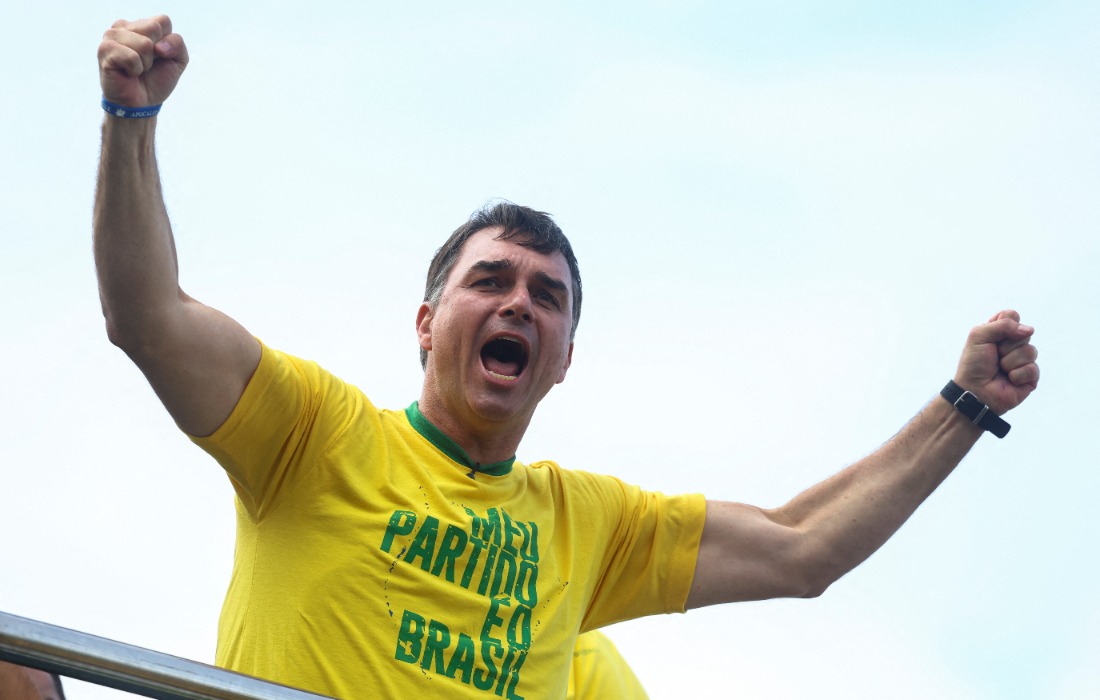
The statement marked a decisive break from the candidate himself. Flávio Bolsonaro, the son of former president Jair Bolsonaro, had refused to concede defeat in Sunday's vote, saying he would seek the annulment of Lula's victory after the Supreme Court extended voting by two hours. He has not commented publicly since his party's statement, but he had earlier vowed to lead the resistance to Lula's government. "To withstand the chaos, I'm going to organise the opposition," he said, according to the South China Morning Post.
The split echoes a pattern familiar from the Bolsonaro family's previous brush with defeat: Jair Bolsonaro, too, declined to concede after losing to Lula in 2022, though he eventually allowed a transition to proceed. This time, the party moved faster than its candidate, denying the losing campaign an institutional vehicle for contesting the result.
Trump weighs in: 'It looked very bad to me'
Trump added an international dimension to the dispute on Monday, telling reporters that Lula's surprise win "looked like another rigged election". "I didn't take sides, but it looked like another rigged election," he said. "It looked very bad to me."
He offered no evidence for the claim and focused his criticism on the Supreme Court's decision to extend voting by two hours. "I just think it had a very bad look, the election, the way it was tabulated," Trump said. "The extension given was very strange."
Trump did not endorse Bolsonaro ahead of the vote, although Reuters has reported that officials from his State Department led a campaign to return the Bolsonaros to power. His remarks nevertheless handed the defeated candidate's supporters a powerful talking point — and raised the prospect of renewed friction between Washington and Brasília, just as Lula begins a fourth term that will require him to manage relations with a US administration openly sceptical of his victory.
A passport order hours after defeat
Within hours of his loss, Flávio Bolsonaro was banned from leaving Brazil and ordered to surrender his passports, in a ruling by Supreme Court Justice Alexandre de Moraes — the same justice who oversaw the trial of his father, the former president, for attempting a coup, according to The Guardian.
Bolsonaro said in a video posted on social media that he had just left a visit to his father, who is under house arrest in Brasília, when federal police served him with the order at the door and in the street. He said the decision was based on an interview his brother, Eduardo Bolsonaro, gave days earlier urging him to leave Brazil if he lost the election. Bolsonaro denied he was planning to flee.
The court's ruling, however, refers to a criminal case in which federal police are investigating Flávio Bolsonaro over his possible involvement in a money-laundering scheme. It cancels all of his passports, including the diplomatic one he holds as a congressman, orders him to hand them over within 24 hours, and bars him from contact with his friend Willer Tomaz, a lawyer linked to betting companies that police suspect were used to launder about £680 million.
The two-hour extension at the heart of the dispute
At the centre of the losing camp's complaint is the Supreme Court's extension of voting by two hours on election day. Bolsonaro's team has argued that the extension tainted the result. The numbers, however, make that argument difficult to sustain: Bolsonaro lost to Lula by more than 4 million votes, while fewer than 35,000 votes — about 0.03 per cent of the total — were cast during the extra two hours, according to an analysis of electoral records by Insper professor Pedro Burgos cited by Reuters.
That arithmetic is one reason the result is expected to stand. A challenge would need to show not merely an irregularity but one large enough to overturn a margin of millions — a bar no losing candidate in Brazil's modern democratic era has cleared.
What happens next
Three questions will shape the coming days. First, whether Flávio Bolsonaro himself eventually concedes, or whether his refusal hardens into a lasting claim of illegitimacy against Lula's government. Second, whether his party's acceptance of the result holds under pressure from its own base, or frays as the annulment campaign gathers steam. And third, whether the passport order and the money-laundering investigation escalate into a broader legal confrontation between the Bolsonaro family and the Supreme Court — a confrontation that has already defined much of Brazilian politics in recent years.
For Lula, the immediate prize is a fourth term won from behind: he entered the runoff trailing, and his comeback is already being described as one of the most remarkable reversals in the country's democratic history. The challenge now is governing a country nearly evenly split, with an opposition leader who has promised organised resistance and a former US president's administration casting doubt on the election that put him there.
Key takeaways
- Flávio Bolsonaro's Liberal Party formally recognised Lula's runoff victory on Monday, even though Bolsonaro himself has refused to concede and says he will seek annulment.
- Donald Trump said the election "looked like another rigged election" but provided no evidence, criticising the Supreme Court's two-hour voting extension.
- Supreme Court Justice Alexandre de Moraes ordered Bolsonaro to surrender all his passports within 24 hours and barred him from leaving Brazil, in connection with a money-laundering investigation.
- Fewer than 35,000 votes were cast during the disputed two-hour extension, against Lula's winning margin of more than 4 million.
- Bolsonaro has vowed to organise the opposition to Lula's fourth-term government.
Frequently Asked Questions
Has Flávio Bolsonaro conceded defeat to Lula?
No. Bolsonaro has refused to concede and says he will seek the annulment of Lula's runoff victory over the Supreme Court's two-hour voting extension. His party, the Liberal Party, has nevertheless formally recognised the result.
Why did Donald Trump call Brazil's election 'rigged'?
Trump said Lula's win "looked like another rigged election" and criticised the Supreme Court's decision to extend voting by two hours, saying the election "had a very bad look". He provided no evidence for the claim.
Why was Flávio Bolsonaro ordered to surrender his passports?
Supreme Court Justice Alexandre de Moraes ordered Bolsonaro to hand over all his passports, including his diplomatic passport, within 24 hours and barred him from leaving Brazil. The ruling is linked to a federal police investigation into his possible involvement in a money-laundering scheme, and also bars contact with lawyer Willer Tomaz.
Could the two-hour voting extension overturn the result?
Almost certainly not on the numbers available: fewer than 35,000 votes were cast during the extension, while Lula won by more than 4 million votes, according to an analysis of electoral records by Insper professor Pedro Burgos.
What did Bolsonaro say he will do next?
Bolsonaro said he would comply with the passport order, denied planning to flee Brazil, and vowed to lead the opposition to Lula's government, saying he would "organise the opposition" to withstand what he called chaos.
Sources
- Reuters — Trump says Brazil election looked 'rigged', defeated Bolsonaro's party recognizes Lula win
- South China Morning Post — Trump claims Brazil election 'rigged' as Bolsonaro's party acknowledges Lula win
- The Guardian — Brazil: defeated Flávio Bolsonaro ordered to surrender passports