Eighty-three people were injured when a passenger bus collided with a car on a narrow mountain road near Barcelona and plunged about 20 metres down an embankment, Catalan emergency services said, in one of the worst road accidents in the region in recent years. Seven people were seriously hurt, 18 suffered less serious injuries and 58 had minor injuries, and no deaths were reported as rescue teams worked into the evening on the steep, wooded slope.
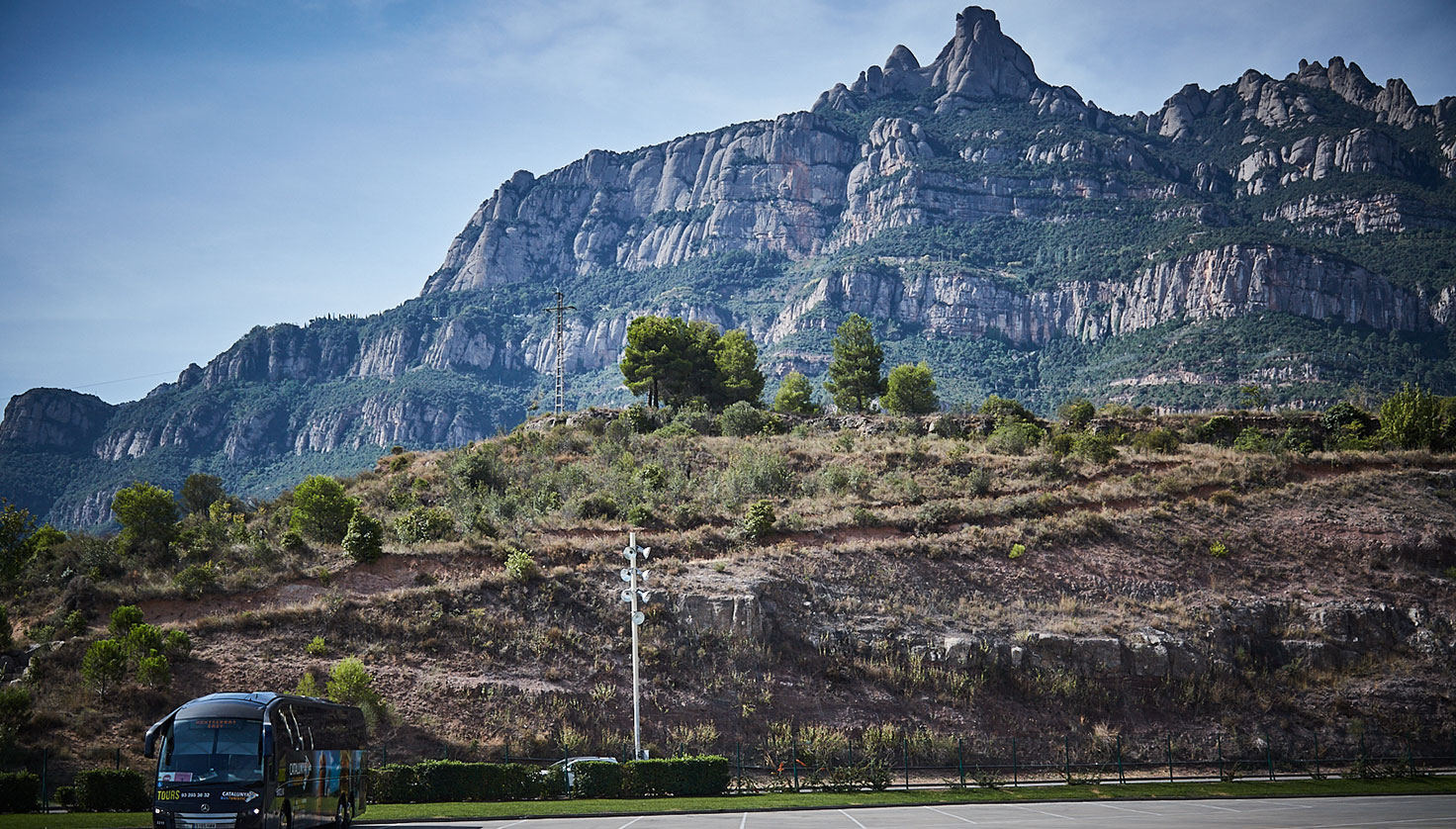
The crash happened on Sunday afternoon on the BV-5114 road at Fogars de Montclús, a village in the Montseny Natural Park between Barcelona and Girona. The bus, operated by Sagalés on line 573 between Fogars de Montclús and Santa Fe del Montseny, veered off the winding road after the collision and fell down the embankment, according to Al Jazeera and Spanish news agency EFE, cited by The Hindu.
Table of Contents
- A Sunday afternoon trip turns into a major rescue
- The rescue operation on a steep slope
- The injured and the hospitals
- What investigators still need to establish
- A road that demands caution
- Key takeaways
- Frequently Asked Questions
- Sources
- Chronicle related reading
A Sunday afternoon trip turns into a major rescue
Authorities were first alerted to the crash at about 4.23 p.m. local time, after at least 25 emergency calls. The regional police closed part of the BV-5114 in both directions as the response unfolded, and a Red Cross reception centre was set up at Can Ramis in Sant Celoni to support people affected by the accident.
Some passengers were able to climb back up to the road unaided. Others had to be carried from the bus on the steep terrain, and the most seriously injured were flown or driven to hospitals. The Catalan emergency medical service, SEM, coordinated the triage, while firefighters secured the vehicle and searched the surrounding ground.
Catalonia's president, Salvador Illa, said he was following the accident "with great concern" and thanked the emergency services, adding that he was in constant contact with the region's interior and health ministers. "All my support to the people affected and my gratitude to the emergency services for their work," he said.
The rescue operation on a steep slope
The scale of the response reflected both the number of casualties and the difficulty of the terrain. Emergency services deployed 23 ambulances and two medical helicopters, along with three joint teams of firefighters and medical personnel and three psychological support teams. The fire service also sent specialist mountain rescue teams, and drones and sniffer dogs were used in intensive searches around the bus to make sure no casualty had been missed.
Olga Pane, health minister of the Generalitat of Catalonia, said rescue crews were searching the area to determine whether there might be any more victims — a standard precaution when a vehicle leaves the road in wooded, uneven ground, where a passenger could be thrown clear of the wreckage and hard to spot.
The operation's geography mattered as much as its size. The Montseny massif is a popular walking and day-trip area, but its roads are narrow, winding and, in places, without the margins that make a recovery straightforward. Moving stretchers up a 20-metre slope, in fading light, with dozens of patients at different levels of severity, is slow work even with helicopters overhead — and the decision to keep searching after the last visible patient had been treated showed how seriously the services took the risk of someone being overlooked.
The injured and the hospitals
Of the 83 injured, 24 were taken to hospital, according to Catalan emergency services. The seven seriously injured were the priority for helicopter and ambulance transfer, while the 18 less seriously injured and 58 with minor injuries were treated at the scene or at nearby facilities.
Early reports varied slightly — Al Jazeera initially put the figure at 80 injured — but the Catalan emergency service's detailed breakdown of 83, with seven seriously hurt, became the authoritative count as the operation progressed. No fatalities were reported.
For the families waiting at the Red Cross centre and at hospitals, the hours after the crash were defined by uncertainty: the names and conditions of individual patients are not released immediately, and the psychological support teams deployed to the scene were there as much for relatives as for survivors.
What investigators still need to establish
The exact circumstances of the crash were not immediately clear and remain under investigation by Catalonia's police force, the Mossos d'Esquadra. What is known is the sequence: a collision between the bus and a car on a narrow, winding stretch, followed by the bus leaving the road and falling down the embankment.
Investigators will now have to untangle how much each factor contributed: the dynamics of the collision itself, the speed and position of both vehicles, the condition of the road surface and its edges, and whether anything about the bus — its brakes, tyres or maintenance — played a part. Until that work is done, no formal cause has been released, and speculation about blame would be premature.
That restraint matters. In crashes involving public transport, the first hours always produce competing accounts from witnesses, and the official record — built from vehicle data, road evidence and forensic examination — takes longer. The families of the injured, and the operator, are entitled to that record rather than to a rushed explanation.
A road that demands caution
The crash is a reminder of the particular risks of rural and mountain bus routes. Unlike motorways, roads like the BV-5114 combine tight bends, gradients, limited overtaking room and mixed traffic — cars, buses, cyclists and walkers sharing the same narrow carriageway. A single collision on such a road can have consequences far beyond the impact itself, because there is so little room to recover once a vehicle leaves the tarmac.
Spain has seen other serious bus accidents this year, including a crash in Lleida this summer in which nearly 50 people were injured when a coach veered into a council office. Each incident feeds the same debate: how to make regional routes safer without cutting off the communities that depend on them. Options regularly discussed by road-safety experts include lower speed limits on winding sections, better barriers where a road runs alongside a drop, and stricter controls on overtaking — but every measure has to be weighed against the cost and the character of the landscape.
For now, the focus in Fogars de Montclús remains on the injured and on the investigation. The road will reopen, the bus will be recovered, and the questions about what happened on that bend will be answered in the investigators' time, not in the news cycle's.
Key takeaways
- A Sagalés bus on line 573 collided with a car and fell about 20 metres down an embankment at Fogars de Montclús, near Barcelona, on Sunday afternoon.
- Catalan emergency services said 83 people were injured: seven seriously, 18 less seriously and 58 with minor injuries. No deaths were reported.
- The response involved 23 ambulances, two medical helicopters, mountain rescue teams, drones, sniffer dogs and psychological support teams.
- The cause of the crash is under investigation by Catalonia's police; no formal cause has been released.
- A Red Cross reception centre was set up at Can Ramis in Sant Celoni, and part of the BV-5114 road was closed.
Frequently Asked Questions
Where did the bus crash happen?
The crash happened on the BV-5114 road at Fogars de Montclús, in the Montseny Natural Park in Catalonia, between Barcelona and Girona, on Sunday afternoon, 25 October 2026.
How many people were injured?
Catalan emergency services said 83 people were injured: seven seriously, 18 less seriously and 58 with minor injuries. Twenty-four people were taken to hospital, and no fatalities were reported.
What caused the bus to leave the road?
The bus collided with a car on a narrow, winding stretch of road and then veered off and fell about 20 metres down an embankment. The exact circumstances are under investigation by Catalonia's police, and no formal cause has been released.
Which bus was involved?
The bus was operated by Sagalés on line 573, which runs between Fogars de Montclús and Santa Fe del Montseny.
What has the Catalan government said?
Catalonia's president, Salvador Illa, said he was following the accident with great concern, thanked the emergency services, and said he was in constant contact with the region's interior and health ministers.