Serbia's election is over, but its political transition has only just begun. The Student List, the protest movement turned parliamentary force, won a decisive majority on Sunday, October 25, 2026 — and now it must do something it has never done before: form a government, name a prime minister, and turn two years of street protest into an administration. The arithmetic is unusually kind to the winners, but the calendar is unforgiving, and the hardest questions — who leads, who runs the key ministries, and who becomes president — are still unanswered.
According to the Republic Election Commission (RIK), the Student List took 52.54 percent of the vote, based on 8,077 of 8,392 polling stations processed, while the United Serbia list led by Aleksandar Vucic's Serbian Progressive Party took 39.29 percent, Al Jazeera reported on Monday. Turnout reached 68.78 percent, a record high in more than 30 years — a figure that itself tells the story of an electorate that treated this vote as a referendum on the country's direction.
Table of Contents
- The numbers that decide everything
- Who could be prime minister?
- The timetable: 30 days, then 90
- The presidency question
- What the Student List promised
- The risks of a movement becoming a government
- Key takeaways
- Frequently Asked Questions
- Sources
- Chronicle related reading
The numbers that decide everything
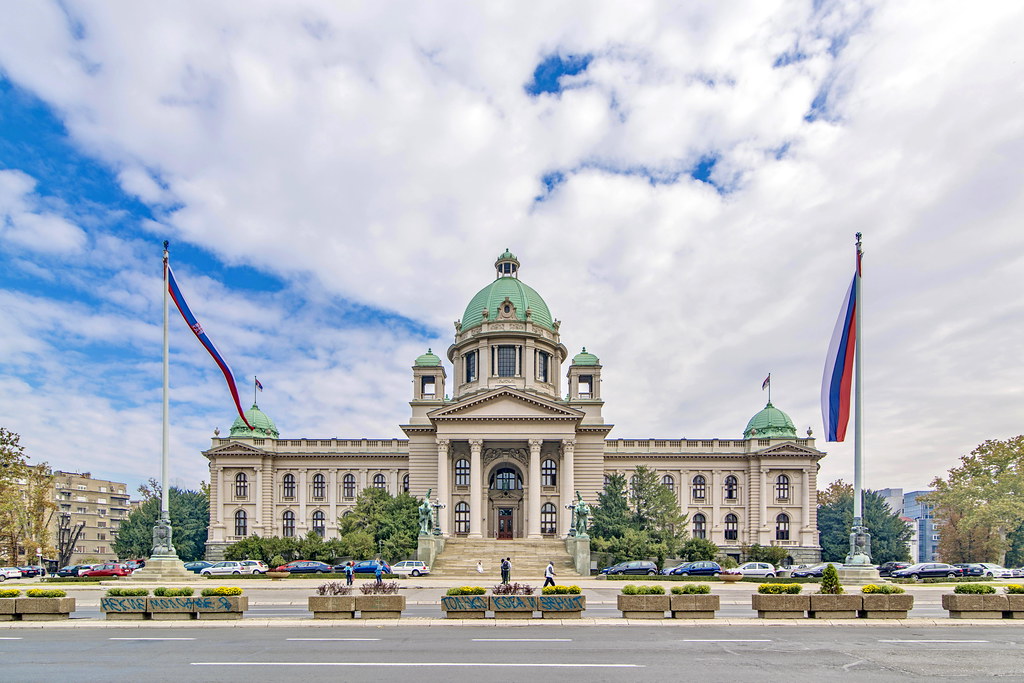
The seat projections explain why this transition, unlike most in the Balkans, should not require weeks of coalition haggling. The Student List is projected to win 140 seats in the 250-member National Assembly — comfortably above the 126 needed for a majority — while United Serbia is expected to take 103. The remaining seats go to smaller lists: the Alliance of Vojvodina Hungarians with three, the Albanian political bloc with two, and the Rasim Ljajc-Ljudski and SDA Sandzak lists with one each.
A single-party majority matters for two reasons. First, it removes the need for the kind of multi-party bargaining that has historically slowed Serbian government formation and diluted reform programmes. Second, it means the Student List will own its record entirely — there will be no junior partner to blame if promises stall. That clarity is a political asset now and a liability later.
The scale of the result also reframes the story of the election itself. This was not a narrow protest vote. With more than half the ballots cast and record turnout, the Student List won an outright mandate — the kind of result that makes its programme, rather than its protest history, the measure by which it will be judged.
Who could be prime minister?
Here the picture is deliberately blurry, and that blurriness is itself a feature of how the movement was built. Unlike United Serbia, which named Vucic as its prime ministerial candidate before the vote, the Student List announced no candidate during the campaign. From its formal creation it avoided elevating single personalities, preferring to present itself as a collective of academics, doctors and workers.
The name most often mentioned now is Ilija Srdanovic, the professor at the Faculty of Medicine at the University of Novi Sad who led the movement during the campaign. A cardiologist by profession, Srdanovic is widely seen as the most likely candidate for prime minister, and analysts cited by Daily Sabah have reached the same conclusion. But "most likely" is not the same as confirmed, and the movement has not yet formally named him.
Even more consequential, and even less settled, is who will run the ministries that define whether a reform government succeeds or fails: internal affairs, finance and justice. These are the portfolios where corruption, institutional capture and organised crime are either confronted or accommodated, and the Student List's credibility will be tested first in its appointments to them. A government led by a respected academic but staffed at the top with party loyalists would send one signal; a cabinet of independent experts would send another. The names, when they come, will be the first real evidence of which government Serbia has voted for.
The timetable: 30 days, then 90
Serbia's constitution sets a two-stage clock. Once the final election results are announced, the new National Assembly must be constituted within 30 days. A government must then be formed within 90 days after that.
In practice, the Student List's majority should compress the second stage considerably — there are no coalition partners to negotiate with and no threshold arithmetic to resolve. The binding constraint is therefore the first stage: the formal announcement of final results and the convening of parliament. Until that happens, the timetable is a framework, not a date. Anyone promising a precise swearing-in day this week is guessing.
That said, the deadlines create a useful discipline. A movement that spent two years demanding accountability from institutions must now demonstrate that it can operate inside them, on schedule, and in public. The 30-day and 90-day limits will be the first test of whether the Student List governs with the same urgency it campaigned with.
The presidency question
The parliamentary transition is only half of Serbia's leadership change. Vucic dominated Serbian politics first as prime minister and then as president from 2014, and his resignation as president on September 27 set off a separate constitutional clock. The post is currently held temporarily by Ana Brnabic, the president of the National Assembly.
Brnabic is obliged to call an extraordinary presidential election, which must be held no later than three months after the end of Vucic's mandate — a deadline of December 27, 2026. Serbia's president is elected directly by citizens, but the office is largely ceremonial, with real executive power sitting with the prime minister and government. The presidential race will nevertheless matter: it will be the first test of whether the Student List's parliamentary majority translates into broader electoral dominance, and whether the remnants of Vucic's political machine can regroup around a new figurehead.
What the Student List promised
The movement's programme, presented in September, gives a clear sense of its intended priorities: fighting corruption and organised crime, raising living standards, boosting employment, improving education, and restoring media freedom and the independence of state institutions. After declaring victory on Sunday, the movement added a foreign-policy note, saying it would work to improve relations with neighbouring countries after a period of tension during Vucic's rule.
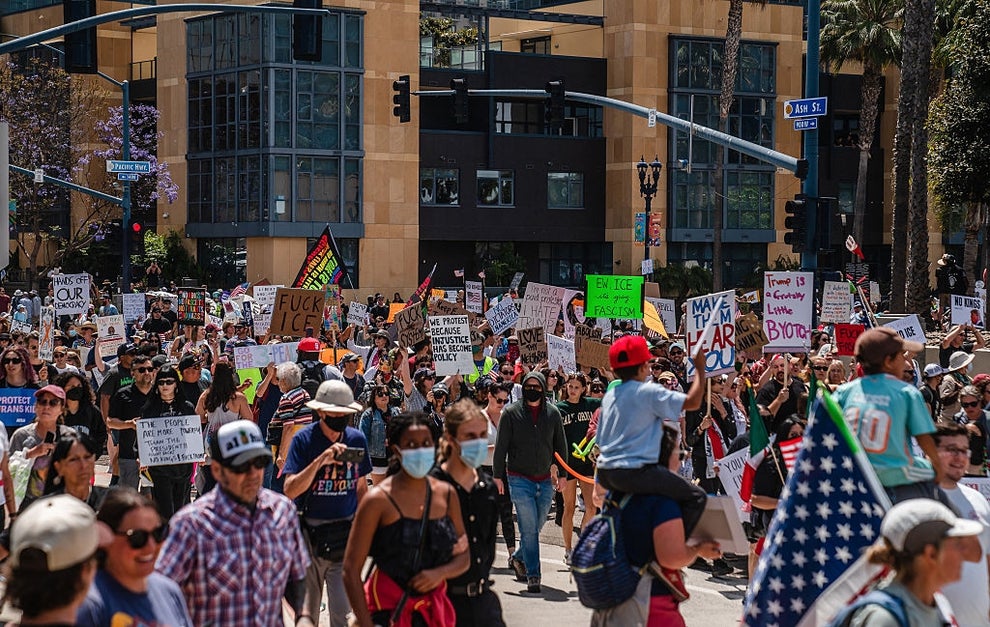
That agenda is coherent, but it is also the agenda of almost every opposition movement that has ever won power in the region. What distinguishes this one is its origin story. The protests began nearly two years ago after 16 people died in the collapse of a railway station canopy in Novi Sad in 2024, and demands for accountability widened into a campaign against alleged corruption and the capture of democratic institutions. The Student List is, in that sense, a movement built around a single moral claim — that institutions should answer to citizens — and its programme is an attempt to turn that claim into policy.
The risk is that a moral claim is easier to sustain in opposition than in office. Restoring judicial independence, for example, requires not just replacing personnel but changing the incentives that made institutions pliable in the first place. Transparency in public procurement requires confronting the business networks that benefited from the old system. These are multi-year projects, and the 90-day government-formation clock is only the beginning of a much longer one.
The risks of a movement becoming a government
The deepest question facing Serbia is not procedural but structural: can a broad civic platform, united mainly by opposition to the previous administration, hold together once it has to make choices that divide its own supporters? The Student List brings together technocrats, academics, civic activists and professionals whose unity, as commentators have noted, currently rests primarily on a shared rejection of the old order. Governing will require it to develop a shared positive programme — on the economy, on relations with the European Union, on Kosovo — where its members may disagree sharply.
There is also the question of experience. A cabinet drawn from outside traditional party politics brings credibility and independence, but also a learning curve in running ministries, managing a budget and negotiating with Brussels. Serbia's neighbours, its creditors and its EU accession partners will all be watching the first appointments for signs of competence as much as of intent.
None of this diminishes the scale of what happened on Sunday. A student protest movement that began on campuses and in the streets now commands a parliamentary majority and record turnout behind it. But elections end arguments about who should govern; they begin arguments about how. The next few weeks — the naming of a prime minister, the composition of the cabinet, and the road to the December presidential vote — will answer the question this article poses, and they will do so in public, under deadlines, with no coalition partner to share the blame.
Key takeaways
- The Student List won 52.54 percent of the vote and is projected to take 140 of 250 parliamentary seats — an outright majority that removes the need for coalition talks.
- Turnout of 68.78 percent was a record high in more than 30 years, underlining the scale of the mandate.
- Ilija Srdanovic, the Novi Sad medical professor who led the movement's campaign, is the frontrunner for prime minister, but no candidate has been formally named.
- The new National Assembly must be seated within 30 days of final results, and a government formed within 90 days after that.
- An extraordinary presidential election must be held by December 27, 2026, with Ana Brnabic holding the presidency temporarily.
- The first cabinet appointments — especially internal affairs, finance and justice — will be the earliest real test of the new government's reform credentials.
Frequently Asked Questions
Who is expected to become Serbia's next prime minister?
Ilija Srdanovic, a cardiology professor at the University of Novi Sad's Faculty of Medicine who led the Student List's campaign, is widely seen as the most likely candidate. However, the movement has not formally named a prime ministerial candidate, having deliberately avoided highlighting individuals during the campaign in favour of its collective identity.
When will Serbia's new government be formed?
The new National Assembly must be constituted within 30 days of the final election results being announced, and a government must be formed within 90 days after that. Because the Student List holds a clear majority, lengthy coalition negotiations should not be needed, but no exact swearing-in date can be set until final results are declared.
How many seats did the Student List win?
The bloc is projected to win 140 seats in the 250-member parliament, well above the 126 required for a majority. United Serbia is expected to take 103 seats, with the remainder going to smaller minority lists.
When must Serbia hold its next presidential election?
An extraordinary presidential election must be held no later than December 27, 2026 — three months after Aleksandar Vucic's resignation as president on September 27. Ana Brnabic, president of the National Assembly, holds the post temporarily in the meantime.
Why did the Student List win?
The movement grew out of nearly two years of youth-led protests that began after 16 people died in the 2024 Novi Sad railway station canopy collapse. Demands for accountability widened into a broader campaign against alleged corruption and institutional capture, and the Student List's programme promised to fight corruption and organised crime, restore judicial independence and media freedom, and improve living standards and education.
Sources
- Al Jazeera — "Serbia after Vucic: Who will be PM and when will a government be formed?"
- Daily Sabah — "Elections in Serbia: What lies ahead in post-Vucic era?"
- Reuters — "Serbia's Vucic concedes defeat as student-led movement wins parliamentary election" (via Chronicle's earlier coverage)