Israel and Lebanon are formally bound by a US-brokered ceasefire framework, but on the ground the truce exists more on paper than in practice. A deal signed in Washington on June 26, 2026 promised phased Hezbollah disarmament, a gradual Israeli withdrawal from southern Lebanon, and the deployment of the Lebanese army — yet Israeli strikes continue almost daily across the south, only one of the two agreed "pilot zones" has begun operating, and the next round of diplomatic talks has been pushed to October. Here is where things stand.
Table of Contents
- Latest developments (updated October 5, 2026)
- The Ceasefire Framework: What the June 26 Deal Says
- Strikes Continue Despite the Truce
- Diplomacy: Stalled Talks and a Military Meeting in Florida
- The Humanitarian Toll
- UNIFIL's Exit and the Coming Security Vacuum
- Key Takeaways
- Frequently Asked Questions
- Sources
- Read Next on Chronicle
Latest developments (updated October 5, 2026)
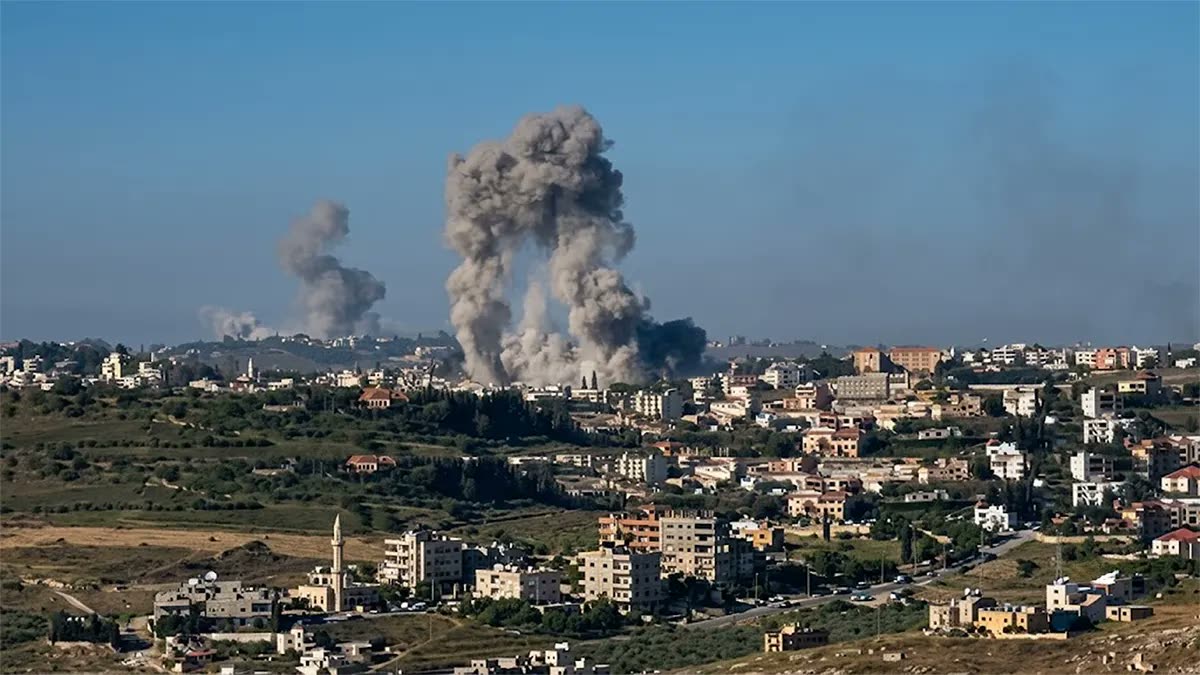
The most recent escalation came on Saturday, October 3, when the Israeli army carried out a wave of demolitions, airstrikes and artillery shelling across southern Lebanon, according to the official Lebanese National News Agency. In Houla, in the Marjayoun district, Israeli forces planted explosives in a private school building and detonated them, destroying the structure, and set fire to homes in the town, A News reported.
The same day, Israeli artillery shelled Khiam and repeatedly targeted Tallouseh and Bani Hayyan, while warplanes carried out two strikes on Bani Hayyan. In the Nabatieh district, fighter jets hit Kfar Tibnit in two waves, and the outskirts of Mayfadoun and Zawtar al-Sharqiyah came under "heavy and concentrated" artillery fire. Israeli forces also carried out large detonations in Aitaroun and Tallouseh, and artillery targeted Mansouri and Majdal Zoun in the Tyre district, where earlier blasts sent white smoke rising around residential areas and caused tremors felt across Tyre, per the agency.
Separately, a Lebanese official source told Al Mayadeen that a military meeting bringing together Lebanese, US and Israeli representatives is scheduled for Tampa, Florida, under US Central Command supervision, running October 20–22. The meeting will be strictly military, with no political participation, and no date has been set for an eighth round of political negotiations.
The Ceasefire Framework: What the June 26 Deal Says
On June 26, the US, Lebanon and Israel reached a trilateral framework agreement in Washington. Among its provisions are the phased disarmament of Hezbollah, the gradual withdrawal of Israeli forces from southern Lebanon, and two "pilot zones" where the Lebanese Armed Forces (LAF) would assume security responsibility from the IDF, according to the UK Parliament's House of Commons Library. The disarming and verification process has not been made public.
Implementation has been limited. The first pilot zone was launched in July, but the second has not yet begun to be implemented, and no further zones have been announced. In July, the Lebanese army said continued Israeli attacks had "obstructed" its efforts to deploy to new areas, the Commons Library briefing notes.
The parties read the deal differently. The Lebanese government, whose objectives include Israeli withdrawal and LAF deployment throughout Lebanon, called the agreement a "first step" but warned that acting against Hezbollah would carry a "high cost". Israel says the framework is "performance-based" and its troops will remain in southern Lebanon so long as Hezbollah remains a threat. Hezbollah and its allied Amal movement have opposed the framework and called it "impossible" to implement.
Strikes Continue Despite the Truce
While Hezbollah has largely held its fire, Israel has launched hundreds of strikes a day, according to the UN peacekeeping mission — a picture confirmed by NPR, whose reporters visited the first and so far only pilot zone at Zawtar al-Gharbiyah on October 1. From a Lebanese army checkpoint there, they heard the fourth or fifth airstrike in half an hour, near Ali al-Taher Hill, where Israel says it detonated tunnels in a Hezbollah command centre.
The IDF said it struck more than 370 Hezbollah targets in southern Lebanon over the past month, JNews reported. In September, Israeli officials confirmed a major strike on an underground Hezbollah facility at the strategic Ali al-Taher ridge — and reemphasised that they have no intention of withdrawing from areas Israel holds in southern Lebanon, per Haaretz.
The current round of fighting began in March 2026, when Hezbollah drew Lebanon into the broader Middle East war by attacking Israel in support of its backer Iran, prompting massive Israeli airstrikes and a ground invasion that Lebanon says has killed more than 4,300 people, according to The Times of Israel, citing Lebanon's health ministry.
Diplomacy: Stalled Talks and a Military Meeting in Florida
The next round of indirect negotiations between Israel and Lebanon — which had been expected in Rome — has been postponed to October, a US official said, with the delay attributed to scheduling conflicts including the UN General Assembly session, a Paris conference and the Jewish holiday period, Gulf News reported.
On September 28, Lebanese Prime Minister Nawaf Salam met US Secretary of State Marco Rubio in Washington and pushed for the framework agreement to move from principles to implementation — full Israeli withdrawal, Lebanese army deployment, and weapons confined to the state throughout its territory, The Times of Israel reported. Rubio posted afterwards that he reaffirmed "strong US support as Lebanon implements the Trilateral Framework – the only path to a durable peace with Israel," adding that "the United States stands with a sovereign Lebanon, free from Hezbollah and Iranian influence."
Meanwhile, Lebanese President Joseph Aoun has said the Israel–Lebanon ceasefire talks are "independent" from US–Iran ones, according to the Commons Library briefing.
The Humanitarian Toll
Civilians are paying a steep price. Lebanon's health ministry says more than 4,300 people have been killed since March, a figure that does not differentiate between civilians and combatants. Around 329,000 people remain displaced since the latest conflict erupted, Prime Minister Salam told UN Secretary-General António Guterres in late September, urging continued support for the humanitarian response, Türkiye Today reported.
A handful of mostly Christian and Sunni villages have been allowed to remain populated inside Israel's self-declared "security zone," but residents must get Israeli approval — routed through UN peacekeepers — for virtually every journey in or out, and peacekeepers frequently escort their convoys, The National reported on October 2. With UNIFIL's mandate expiring within months, residents told the paper they fear being left "at God's mercy."
UNIFIL's Exit and the Coming Security Vacuum
The UN Interim Force in Lebanon (UNIFIL) — roughly 7,500 peacekeepers from 46 countries who have served as a buffer between Lebanon and Israel since 1978 — is heading for the exit. Under US pressure, the UN Security Council voted in August 2025 not to renew the force's mandate after 2026, with troops completing a drawdown in 2027, according to the Commons Library.
UNIFIL's head of mission, Major General Diodato Abagnara, told Reuters on September 19 that it was critical for other UN agencies and Lebanese troops to take over the force's tasks — including escorting humanitarian aid convoys — before the pull-out. He acknowledged it could be "very difficult" to hand over some posts, given that more than half lie within areas now controlled by Israeli troops. Seven UNIFIL peacekeepers have been killed in the 2026 conflict, the mission says.
Lebanon is asking for a successor force. President Aoun has said the "best and most optimal option" remains extending UNIFIL's mandate, and France and Italy have said they want to set up a multinational coalition to succeed it, Türkiye Today and Free Malaysia Today reported. Diplomats worry UNIFIL's departure will mean an end to the UN's "eyes and ears" in southern Lebanon.
Key Takeaways
- A trilateral US–Lebanon–Israel framework agreement signed June 26, 2026 promises Hezbollah disarmament and gradual Israeli withdrawal, but implementation has largely stalled — only one of two "pilot zones" for the Lebanese army is operating.
- Israeli strikes continue almost daily across southern Lebanon; on October 3, Israeli forces demolished a school in Houla and shelled towns across the south, per Lebanon's state news agency.
- The IDF says it struck over 370 Hezbollah targets in the past month and has ruled out withdrawing from the areas it holds in the south.
- Lebanese PM Nawaf Salam pressed US Secretary of State Marco Rubio on September 28 for real implementation; a Lebanon–US–Israel military meeting is set for Tampa, Florida, on October 20–22.
- Lebanon's health ministry says more than 4,300 people have been killed since March, and the prime minister says around 329,000 remain displaced.
- UNIFIL's mandate ends at the close of 2026 with a full drawdown in 2027; Lebanon is seeking a successor international force to avoid a security vacuum.
Frequently Asked Questions
Is the Israel–Lebanon ceasefire holding?
Formally, yes — the June 26 trilateral framework remains in force, and Hezbollah has largely held its fire. In practice, it is heavily violated: the UN peacekeeping mission says Israel has launched hundreds of strikes a day, and Lebanon's state news agency reports near-daily demolitions, shelling and airstrikes in the south.
What does the June 26 framework agreement require?
Phased disarmament of Hezbollah, gradual withdrawal of Israeli forces from southern Lebanon, and deployment of the Lebanese Armed Forces, starting with two "pilot zones" where the LAF assumes security responsibility from the IDF. The disarmament and verification process has not been published, and only the first pilot zone has begun operating.
Is UNIFIL leaving Lebanon?
Yes. The UN Security Council voted in August 2025 not to renew UNIFIL's mandate after 2026, with a full drawdown to be completed in 2027. Lebanon wants a new international force — European or otherwise — to succeed it and prevent a security vacuum, and France and Italy have backed the idea.
How many people have been killed or displaced?
Lebanon's health ministry says more than 4,300 people have been killed since March 2026 (the figure does not distinguish civilians from combatants). Prime Minister Nawaf Salam said in late September that around 329,000 people remain displaced.
What are the pilot zones?
Test areas where the Lebanese army takes over security responsibility from Israeli forces, as a proof of concept for the framework agreement. The first zone was launched in July 2026 — reportedly around Zawtar al-Gharbiyah in the south — but the second has not yet begun, with the Lebanese army saying Israeli attacks have obstructed its deployment.
Sources
- A News — October 3, 2026: "Israeli army blows up school, shells towns in southern Lebanon despite ceasefire."
- NPR — October 1, 2026: "In Lebanon, a test to see if the army can keep Israel and Hezbollah apart."
- Al Mayadeen — October 2026: "Israel sustains Lebanon ceasefire violations with strikes, shelling" (Lebanon-US-Israel military meeting in Tampa).
- UK Parliament House of Commons Library — 2026: "Israel–Hezbollah conflict 2026 and UK response" and "Lebanon and the end of UNIFIL's mandate in 2026."
- The Times of Israel — September 28, 2026: "Lebanese PM meets Rubio, stresses need for IDF withdrawal, Hezbollah disarmament."
- Haaretz — September 2026: "IDF destroys underground Hezbollah complex at Lebanon's Ali al-Taher."
- Reuters — September 19, 2026: "UN peacekeeping chief in Lebanon says smooth transition is critical before pull-out."
- Türkiye Today — September 2026: "Lebanon needs international force after peacekeepers leave, PM says."
- The National — October 2, 2026: "At God's mercy: Life after Unifil in Israeli-occupied Lebanese village."
- Gulf News — September 12, 2026: "Israel-Lebanon Rome Talks Delayed to October."