A devastating new United Nations assessment has laid bare the toll of seven months of renewed war on Lebanon's children: more than one in five households now say their children go to bed hungry, hundreds of children have been killed or maimed, and hundreds of thousands of displaced families cannot go home — even as fighting continues despite a ceasefire deal signed in April.
The findings, published on Wednesday by the UN Children's Fund in a report titled An Enduring Nightmare, describe a generation being crushed between relentless conflict and economic collapse. UNICEF's Lebanon representative, Marcoluigi Corsi, warned that "without urgent and sustained action, an entire generation of children and young people risks carrying the scars of this crisis into adulthood."
A hungry generation
The headline figure is stark: 22 per cent of Lebanese households surveyed said at least one child had gone to bed hungry. Around one in five children has been out of school for a full year. Families are coping by cutting essentials — 46 per cent said they had reduced spending on education, and 17 per cent said their children had stopped attending school altogether. Among those still enrolled, nearly a third cannot learn as normal, often because of emotional distress or difficulty concentrating.
Health has collapsed alongside education. Some 71 per cent of displaced families said they were struggling to meet their children's medical needs — triple the figure from six months ago. Nearly four in ten households said they had no access to medicines their children needed, and about a third said their children had not received necessary healthcare, largely because treatment is unaffordable.
The psychological damage may be the longest-lasting. UNICEF estimates 770,000 children have experienced distress in the past six months; more than half of households reported their children's emotional well-being had deteriorated, and 63 per cent said their children were anxious or nervous. Fourteen per cent of families said at least one child had been put to work — more than double the share recorded in January 2025.
The deadliest six months in decades
The conflict restarted on 2 March, when Hezbollah resumed hostilities with Israel in response to the targeted killing of Ayatollah Ali Khamenei in Iran. Since then, according to UNICEF, at least 261 children have been killed and 1,056 injured — an average of seven children killed or wounded every day. An estimated 12 per cent of the injured children now live with a disability.
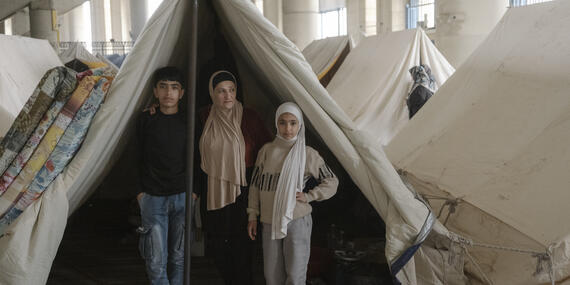
At the height of the fighting, about 1.2 million people were displaced; roughly 340,000 still cannot return because of continued attacks and the scale of destruction in the south, UN figures show. One-third of those unable to go home are children.
Education infrastructure has been shattered: 436 schools have been damaged or destroyed, putting around 100,000 children at risk of losing access to a classroom, and 86 teachers have been killed or injured. More than 700,000 people, including 238,000 children, have been affected by disruptions to water systems, raising the risk of preventable disease.
A ceasefire that never held
An April 17 ceasefire agreement was supposed to halt all hostilities. Instead, the UN aid coordination office, OCHA, continues to report "airstrikes, shelling, demolitions and military activity" across southern Lebanon, with humanitarian access restricted and conditions unsuitable for safe returns. Israel still occupies a strip of land in the south, UN News reported.
UNICEF is blunt about what aid alone can achieve: humanitarian assistance cannot substitute for an end to the fighting. Its teams have treated injured children, delivered supplies to shelters and medical facilities, and supported displaced families since January — but, as Corsi put it, the crisis is outrunning the response.
Key takeaways
- UNICEF's new assessment: 22% of Lebanese households say children go to bed hungry; 20% of children have been out of school for a year.
- Since fighting resumed on March 2: at least 261 children killed, 1,056 injured — about seven child casualties a day; 12% of injured children now live with disabilities.
- Some 340,000 people remain displaced and unable to return home; one-third are children.
- 436 schools damaged or destroyed; 86 teachers killed or injured; 770,000 children experiencing psychological distress.
- An April 17 ceasefire has not stopped airstrikes, shelling and demolitions in the south, according to OCHA.
FAQ
Why did fighting resume in Lebanon this year?
Hezbollah restarted hostilities with Israel on March 2 in response to the targeted killing of Ayatollah Ali Khamenei in Iran, according to reporting by The Jerusalem Post. Israel responded with a major military operation.
Is there a ceasefire?
An April 17 agreement was intended to halt all hostilities, but OCHA reports that airstrikes, shelling, demolitions and military activity across southern Lebanon have continued, and Israel still holds a strip of land in the south.
How many people are still displaced?
Roughly 330,000–340,000 people have not returned home since the escalation, with one-third of them children, according to UN figures cited by Arab News.
What is UNICEF doing?
The agency says it has expanded its response since January 2026: treating injured children, delivering supplies to shelters and medical facilities, and supporting displaced families — but warns that aid alone cannot meet the scale of need.
Sources
- UN News: «Lebanon: One in five children goes to bed hungry, says UNICEF» — https://news.un.org/en/story/2026/09/1168490
- Arab News: «1 in 5 Lebanese households says children go to bed hungry, UN Children's Fund warns» — https://www.arabnews.com/middle-east/1-in-5-lebanese-households-says-children-go-to-bed-hungry-un-childrens-fund-warns-3003982
- The Jerusalem Post: «One in five Lebanese children going to bed hungry, UNICEF assessment shows» — https://www.jpost.com:443/middle-east/article-910311
- JBizNews: «UNICEF warns of severe child deprivation in Lebanon as displacement, economic tolls mount» — https://jbiznews.com/unicef-warns-of-severe-child-deprivation-in-lebanon-as-displacement-economic-tolls-mount/