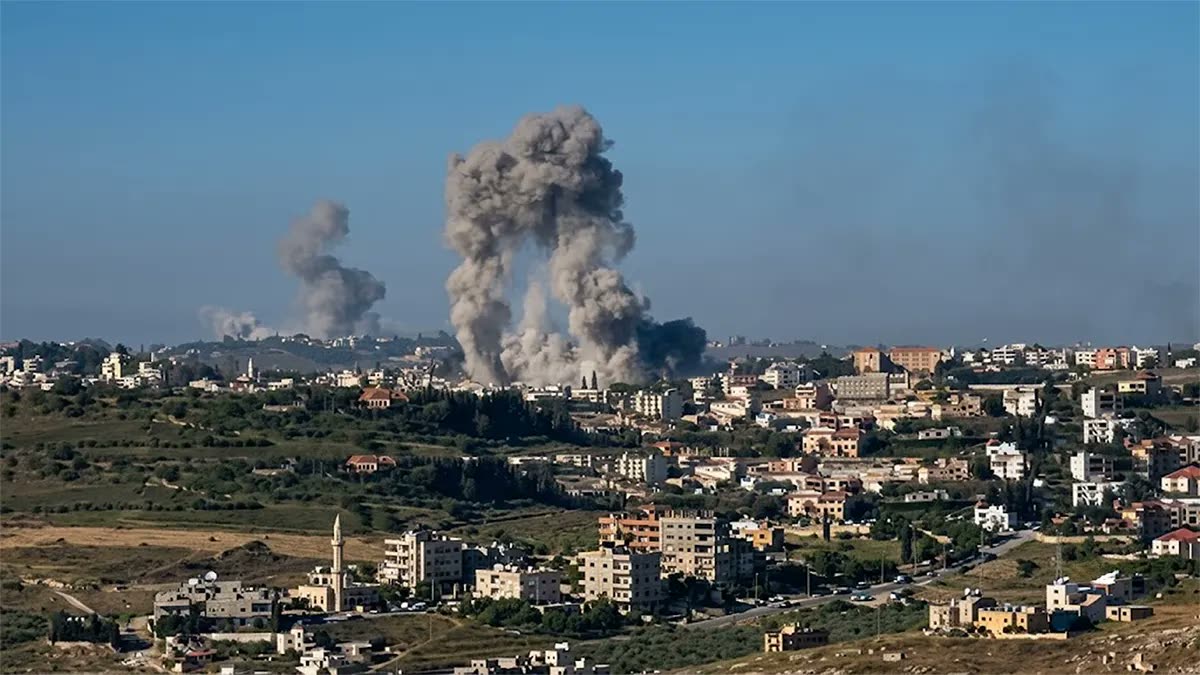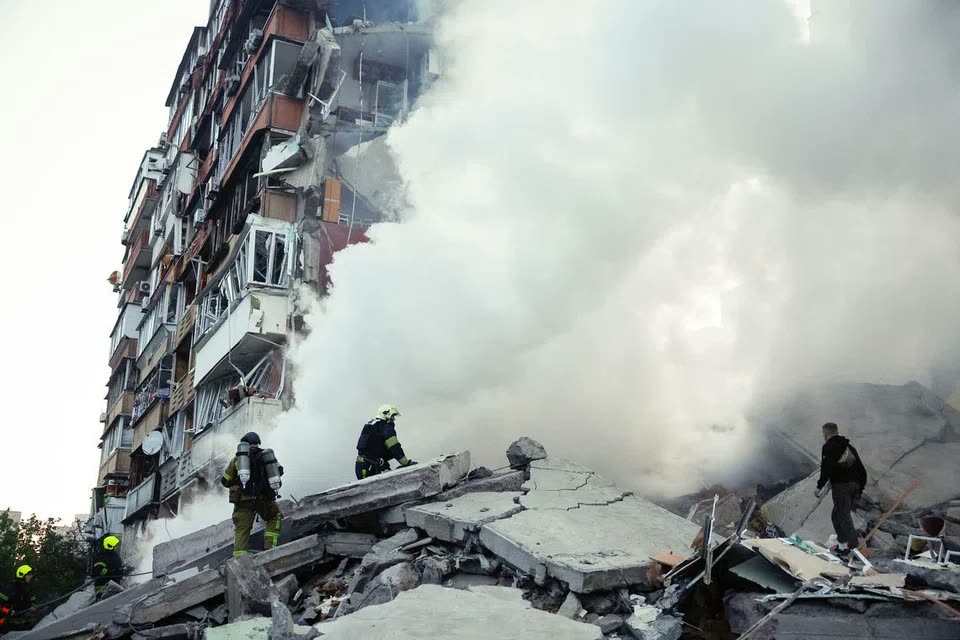
The war in Ukraine is entering its harshest stretch of 2026, and cameras are everywhere it happens. In recent weeks, Associated Press photojournalists in Kyiv have documented burning hospitals and scientists fleeing a blazing academy building; Reuters has verified eyewitness footage of a Russian drone slamming into one of the capital's main bridges; and Ukrainian officials have released imagery of President Volodymyr Zelenskyy's visits to command posts near the front. This hub collects the notable verified photos and videos of recent weeks — what they show, and what they tell us about where the war stands now.
Chronicle does not host unverified battlefield clips. Below we describe visuals confirmed by major outlets and link to their reporting. Viewer discretion: some described footage shows the aftermath of strikes that killed civilians.
Table of Contents
- The Bridges of Kyiv: Drone Strikes Caught on Camera (Oct 2–4)
- AP Photos of the Kyiv Barrage (Sept 28)
- Aftermath Galleries: Vyshhorod and the Kyiv Region (Sept 30)
- Zelenskyy's Visit to the Lyman Command Post (Sept 30)
- The Jet-Drone Wave and Ukraine's Refinery Answer
- Kyiv Through an AP Photojournalist's Lens
- Latest Developments (Updated October 5, 2026)
- Key Takeaways
- Frequently Asked Questions
- Sources
- Read Next on Chronicle
The Bridges of Kyiv: Drone Strikes Caught on Camera (Oct 2–4)
The most-watched footage of the past week shows a Russian drone striking Kyiv's Pivnichnyi — or North — Bridge over the Dnipro River on Sunday, October 4, while German Chancellor Friedrich Merz was in the city. Eyewitness video captured the moment the drone hit the roadway, throwing up flames and smoke as vehicles crossed. Reuters verified the location by matching buildings, the road layout, the bridge structure, and trees to archive and satellite imagery, and Reuters aftermath footage confirmed damage at the same spot, according to a report carried by The Manila Times.
It was the second strike on the crossing in two days. The first, on October 3, damaged the road surface and overhead trolleybus cables and injured two people, Reuters reported, citing Kyiv Mayor Vitali Klitschko. Around the same time, Kyiv's Southern Bridge — which carries both road traffic and the metro — was hit repeatedly, five times in less than 24 hours, forcing closures and traffic chaos across the river, per CNN.
Russia's Defense Ministry claimed the Northern Bridge was being used to move Ukrainian troops and military cargo, The Hindu reported, while Klitschko said the escalated attacks were "tearing Kyiv apart," according to Times Now. Merz, arriving by train for talks with Zelenskyy, announced €1 billion in military aid plus €350 million for energy repairs — and German funding for drone production, including interceptors for Russia's jet-powered drones, Times Now reported.
AP Photos of the Kyiv Barrage (Sept 28)
A week earlier, AP photographers documented one of the heaviest bombardments of the capital this year. The wire's Kyiv team — Dan Bashakov, Efrem Lukatsky, and Evgeniy Maloletka — produced images that have become the defining stills of this phase of the war, collected in photo galleries by Outlook India:
- A man running in front of the Dobrobut Hospital after a drone strike damaged it, smoke rising behind him (Bashakov).
- Rescue workers extinguishing flames at the National Academy of Sciences building in central Kyiv, its staff evacuating down firefighters' ladders (Bashakov).
- Paramedics carrying an injured woman into an ambulance in front of the burning academy building (Bashakov).
- Smoke pouring from the hospital and an adjacent residential building, watched by stunned residents from their windows (Maloletka).
- Firefighters preparing to attack the blaze after another Russian air attack on the capital (Lukatsky).
According to Al Jazeera's gallery of the same attack, at least seven people were killed and more than 80 wounded on Monday, September 28, as strikes hit apartment blocks, offices, petrol stations, data centres, and cultural sites. A high-speed drone smashed into the academy building near the German embassy and government institutions, killing a woman there. Three more people were killed in a strike on an office center in Dnipro; dozens were wounded in Kharkiv, Zaporizhzhia, and Odesa. Moscow says it targets military-related sites; Ukraine accuses Russia of systematic attacks on civilians and infrastructure to cripple the economy and force concessions.
Aftermath Galleries: Vyshhorod and the Kyiv Region (Sept 30)
Photos provided by Ukraine's Emergency Services and distributed via AP captured the wreckage two days later. In a second Outlook India gallery, rescuers extinguish a fire in a garage destroyed by a drone strike in the Kyiv region, and — in one of the most-circulated images of the week — boys stand beside a residential house flattened by a Russian missile strike in Vyshhorod, rocket fragments scattered on the ground nearby (Evgeniy Maloletka). A separate image shows a Ukrainian air defense soldier scanning the evening sky in Kyiv on September 19, ready to repel another drone wave (Efrem Lukatsky).
Zelenskyy's Visit to the Lyman Command Post (Sept 30)
The same week, Ukraine's presidency released photos of Volodymyr Zelenskyy visiting a military command post near Lyman in the Donetsk region, meeting commanders and soldiers involved in Operation Vivaldi against Russian forces, according to the Guardian's Ukraine war briefing of October 4. In an interview with Reuters days earlier, Zelenskyy said Ukrainian intelligence had obtained documents showing that Vladimir Putin had issued a new military doctrine authorizing strikes on a much broader range of civilian targets ahead of winter — infrastructure, logistics, roads, schools, hospitals — "to pressure people to leave the capital," in his words.
Zelenskyy's stated response: Ukraine will step up attacks on Russian oil refineries — "what gives money to them for this war" — while refusing to target civilians. Read our full coverage: Zelenskiy says Ukraine will step up strikes on Russian oil refineries in response to Moscow's 'new doctrine' of attacks.
The Jet-Drone Wave and Ukraine's Refinery Answer
One of the war's defining technical trends in 2026 is the shift to jet-powered attack drones. Zelenskyy said on October 4 that Russia had used more than 1,900 attack drones against Ukraine in the previous week alone — over 800 of them jet-powered — along with 1,700 aerial bombs and 25 missiles, according to Ukrainska Pravda. Russia also claims it intercepted hundreds of Ukrainian drones between Saturday night and Sunday morning, a claim Reuters said it could not independently verify, The Hindu reported.
Combat footage circulating from Ukrainian drone units — particularly the military's Magyar's Birds 414th UAS brigade and other FPV units operating near Pokrovsk and Toretsk — shows the mirror image of the same technological war: hexacopters dropping anti-tank mines onto Russian positions, FPV interceptors downing reconnaissance drones, and strikes on Russian logistics deep in the Donbas. Such footage is released by the Ukrainian military itself and carries its spin; treat it accordingly.
The drone race has become an economic one too: Washington's PowerUS and the Trump family's Ukrainian drone-tech push shows how deeply the war's drone revolution has embedded itself in Western defense markets.
Kyiv Through an AP Photojournalist's Lens
Perhaps the most striking visual journalism of the month isn't a single strike but a personal account from an AP photojournalist who spent four weeks in Kyiv as the attacks intensified. His photos show thousands of residents sleeping in metro stations during major barrages, firefighters responding to strikes across the city, and — amid it all — ordinary life continuing: people meeting in cafes, children filing into school shelters, a couple celebrating their wedding on the same day a drone damaged their apartment. Each morning, residents stopped for a nationwide minute of silence honoring the dead.
"This time, I saw greater exhaustion, resignation and little hope of an immediate end to the fighting," he wrote, contrasting this trip with an earlier visit. "Kyiv felt like a city living not between moments of war, but within them."
Latest Developments (Updated October 5, 2026)
- Kyiv bridges remain restricted. After the October 2–4 strikes on the Southern and Northern Bridges, traffic across the Dnipro has been restricted or suspended on several crossings, with authorities reportedly preparing pontoon bridges as backups, per Times Now.
- Germany's new aid package. During Merz's October 4 visit, Berlin pledged €1 billion in military aid and €350 million for energy repairs, plus funding for Ukrainian drone production — including interceptors for jet-powered Russian drones, per Times Now.
- Zelenskyy's refinery warning stands. Russia has promised to intensify strikes after Zelenskyy told Reuters Ukraine would step up attacks on Russian oil refineries, The Hindu reported.
- The diplomacy track. The wider US–Russia–NATO posture remains fluid; our analysis of the Trump administration's position is here: Russia, US and NATO: Trump's stance explained.
Key Takeaways
- The most-watched war footage of the week is Reuters-verified eyewitness video of a Russian drone hitting Kyiv's North Bridge on October 4 — the second strike on the crossing in two days, hitting while Germany's chancellor was in town.
- AP photographers documented September 28's Kyiv barrage — a burning hospital, a blazing academy building, civilians evacuating down ladders — in images now defining this phase of the war.
- Zelenskyy says Russia has used 1,900+ drones in a week (800+ jet-powered) and that Moscow has issued a "new doctrine" targeting civilians and infrastructure ahead of winter; Ukraine vows to answer with more refinery strikes.
- Germany pledged €1 billion in military aid and €350 million in energy repairs during Merz's October 4 visit.
- Chronicle does not host combat footage; we describe and link visuals verified by Reuters, AP, and other established outlets.
Frequently Asked Questions
Is there verified video of the Kyiv bridge drone strikes?
Yes. Reuters verified eyewitness video of the October 4 drone strike on Kyiv's Pivnichnyi (North) Bridge, confirming the location against archive and satellite imagery, according to The Manila Times carrying the Reuters report. It followed a strike on the same bridge on October 3.
Why is Russia striking Kyiv's bridges?
The bridges over the Dnipro connect the capital's two halves — over a third of Kyiv's 3 million residents live on the east bank while most workplaces are on the west — and the crossings also serve military logistics. Russia's Defense Ministry claimed the Northern Bridge moved troops and cargo; Kyiv says the campaign is meant to "tear the city apart" and disrupt daily life, per CNN and Times Now.
What happened in the September 28 Kyiv strikes?
A Russian drone and missile barrage hit apartment blocks, offices, petrol stations, data centres, and cultural sites. At least seven people were killed and more than 80 wounded, according to Al Jazeera. AP photographers documented the aftermath at the National Academy of Sciences and Dobrobut Hospital.
What are jet-powered drones?
A newer class of Russian attack drone with jet engines, making them faster and harder to intercept than the propeller-driven Shaheds they are replacing. More than 800 of the 1,900+ drones Russia used in one week in early October were jet-powered, Zelenskyy said, per Ukrainska Pravda.
Can I watch Ukraine war videos on this site?
Chronicle does not host combat footage. This hub describes visuals verified by outlets such as Reuters and AP and links to their reporting so you can view them at the source.
Where can I see verified Ukraine war photos?
The photo galleries cited above — Outlook India's collection of AP images and Al Jazeera's gallery of the September 28 strikes — are good starting points for verified stills.
What is Operation Vivaldi?
The Guardian's October 4 briefing refers to Operation Vivaldi as the Ukrainian effort involving commanders and soldiers near Lyman in the Donetsk region, whom Zelenskyy visited on September 30. Details beyond the official visit photos remain limited.
How is Ukraine responding to the strikes?
Zelenskyy told Reuters Ukraine will increase attacks on Russian oil refineries — "what gives money to them for this war" — in response to Moscow's new doctrine of strikes on Ukrainian cities and infrastructure, while refusing to target civilians.
Sources
- Reuters — October 2026: "Bridge across Dnipro river in Kyiv hit during Russian attack, mayor says." Also: eyewitness video verification of the October 4 North Bridge strike (via Manila Times).
- CNN — October 3, 2026: "Russia strikes another major bridge in Kyiv as attacks on Ukrainian capital escalate."
- The Hindu — October 5, 2026: "Russia says it hit Kyiv bridge, two vessels in Black Sea."
- Al Jazeera — September 28, 2026: "Photos: Russian drone strikes pound civilian targets across Kyiv."
- Outlook India — September/October 2026: "In Photos: Russia-Ukraine War — Strikes, Destruction And Life On The Front Lines" and "War Rages On Between Russia And Ukraine" (AP images).
- Ukrainska Pravda — October 4, 2026: "Video shows Russian drone strike on Kyiv's Pivnichnyi Bridge."
- Times Now — October 2026: coverage of the Kyiv bridge strikes and Merz's visit.
- The Guardian — October 4, 2026: "Ukraine war briefing: Kyiv to increase oil refinery attacks because of Moscow's winter strategy, Zelenskyy says."
- AP (via Reflector.com) — September 2026: "A personal account of daily life in Kyiv amid intensified Russian attacks, in photos."