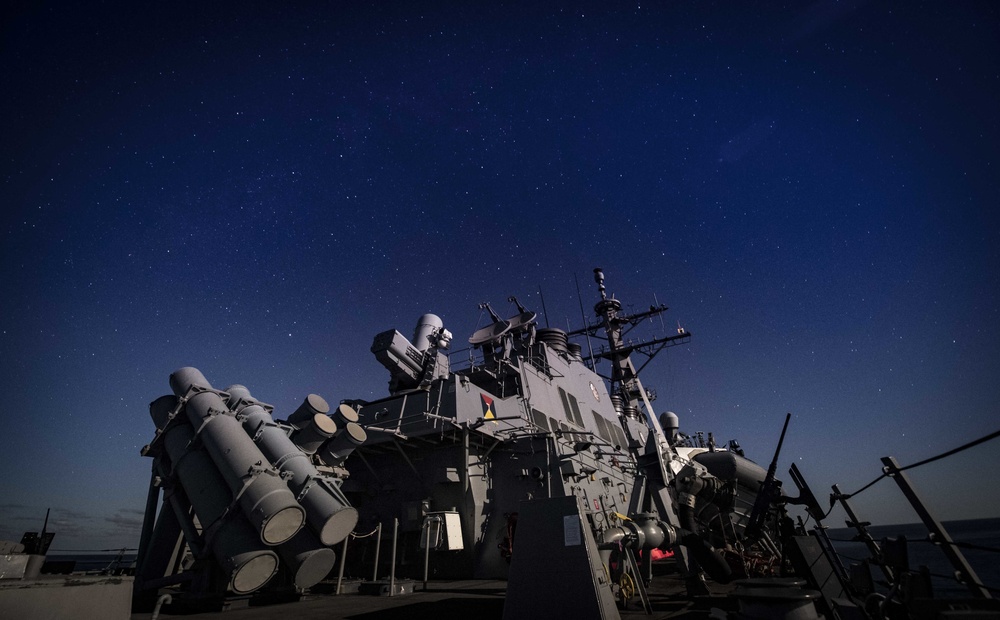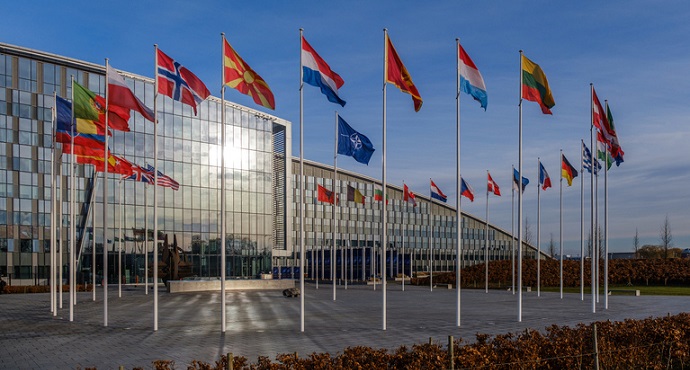
Four years into Russia's full-scale invasion of Ukraine, the relationship between Moscow, Washington and NATO is being reshaped by a single force: President Donald Trump's demand that America do business and make deals where its predecessors drew red lines. The result is a strange triangle — an energized NATO spending at record levels, a US administration negotiating directly with the Kremlin over oil and ceasefires, and a war in Ukraine that grinds on through a fifth year of fighting.
Table of Contents
- The War: Where the Fighting Stands
- Trump's Diplomacy: Energy Ceasefires and the Trilateral Push
- The Lukoil Deal: Business Inside the Peace Talks
- Sanctions: The Lever Trump Finally Pulled
- NATO's Spending Revolution
- Latest Developments (Updated October 5, 2026)
- Key Takeaways
- Frequently Asked Questions
- Sources
- Read Next on Chronicle
The War: Where the Fighting Stands
Russia's war against Ukraine is now in its fifth year since the full-scale invasion of February 2022, and the battlefield remains brutal even as diplomats talk. On October 3, 2026, Russia attacked a Liberian-flagged cargo ship in one of Ukraine's Black Sea ports in the Odesa region, killing one person and injuring three, according to the Ukrainian sea ports administration, as Newswav reported. The strike fits a broader pattern: Moscow has effectively renewed its blockade of Ukraine's Black Sea ports since the summer, disrupting grain and steel exports and dealing a heavy blow to the Ukrainian economy.
Kyiv, meanwhile, has carried its own war into Russia's energy sector. Ukrainian strikes on Russian oil refineries have knocked out a large share of Russia's oil production — close to half, according to oil analysts cited by NPR — and the damage has rippled into global fuel markets, stoking diesel prices worldwide, per NPR reporting. President Volodymyr Zelensky has been characteristically blunt: Ukraine will agree to an energy ceasefire only if Russia also suspends attacks on Ukraine's power grid, which Moscow has hammered for four consecutive winters.
Trump's Diplomacy: Energy Ceasefires and the Trilateral Push
The Trump administration has made the most sustained US diplomatic push of the war so far, and it runs through a narrow team: Special Envoy Steve Witkoff and the president's son-in-law Jared Kushner. After visiting Kyiv and Moscow in early September, the pair have been in contact with both sides — and on October 4, Zelensky said Washington is proposing negotiations "at the technical level in a trilateral format by the end of October," telling reporters he is open to holding them in the UAE or any other country the US proposes, according to the Kyiv Independent.
That push follows a 40-minute meeting between Trump and Zelensky at UN headquarters in New York in late September, where Zelensky said Kyiv was ready for "any format" of an energy ceasefire with Moscow — but that Trump made no request for Ukraine to unilaterally halt its strikes, per Ukrinform. Trump, whose approval ratings have slumped amid high fuel prices ahead of the November US midterms, had voiced concern that Ukraine's refinery strikes were feeding global diesel inflation — though Zelensky said Trump was cordial but noncommittal on the truce idea, the South China Morning Post reported. Notably, Trump has effectively cut off US military aid to Ukraine, and there is no indication he plans to reverse that, according to NPR.
Moscow, for its part, has shown no signal of pausing its assault on Ukraine's power grid — and sources told the Kyiv Independent that Trump privately doubts Vladimir Putin will agree to an energy truce before winter.
The Lukoil Deal: Business Inside the Peace Talks
The most unusual feature of the Trump-era diplomacy is how openly commerce is woven into it. On October 3, 2026, the New York Times reported that the administration's talks with Russia have expanded to include a multibillion-dollar deal involving Lukoil's foreign oil assets — oil fields, refineries and gas stations around the world owned by Russia's second-largest oil producer, per Reuters.
Putin raised the deal himself during a September 5 meeting with Witkoff and Kushner at the Kremlin, framing it as proof to Russians that business with the United States could resume, according to the Times reporting relayed by BBRW. The group pursuing the deal includes US billionaire Todd Boehly, Middle Eastern groups with business ties to the Kushner and Witkoff families, and an arm of the US government — but it would need approval from both Washington and the Kremlin. The envoys argued it could build goodwill and lean on global energy prices. As the Kyiv Independent noted, Lukoil — accounting for about 2% of global oil output — has been under US sanctions since 2025, with its US-based assets frozen.
Sanctions: The Lever Trump Finally Pulled
For most of his second term, Trump held back on new sanctions against Russia. That changed in October 2025, when his administration sanctioned Russia's two biggest oil companies — state-owned Rosneft and privately held Lukoil — because of what the Treasury called Russia's "lack of serious commitment to a peace process," Reuters reported. Together the two companies account for more than 5% of global oil output, a powerful signal of Trump's intent to squeeze Russia's finances and force the Kremlin toward a peace deal, the same reporting noted.
The sanctions marked a dramatic U-turn: only days earlier Trump had announced he would meet Putin in Budapest. "I just felt it was time," Trump said at the time, adding he hoped the sanctions "won't be on for long" and that he expected the war to be settled, per Reuters. The effect was immediate: oil prices rose about 5%, Chinese state oil majors suspended Russian oil purchases in the short term, and Indian refiners — the largest buyers of seaborne Russian oil — prepared to cut imports. Analysts note the Urals discount to Brent widened to record levels after the sanctions took full effect in November 2025, squeezing the Kremlin's revenue, according to Europesays.
Trump has also kept secondary-pressure tools loaded. In late September 2026 he signed a new law allowing tariffs on Russia and countries buying its oil — legislation championed by the late Senator Lindsey Graham — though in his UN speech he said using those powers was not imminent, NPR reported.
NATO's Spending Revolution
Trump's most concrete victory may be inside the alliance itself. At the 2026 NATO summit in Ankara in July, allies committed to what the White House calls a historic defense surge. The numbers are real: core defense spending by European allies and Canada is projected to rise nearly 11% to $634 billion in 2026 — from 1.62% of GDP in 2021, the year before the invasion, to 2.53% of GDP this year (3.93% including defense-related spending), according to NATO figures reported by Qatar Tribune. German core spending alone is set to reach 2.69% of GDP, up from 2.22% in 2025.
The target itself is now 5% of GDP by 2035 — 3.5% for core defense plus 1.5% for related expenditure — and five countries, including Poland and the Baltic states, were already hitting it in 2026, per Arab News. The summit's final communiqué reaffirmed Article 5's mutual-defense clause, and Secretary-General Mark Rutte announced new purchases "worth tens of billions of dollars and growing," including a push to spend $40 billion on NATO drone defense over five years, the Qatar Tribune reported.
The White House fact sheet counted some $3 billion in major deals and joint ventures: a Lockheed Martin Patriot PAC-3 maintenance facility in Europe, Northrop Grumman MQ-4C Triton sales to 10 nations, Lockheed-Rheinmetall ATACMS production in Europe, expanded Stinger production, and an Anduril missile production line in Poland, per the White House. And NATO leaders pledged €70 billion a year in military support for Ukraine through 2027, according to summit reporting by Edgen.
The tone, however, has been anything but serene. Trump said "I'm not happy with NATO" at the Ankara summit, singled out Spain as a "terrible partner" for refusing US basing access for Iran operations, and ordered the Treasury to halt trade with Madrid, the Middle East Institute reported. European leaders, after emergency meetings earlier this year, are increasingly investing in independent defense, space and AI infrastructure on the assumption Trump's transactional approach is permanent, Edgen noted.
Latest Developments (Updated October 5, 2026)
- Trilateral talks proposed for October. Zelensky said on October 4 that the US is pushing for Ukraine and Russia to hold technical-level trilateral negotiations before the end of the month, with the UAE floated as a possible venue. Ukraine has confirmed it will participate; Russia's response is pending, per the Kyiv Independent.
- Lukoil deal enters the peace talks. The New York Times reported on October 3 that a multibillion-dollar deal for Lukoil's foreign oil assets — involving investors tied to US envoys Witkoff and Kushner — is now part of the negotiations, per Reuters. Putin first proposed it at the September 5 Kremlin meeting with the envoys.
- Black Sea strike. Russia hit a Liberian-flagged cargo ship at an Odesa port on October 3, killing one and injuring three, as Moscow's renewed blockade of Ukrainian ports continues to squeeze grain and steel exports, per Newswav.
- Hungary door opens for Ukraine's EU bid. Hungary welcomed Ukraine's bill strengthening education rights for its ethnic Hungarian minority — a step Budapest had made a prerequisite for backing Ukraine's EU accession, per Newswav.
- Energy truce still elusive. Trump is pushing both sides to stop striking energy facilities, but Moscow has shown no sign of pausing attacks on Ukraine's power grid, and Trump himself privately doubts Putin will agree before winter, the Kyiv Independent reported.
Key Takeaways
- The Trump administration is pushing for trilateral technical-level talks between Ukraine and Russia before the end of October 2026, possibly in the UAE; Ukraine has agreed, Russia has not responded.
- A multibillion-dollar deal involving Lukoil's foreign oil assets — with investors tied to US envoys Witkoff and Kushner — is now part of the peace talks, pending approval from Washington and Moscow.
- In October 2025 Trump sanctioned Rosneft and Lukoil, his first major Russia sanctions package, driving a record Urals-to-Brent discount and squeezing Kremlin oil revenue.
- NATO allies agreed at the July 2026 Ankara summit to reach 5% of GDP on defense and security by 2035; European and Canadian core defense spending is up 11% to $634 billion in 2026.
- Ukraine's strikes on Russian refineries have taken a large share of Russian oil production offline and stoked global diesel prices — a dynamic Trump is watching closely ahead of the US midterms.
Frequently Asked Questions
Is the Ukraine war ending?
Not yet. The fighting is in its fifth year, and while Washington is pushing for technical-level trilateral talks in October 2026 and an energy ceasefire, Moscow has shown no willingness to pause its attacks, and no comprehensive peace deal is on the table.
Why is Trump mixing business deals into the peace talks?
Trump's negotiating theory — stated repeatedly by his envoys — is that commercial deals can build goodwill with Moscow and create momentum toward a ceasefire. The Lukoil asset sale is the first specific deal tied to that theory in public reporting.
What is NATO's new spending target?
At the July 2026 Ankara summit, allies recommitted to the 5% of GDP pledge: at least 3.5% for core defense and up to 1.5% for defense-related spending such as infrastructure and resilience, by 2035.
Are US sanctions on Russian oil working?
Partially. Sanctions on Rosneft and Lukoil since October 2025 widened the Urals discount to Brent to record levels and disrupted some buyers, but Russia has continued to sell crude at a discount, and oil prices initially rose on the announcement.
Has the US cut military aid to Ukraine?
According to NPR's analysis, Trump has effectively cut off US military aid to Ukraine, with European allies — who pledged €70 billion a year in military support through 2027 — now carrying the load.
Sources
- Kyiv Independent — October 4, 2026: "US proposes trilateral talks with Russia, Ukraine by end of October, Zelensky says."
- Kyiv Independent — October 4, 2026: "U.S. peace negotiations with Russia could now involve multi-billion dollar Lukoil deal, NYT reports."
- Reuters — October 3, 2026: "US-Russia talks on Ukraine involve multi-billion dollar oil deal, NYT reports."
- Reuters — October 23, 2025: "Putin defiant after Trump sanctions Russian oil companies over Ukraine."
- NPR — September 23, 2026: "Ukraine's Zelenskyy proposes energy truce with Russia during meeting with Trump."
- Ukrinform — September 2026: "There were no requests for Ukraine to unilaterally cease fire — Zelensky after meeting with Trump."
- South China Morning Post — September 2026: "Zelensky meets Trump, says Ukraine ready for energy truce with Russia."
- Qatar Tribune / dpa — July 2026: "NATO reports major spending rise as Trump pushes allies to step up."
- Arab News — July 7, 2026: "NATO says European core defense spending up 11 percent in 2026."
- The White House — July 2026: "Fact Sheet: President Donald J. Trump Secures Historic Defense Investment from NATO Allies."
- BBRW — October 2026: "Trump and Putin link a Ukraine peace push to a Lukoil asset sale."
- Newswav — October 2026: "Ukraine-Russia war latest" (Odesa port ship strike; Hungary minority-rights bill).
- Edgen — July 2026: "NATO allies pledge $50B in arms as Trump threatens trade with Spain."
- Middle East Institute — September 2026: "NATO: Time for a Europe-US Transatlantic Security Bargain."
- Europesays — 2026: analysis of Urals-to-Brent discount widening after Rosneft/Lukoil sanctions.