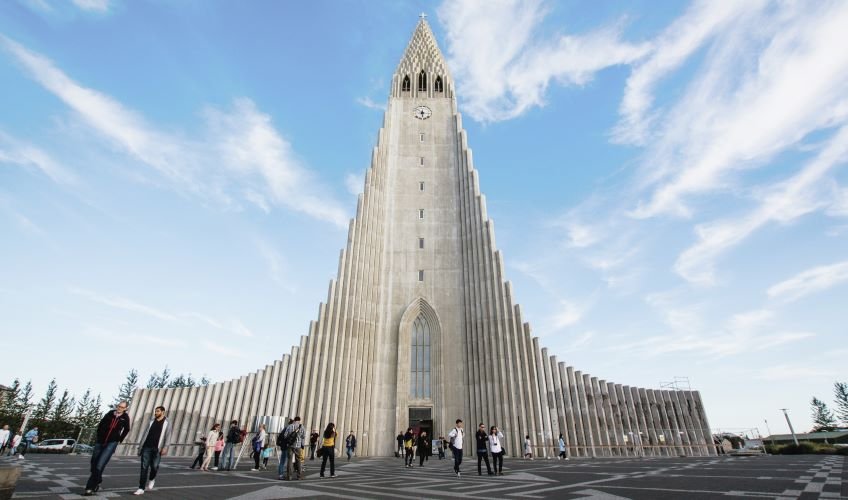
US Secretary of State Marco Rubio arrived in Iceland on Monday, October 5, at the start of a three-country European tour aimed at cementing Washington's growing footprint in the Arctic. The lightning visit to Reykjavik — where he will meet Icelandic officials to discuss "economic and security collaboration" — comes just two weeks after the United States signed a security agreement on Greenland with Denmark in New York, a deal that appears to have closed the chapter on President Donald Trump's threats to annex the Danish territory.
The trip, announced by the State Department on October 1, makes Rubio the first US secretary of state to visit Iceland since Antony Blinken in 2021, according to France24. From Reykjavik he will travel to Athens for the sixth session of the US-Greece Strategic Dialogue and then to Lisbon for talks on defence, economic and technology cooperation, in a tour running from October 5 to 8.
Contents
- Why Iceland, why now
- The Greenland deal that changed the equation
- A country with no army, at the centre of a great-power chessboard
- The map that angered Reykjavik
- Greece and Portugal: the Mediterranean and Atlantic legs
- FAQ
- Sources
- Chronicle related coverage
Why Iceland, why now
The Arctic has become one of the fastest-moving fronts in great-power competition. As sea ice retreats, new shipping lanes are opening through waters Russia and China both covet, and Washington has been moving to lock in allied cooperation across the High North. Iceland, sitting squarely between North America and Europe in the GIUK gap — the naval chokepoint long watched by NATO planners — has regained a strategic importance it last held during the Cold War.
Iceland itself has no standing army and has never had one since gaining independence in 1944. It relies on NATO membership and a 1951 bilateral defence pact with the United States for its security. Two former US ambassadors to Iceland told Radio Free Europe, speaking on condition of anonymity, that Rubio should expect Reykjavik to be receptive to deeper cooperation while listening carefully to a country that places a high value on its independence, Europa Says reported.
Former diplomat Robert Gerber said the visit could build on commitments discussed at a September meeting of Arctic countries on the sidelines of the UN General Assembly, including greater responsibility for Arctic partners to ensure their own security and protect critical infrastructure.
The Greenland deal that changed the equation
The political backdrop to Rubio's visit is the security pact signed in late September on the sidelines of the United Nations General Assembly in New York between the United States, Denmark and Greenland. Under the agreement, Washington plans to establish two new military bases on Greenland, drawing the autonomous Danish territory further into the US orbit — a development that followed months of strained relations after Trump repeatedly floated buying or even annexing Greenland.
The pact, by most accounts, defused the crisis and restored a working relationship with European allies. But it also confirmed Washington's new posture: the Arctic is no longer a diplomatic backwater, and the United States intends to be visibly, permanently present there.
A country with no army, at the centre of a great-power chessboard
For Iceland, the renewed attention is double-edged. The island has long cooperated closely with the United States and NATO on security because of its location, but it guards its sovereignty jealously — and recent events have tested the relationship.
In early September, Trump sparked fresh controversy by sharing an AI-generated map that appeared to depict all of North America, Mexico, the Caribbean, Greenland and Iceland as "the United States of America." Iceland responded by summoning the US ambassador in Reykjavik to denounce the image. Iceland's foreign ministry told AFP the image was "wholly inappropriate."
The episode echoed the damage done during the Greenland saga and helps explain why Rubio's visit is as symbolic as it is substantive: reassurance matters as much as bases and budgets. Security dynamics in Europe have been shifting all year, and small frontline states are watching closely how Washington treats its allies.
Greece and Portugal: the Mediterranean and Atlantic legs
After Reykjavik, Rubio heads to Athens to lead the US delegation at the sixth US-Greece Strategic Dialogue, a high-level forum on defence, energy and regional security — Greece's position in the Eastern Mediterranean gives it outsized relevance as instability persists in the Middle East. The final stop, Lisbon, will focus on defence, economic and technology cooperation, with Portugal's Atlantic position important to US military operations.
The itinerary is a map of Washington's current European priorities: the High North, the Eastern Mediterranean and the Atlantic — each a node in the competition with Russia and China that now defines US strategy. Icelanders themselves recently signalled their mood on Europe: in a late-August referendum, voters rejected resuming EU accession negotiations 52.8 percent to 47.2 percent, talks that have been frozen since 2013.
FAQ
Why is Rubio visiting Iceland now? The visit follows a US-Denmark-Greenland security pact signed in New York in late September and forms part of a broader American push to strengthen its position in the Arctic as competition with Russia and China intensifies. He will meet Icelandic officials on October 5 to discuss economic and security collaboration.
Has a US secretary of state visited Iceland recently? No — Rubio is the first to do so since Antony Blinken in 2021, which underlines how much strategic weight Washington is now placing on the trip.
What did the Greenland deal involve? The United States, Denmark and Greenland agreed that Washington would establish two new military bases on Greenland. The deal appears to have ended President Trump's threats to buy or annex the territory, which had soured relations with the EU.
Why is Iceland strategically important if it has no military? Iceland sits in the GIUK gap between Greenland, Iceland and the UK — a key NATO naval chokepoint — and relies on NATO and a 1951 bilateral defence treaty with the US for security. As Arctic shipping routes open, its location has become critical.
What comes after Iceland on Rubio's tour? Athens, for the sixth US-Greece Strategic Dialogue on defence, energy and regional security, then Lisbon for talks on defence, economic and technology cooperation. The tour runs October 5–8.
Sources
- France24: Rubio visits Iceland as US boosts Arctic presence
- Reuters via The Straits Times: Rubio to visit Iceland, Greece and Portugal next week
- Europa Says / Radio Free Europe: Rubio heads to NATO allies in Europe