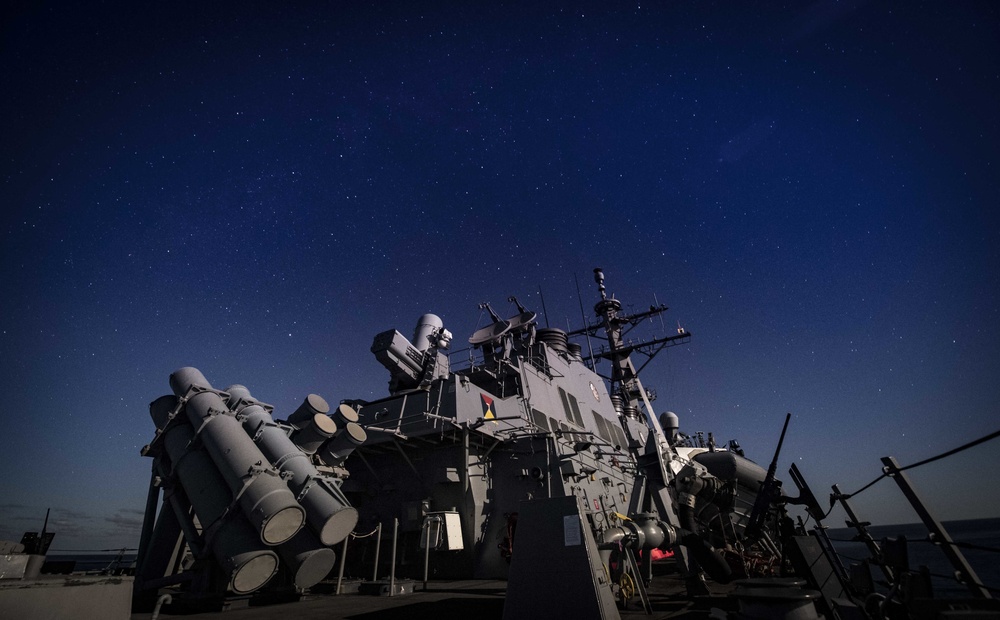
The United States military said on Sunday it had destroyed a suspected drug-trafficking vessel in the Caribbean Sea, killing four people aboard, in the latest of a string of lethal strikes the Trump administration says target "narco-terrorists" but which human rights groups condemn as extrajudicial killings, Reuters reported.
US Southern Command said on X that Joint Task Force Western Hemisphere had "executed a lethal, kinetic strike on a go-fast vessel operating along established narco-trafficking routes in the Caribbean," citing what it called "confirmed intelligence" of the boat's involvement in drug trafficking. It released video showing the vessel moving through the water before being engulfed in an explosion.
Contents
- What the military says happened
- A campaign in its second year
- The legality question
- The war expands onshore
- Key takeaways
- Sources
- Chronicle related coverage
What the military says happened
The strike took place on Sunday, Oct 4, according to SOUTHCOM's statement. The command described those killed as "narco-terrorists" but provided no identities, no evidence that the vessel was carrying drugs at the time of the strike, and no details of the operation beyond the released footage. As with most of the campaign's announcements, the military's case rests entirely on its own assertion of intelligence that it has not made public.
That pattern is precisely what has drawn sustained criticism. President Donald Trump has said the United States is in "armed conflict" with drug cartels in Latin America and has justified the strikes as a necessary escalation to choke off the narcotics flow and the overdose deaths it blames on trafficking. His administration has, however, offered little evidence to support its repeated claims that those killed were smugglers.
A campaign in its second year
The Caribbean strike was the 71st of its kind, according to a Just Security timeline tracking the campaign. At least 235 people have been killed in around 70 strikes since the administration began targeting alleged traffickers in September 2025, with operations spanning the Caribbean Sea and the Eastern Pacific, DT Next reported.
What began as a stated counter-narcotics operation has grown into one of the defining military postures of Trump's second term — a standing campaign of lethal force against civilian boats that the executive branch conducts without judicial review of each target and with only intermittent congressional oversight.
The legality question
Legal scholars, rights advocates and United Nations experts have questioned the campaign since its first months. Human Rights Watch, Amnesty International and independent UN experts have called the strikes unlawful extrajudicial killings. Ben Saul, the UN special rapporteur on human rights and counterterrorism, has said there are "reasonable grounds to believe" the attacks "constituted crimes against humanity of murder under customary international law." The American Civil Liberties Union has dismissed the administration's assertions about its targets as "unsubstantiated, fear-mongering claims."
The scrutiny is now moving through the courts. On September 30, a federal judge in the Southern District of New York ordered the administration to submit for closed-door review the Justice Department's Office of Legal Counsel memorandum that purports to provide the legal basis for the strikes — and to identify everyone who has had access to it. The ruling, Just Security noted, forces the government to at least show a court the document it claims authorizes killing civilians in boats.
The war expands onshore
The maritime campaign is also pushing outward onto land. Defence Secretary Pete Hegseth said during a visit to Panama in August that Colombia, Guatemala and Honduras had agreed to allow the US to carry out joint military operations against criminal groups on their soil — a claim Guatemala promptly denied. Ecuador launched similar joint missions with the US in March, and the administration is pursuing further deals with allied nations to extend its offensive to Latin American territory.
That expansion has already collided with sovereignty concerns, and with the same evidentiary questions that shadow the boat strikes: strikes carried out on partner nations' territory, against targets identified by secret intelligence, with no public accounting afterward.
The tension runs through every strand of the administration's current military posture. Read more about Trump's framing of the military options facing him, and about how the Yemeni government's military operation against the Houthis is reshaping another US-backed front.
Key takeaways
- The strike: SOUTHCOM said it destroyed a go-fast vessel in the Caribbean on Oct 4, killing four people it called "narco-terrorists," citing intelligence it has not made public.
- The campaign: it was the 71st such strike; at least 235 people have been killed across around 70 strikes since September 2025 in the Caribbean and Eastern Pacific.
- The criticism: Human Rights Watch, Amnesty and UN experts call the strikes unlawful extrajudicial killings; a UN rapporteur says they may constitute crimes against humanity.
- The court test: on Sept 30 a federal judge ordered the administration to submit its legal-authorisation memo for closed-door judicial review.
- The expansion: Washington is pressing Latin American governments for deals allowing joint military operations on land, with mixed success.
Sources
- Reuters: US military says it struck vessel in Caribbean, killing four
- Just Security: Timeline of Boat Strikes and Related Actions
- DT Next: US military says latest strike on alleged drug-smuggling boat in Caribbean kills 4