The leaders of Egypt, Eritrea, Sudan and Somalia gathered in the Egyptian coastal city of Alamein on Sunday to confront the renewed war in Ethiopia's northern Tigray region, issuing a joint declaration on regional security and stability. The summit — bringing together four governments with increasingly hostile relations with Addis Ababa — marked a sharp escalation of diplomatic pressure as Ethiopian federal forces re-entered the rebel-held regional capital, Mekelle.
The meeting assembled Egyptian President Abdel Fattah al-Sisi, Eritrean President Isaias Afwerki, Somalia's President Hassan Sheikh Mohamud and Sudan's army chief and de facto leader Abdel Fattah al-Burhan on the sidelines of an African Business Forum. According to the Egyptian presidency, the talks were intended to "co-ordinate and consult on regional issues of interest" to the four countries — but sources told The National the summit was also expected to deepen military cooperation, including steps to safeguard Red Sea shipping.
Mekelle back under federal control
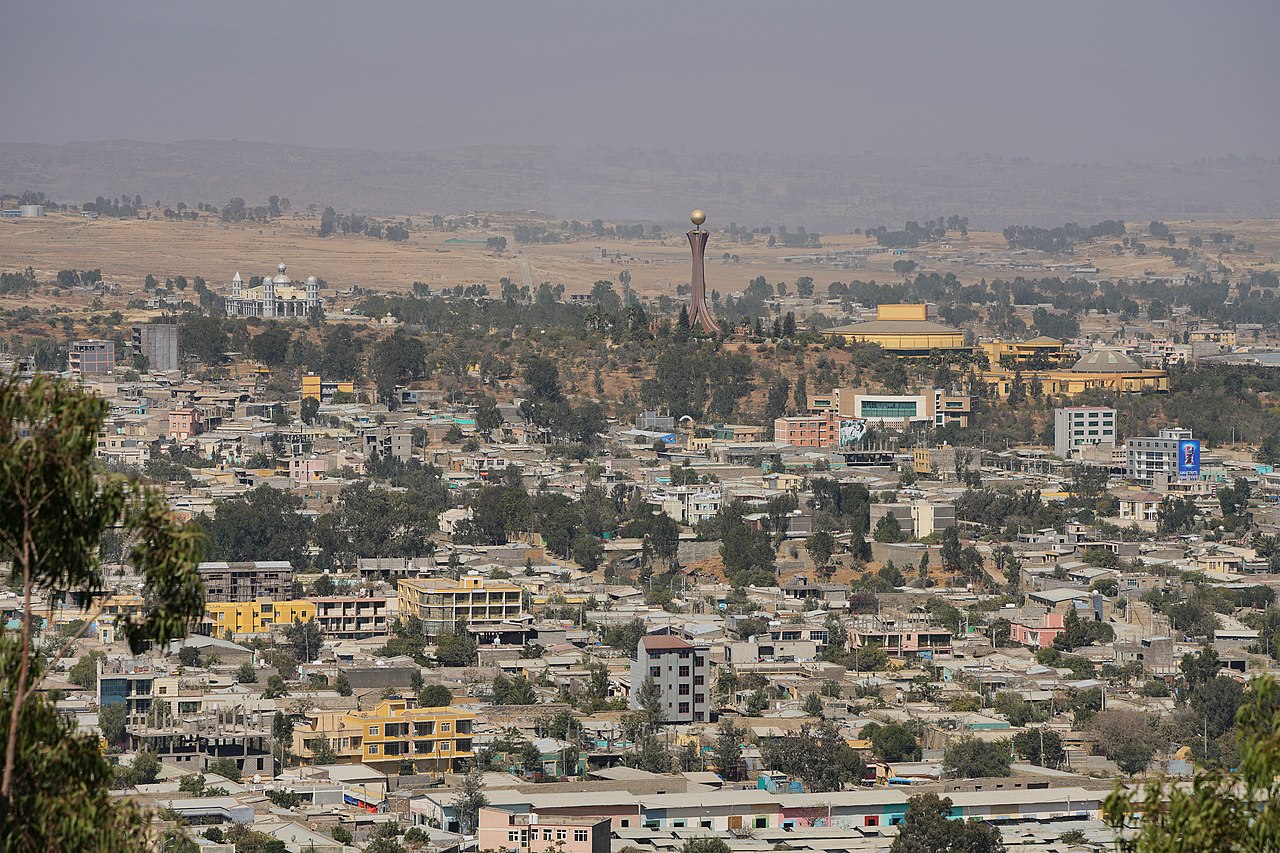
The summit unfolded against a rapid federal military advance in the north. Ethiopian federal forces entered Mekelle on Saturday without a fight, as Tigray People's Liberation Front (TPLF) leaders and fighters abandoned the city, Arab News reported. Federal troops were patrolling the streets and manning key institutions on Sunday, a local journalist told AFP, while communications were restored for the first time in more than a week.
"We have taken control of Mekelle and we are marching forward," a commander with a pro-government militia told AFP. Businesses and shops remained closed, with owners moving stock to safer locations ahead of time for fear of looting and vandalism. "There are no police. Last night, we had to organise ourselves and take care of security," one resident told AFP on condition of anonymity.
The TPLF launched its offensive against federal forces on September 23 — the worst breach yet of the 2022 cessation of hostilities that ended the devastating 2020-2022 civil war, a conflict the African Union says killed more than 600,000 people. The TPLF has long dominated Tigray and ruled all of Ethiopia from 1991 until 2018, when it was marginalised with the rise of Prime Minister Abiy Ahmed.
Accusations of foreign backing
Addis Ababa has accused Eritrea of directly backing the TPLF-led rebellion, with the support of Sudan and Egypt — charges all three countries deny. Eritrea, which shares a long border with Tigray, is the most directly exposed: it accuses landlocked Ethiopia of planning to invade and seize access to its coastline, while analysts say Asmara has backed the rebels in a bid to keep the conflict away from its border.
The confrontation has already carried a heavy diplomatic price. Ethiopia ordered the closure of its embassy in Eritrea and declared 10 Eritrean diplomats persona non grata, prompting Asmara to sever all diplomatic ties. Egypt and Ethiopia expelled each other's diplomats last week in a retaliatory row. For more on the breakdown of relations, see our coverage of the Ethiopia–Eritrea diplomatic rupture.
The TPLF's leader, Debretsion Gebremichael, implied this week that the group would revert to guerrilla-style attacks, as it did when Mekelle fell to government forces in 2020. "We operate under a strategy to strike the enemy wherever we choose," he said — a campaign that ultimately saw the TPLF retake the city the following year.
Warnings against a wider war
The prospect of the conflict spreading beyond Tigray has alarmed Western governments. The European Union, EU member states and the embassies of Canada, Norway and the United Kingdom in Addis Ababa issued a joint statement warning that any renewed fighting would further devastate a region already struggling with drought and severe humanitarian needs, urging all parties to engage "in good faith" on implementing the cessation of hostilities agreement, The Eastleigh Voice reported. The African Union Commission has separately called on Ethiopia, Eritrea and Egypt to exercise "maximum restraint."
Table of Contents
What the Alamein summit signals
The four-way meeting is the clearest sign yet that Ethiopia's internal war is becoming a regional confrontation. All four participants have difficult, in some cases adversarial, relations with Addis Ababa: Egypt is locked in a long-running dispute with Ethiopia over the Nile; Eritrea has gone from peace partner to open adversary in under a year; Sudan's military leadership backs Eritrean positions; and Somalia has tilted toward Egypt as its own relationship with Ethiopia has soured.
By meeting publicly and issuing a joint declaration, the four governments are signalling a loose anti-Addis alliance that Ethiopia will inevitably read as a hostile bloc. The emphasis on Red Sea security is particularly pointed: the Red Sea is the region's most strategically sensitive waterway, and Ethiopia's ambition for sea access has been the subtext of its quarrels with both Eritrea and Somalia. Red Sea security is also at the heart of the parallel confrontation playing out across the water in Yemen — see our report on the Taiz escalation.
How the war resumed
The 2022 Pretoria agreement, brokered by the African Union and Washington, was never fully implemented but kept an uneasy peace until last year. That fragile calm collapsed when a TPLF-led rebel alliance — the "Ethiopian Peoples' Forces Alliance for Survival," combining the TPLF with the Amhara Fano movement, the Oromo Liberation Army and four smaller groups — launched coordinated attacks on September 23.
The initial offensive made alarming gains: pro-government forces reported the capture of key towns and airfields in southern Tigray, and fighting also spread into the Amhara and Afar regions, signalling a broader escalation. The counter-offensive that retook Mekelle suggests federal forces have regained the momentum, but the TPLF's shift toward guerrilla warfare raises the prospect of a long, grinding insurgency rather than a decisive victory.
The regional standoff
The Alamein declaration is unlikely to deter Addis Ababa in the short term — if anything, it confirms the government's narrative that the rebellion enjoys foreign support, a claim that tends to harden rather than soften Ethiopian resolve. The real question is whether the four governments move from words to material support for the TPLF. Egypt has deep interest in pressuring Ethiopia over the Nile; Eritrea, despite Asmara's denials, is already widely suspected of arming the rebels; and Sudan's eastern border has long been porous to weapons and fighters.
The African Union, which helped broker the original ceasefire, has been conspicuously quieter this time. Its High Representative for the Horn of Africa, former Nigerian President Olusegun Obasanjo, has stepped up shuttle diplomacy with meetings in Addis Ababa and Mekelle — but with fighting spreading and regional powers hardening into rival camps, mediation faces far steeper obstacles than in 2022.
What happens next
Three scenarios dominate the near term. First, a protracted federal counter-offensive that pushes the TPLF deep into the highlands and settles into guerrilla war, with mounting humanitarian costs. Second, a wider regional escalation if evidence of direct Eritrean military involvement surfaces — the one development that could turn an internal war into an interstate conflict. Third, a renewed diplomatic track driven by the EU, AU and the United States, though the four-way Alamein bloc makes Addis Ababa less likely to accept mediation from neighbours.
For now, the declaration from Alamein and the fall of Mekelle mark a grim milestone: Ethiopia's war is no longer a localised rebellion but a crisis pulling in every state around it.
FAQ
Who met in Alamein? Egypt's President Abdel Fattah al-Sisi, Eritrean President Isaias Afwerki, Somalia's President Hassan Sheikh Mohamud and Sudan's army chief Abdel Fattah al-Burhan. The summit took place in the Egyptian coastal city of Alamein on October 4, 2026.
What did the joint declaration say? The four leaders issued a joint declaration on regional security and stability, with sources indicating it would include measures to deepen cooperation — including wider military cooperation to safeguard Red Sea shipping.
Why is Ethiopia fighting Tigray again? The TPLF launched attacks on September 23, 2026, in the worst breach yet of the 2022 ceasefire that ended the 2020-2022 civil war. Ethiopia says Eritrea, Sudan and Egypt are backing the rebels; all three deny it.
How deadly was the last war? The African Union estimates the 2020-2022 civil war killed more than 600,000 people, making it one of the deadliest conflicts in the world in recent times.