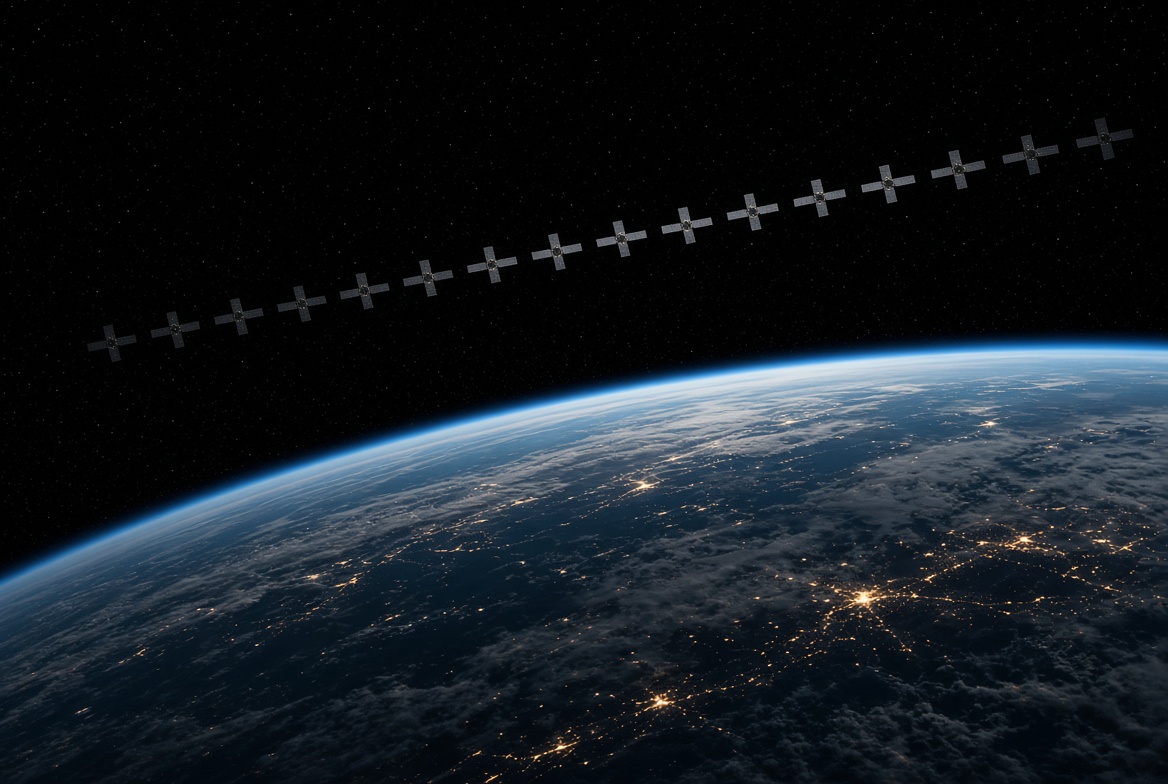
Iran's Foreign Ministry summoned Norway's ambassador in Tehran on Sunday to deliver a formal diplomatic protest over what it described as unauthorized Starlink satellite internet operations on Iranian territory, arguing that Oslo, as the country that registered the network with the International Telecommunication Union, has a legal duty to shut the transmissions down, Press TV reported.
The move turns a technology company into a diplomatic flashpoint — and puts a rarely discussed corner of international telecom law under the spotlight.
Contents
- The summons
- The ITU argument
- Why Starlink alarms Tehran
- Norway's position and the legal grey zone
- What happens next
- Key takeaways
- Sources
- Chronicle related coverage
The summons
Mohammad Hassannejad Pirkoohi, the Foreign Ministry's director general for international peace and security, summoned Norwegian Ambassador Paul Beijer Nestad to the ministry in Tehran on Sunday and handed him an official note of protest. According to Press TV, Pirkoohi accused the United States and Israel of "weaponizing" the SpaceX-operated satellite network for espionage and subversion against the Islamic Republic, and criticized Oslo for failing to act despite what Tehran described as repeated follow-ups.
The complaint, as framed by Iranian state media, is procedural as much as political: Norway is the state that registered Starlink's frequencies and orbital slots with the ITU, the UN agency that coordinates global radio spectrum. Tehran's argument is that this registration carries responsibility — that Oslo cannot license a network at the international level and then disclaim control over where its signals land.
The ITU argument
The legal centrepiece of Iran's protest is a set of decisions by the ITU's Radio Regulations Board, the body that polices cross-border interference. Tehran quoted several recent RRB decisions to support its claim that the registering state must ensure its satellite networks do not provide unauthorized services inside another country's territory.
The underlying principle is long-standing: under the ITU's constitution, a satellite operator may not transmit into a country without that country's authorization. Iran has never authorized Starlink. SpaceX, for its part, has activated the service in countries without government permission before — most famously in Iran during the 2022 protests, when Elon Musk said Starlink would be switched on over the country as Tehran throttled the domestic internet.
Whether Norway can actually force SpaceX to geofence its beams away from Iran is the unresolved question. Technically, Starlink terminals can be deactivated by geography; the company demonstrated that capability when it restricted the service's use in certain conflict zones. Legally, enforcing an ITU ruling against a company headquartered in the United States would require action by the US regulator, the FCC — not by Oslo alone. VoM News noted that Tehran accused Norway of inaction "despite receiving repeated requests," suggesting the ministry sees this as a pattern rather than an isolated complaint.
Why Starlink alarms Tehran
For Iran's leadership, satellite internet is not an abstract infrastructure question. Internet shutdowns have become a standard tool of Iranian crisis management — during periods of unrest, authorities throttle or cut domestic connectivity to slow the spread of protest footage and organizing messages. A parallel network that bypasses state-controlled gateways directly undermines that strategy.
Tehran has previously seized Starlink terminals at the border and warned citizens against using them. Iranian officials have also tied the service to foreign intelligence, a framing that turns the technology dispute into a national-security one — and makes a quiet technical fix politically impossible to sell at home.
Norway's position and the legal grey zone
Oslo has not publicly responded to the summons. The Norwegian Communications Authority registered Starlink's ITU filings years ago, but Norway has no domestic authority over a US company's satellite constellation, and the ITU itself has no enforcement police — its rulings rely on member states to implement them.
The ambiguity cuts both ways. If Tehran's interpretation of the RRB decisions gained traction, registering states could face pressure to police private constellations far beyond their borders, a precedent that satellite-heavy countries would resist. If it fails, Iran's complaint joins a long list of ITU grievances that produced diplomatic theatre but no technical change.
What is new is the setting: the dispute arrives as US–Iran tensions run at their highest in years, with the Strait of Hormuz closed to commercial traffic and Washington weighing military options. In that context, a satellite-internet grievance reads less like telecom housekeeping and more like another front in an escalating confrontation.
What happens next
Tehran demanded that its protest be relayed to the Norwegian government "immediately," with a call for "swift action" to halt the transmissions. In practice, the next move belongs to Oslo's diplomats and, behind them, the US regulator. Neither has signalled any intent to restrict the network.
Expect the dispute to surface at the ITU's next Radio Regulations Board session, where Iran will likely press for a formal ruling it can wave at the industry. Whether that ruling changes anything on the ground depends on a question no telecom treaty has yet answered convincingly: who is responsible when a private constellation sells the sky.
Key takeaways
- The protest: Iran summoned Norway's ambassador on Oct 4 over what it calls unauthorized Starlink operations inside Iran.
- The legal hook: Tehran argues Norway, as Starlink's ITU registering state, must act under Radio Regulations Board decisions to stop unauthorized transmissions.
- The context: Starlink has repeatedly undermined Iran's internet shutdowns during unrest; authorities treat the terminals as a security threat.
- The grey zone: the ITU has no enforcement arm, and restricting a US company's satellites would ultimately require US regulatory action.
- The timing: the summons lands amid the worst US–Iran confrontation in years, with Hormuz closed and oil near $100 a barrel.
Sources
- Press TV: Iran summons Norwegian envoy over US weaponization of Starlink for subversion
- VoM News: Norwegian Ambassador to Iran Summoned by Iran Over Starlink Operations
- Breaking News: Iran summons Norway's envoy over Starlink (via AwesomeCapital)