Serbia's long-serving leader Aleksandar Vucic conceded defeat on Sunday, October 25, 2026, after a student-led opposition movement won a snap parliamentary election, bringing an abrupt end to more than a decade in which he dominated the Balkan country's politics. Speaking on live television before final results were announced, Vucic acknowledged that the Student List had won, saying that on the basis of sample counts "it is clear that we have lost these elections," according to Reuters.
Vucic said his Serbian Progressive Party (SNS) expected the Student List to take between 135 and 140 seats in the 250-member parliament, against around 105 for his own party, with no other party crossing the threshold. As he spoke, cheers broke out among Student List candidates gathered at their campaign headquarters in Belgrade, where they began planning a new government after 12 years of Vucic's rule.
Table of Contents
- A concession before the final count
- From campus protests to a governing force
- Record turnout in a high-stakes vote
- The Novi Sad tragedy that changed Serbia
- Vucic's bitter farewell — and his warning
- What comes next for Serbia
- Key takeaways
- Frequently Asked Questions
- Sources
- Chronicle related reading
A concession before the final count
Vucic's announcement came as a surprise. Leaders who have held power for as long as he has rarely concede before official results, and his party had spent the campaign warning that the student movement was a foreign-backed attempt to destabilise the country. Yet on election night he stated plainly: "The Students' List has won."
Projections published on the night put the Student List at around 52 per cent of the vote against 39.3 per cent for the SNS, according to a projection from the Centre for Free Elections and Democracy and Ipsos Serbia cited by The Times. Radomir Saicic, a chemistry professor at the University of Belgrade who stood as a Student List candidate and has been touted as a possible future president, summed up the mood at headquarters: "Tonight is a victory of courage over fear, and of faith that Serbia can and must be different."
From campus protests to a governing force
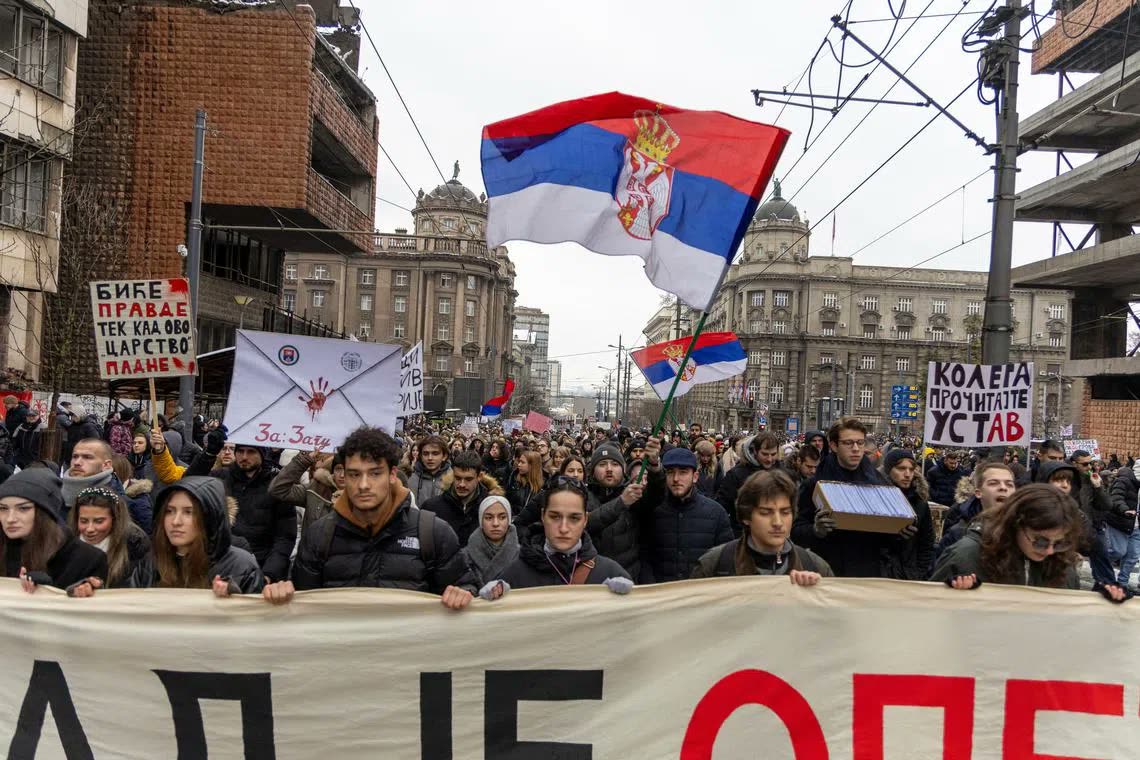
The result is the culmination of almost two years of student-led demonstrations against perceived corruption and creeping authoritarianism. What began as campus anger grew into the broadest opposition movement Serbia has seen since Vucic first became prime minister in 2014 and president in 2017, drawing in farmers, teachers, lawyers and pensioners alongside students.
The movement's transformation from street protest to electoral machine is itself remarkable. The Student List ran as a unified slate, channelling a diffuse protest energy into a disciplined campaign that appealed well beyond university towns. Its success makes Serbia the latest European country where a protest movement has broken through electorally — a pattern also visible in the wave of demonstrations that swept France and Italy earlier this month.
Record turnout in a high-stakes vote
Serbia's 6.4 million eligible voters turned out in force. Turnout passed 67 per cent, the highest participation recorded in the country since the dissolution of Yugoslavia in 1993, according to reports cited in election-night coverage. Long queues formed at polling stations across the country, and Serbs living abroad queued outside consulates — including in Zurich, where hundreds waited in the rain to cast ballots.
The scale of participation underscored how much the election had become a referendum on Vucic himself. The snap vote, which he called in September, was a gamble: he hoped to renew his mandate and crush the protest movement at the ballot box. Instead, voters used the election he called to remove him.
The Novi Sad tragedy that changed Serbia
The movement traces its origins to November 2024, when a concrete canopy collapsed at the railway station in Novi Sad, Serbia's second city, killing 16 people. The disaster became a symbol of everything the protesters said was wrong with the country: shoddy public works, opaque contracts and a state that refused accountability.
In the months that followed, students occupied faculties, organised marches that drew hundreds of thousands, and demanded early elections. The government responded with a mix of concessions and crackdowns, including accusations — denied by protesters — that police used a sound cannon against demonstrators last year, an episode Vucic himself alluded to in his concession speech.
Vucic's bitter farewell — and his warning
Vucic's concession was gracious in form but bitter in content. He thanked his followers and said he was "proud of everything we have done," while accusing his opponents of "lying about everything." He blamed his defeat on "a revolution fuelled by European countries and the deep American state, the one which is against Trump," and said he would not flee the country.
"I am waiting for them to come after me over the sound cannon, you corrupt scumbags," he told supporters, before adding that he would not appeal against the result in the courts in order to avoid "unrest and clashes in the streets." The decision to accept the outcome — however grudgingly — removes the most immediate risk of a post-election crisis in a country where disputed votes have historically led to street confrontations.
Vucic's fall also carries significance beyond Serbia's borders. He had been one of Europe's most durable strongmen, maintaining a close relationship with Russia's President Vladimir Putin even as he kept Serbia on a nominal path toward European Union membership. His defeat removes what some commentators called "Putin's last friend in Europe" from power in Belgrade.
What comes next for Serbia
The Student List now faces the harder task: governing. It must assemble a parliamentary majority, form a government, and deliver on promises of accountability and reform — including a credible investigation into the Novi Sad collapse — while managing an economy and a bureaucracy staffed largely by SNS appointees.
The movement must also decide its direction on the two questions that have defined Serbian politics for a generation: the pace of EU integration and the unresolved status of Kosovo. Neither featured prominently in a campaign fought mainly on corruption and democratic standards, but both will demand answers quickly once a new government takes office.
For now, though, the story is the scale of the upset. A movement born in lecture halls and on the streets, led by people most of whom had never stood for office, has defeated a leader who appeared immovable — and done so in an election he himself called.
Key takeaways
- Aleksandar Vucic conceded defeat on October 25, 2026, after his Serbian Progressive Party lost a snap parliamentary election to the Student List.
- Projections give the Student List 135–140 of 250 parliamentary seats, against around 105 for the SNS.
- Turnout exceeded 67 per cent, the highest in Serbia since the dissolution of Yugoslavia in 1993.
- The student movement grew out of protests triggered by the 2024 Novi Sad station canopy collapse, which killed 16 people.
- Vucic said he would not challenge the result in court, but blamed foreign interference for his defeat.
Frequently Asked Questions
Who won Serbia's parliamentary election?
The Student List, a movement that grew out of two years of student-led protests, won the snap parliamentary election held on October 25, 2026. Projections put it at 135–140 seats in the 250-member parliament, ahead of Aleksandar Vucic's Serbian Progressive Party with around 105 seats.
Why did Aleksandar Vucic call a snap election?
Vucic called the snap election in September 2026, apparently hoping to renew his mandate and defeat the student protest movement at the ballot box. The gamble backfired: voters used the election to end his 12-year rule.
What triggered the student protests in Serbia?
The protests began after a concrete canopy collapsed at Novi Sad railway station in November 2024, killing 16 people. The disaster became a symbol of corruption and lack of accountability, sparking nearly two years of demonstrations that eventually formed the Student List.
Did Vucic accept the election result?
Yes. Vucic conceded defeat on live television before final results were announced and said he would not appeal against the result in the courts, to avoid "unrest and clashes in the streets." He did, however, blame European countries and an "American deep state" for his defeat.
What happens next in Serbia?
The Student List must now form a government and deliver on its promises of accountability and reform, including a credible investigation into the Novi Sad collapse. It will also have to address Serbia's EU integration path and the unresolved status of Kosovo.
Sources
- Reuters — Serbia's Vucic concedes defeat to student-led movement in parliamentary election
- The Times — Serbian leader Aleksandar Vucic concedes defeat to student party
- Al Jazeera — election-day coverage and regional context