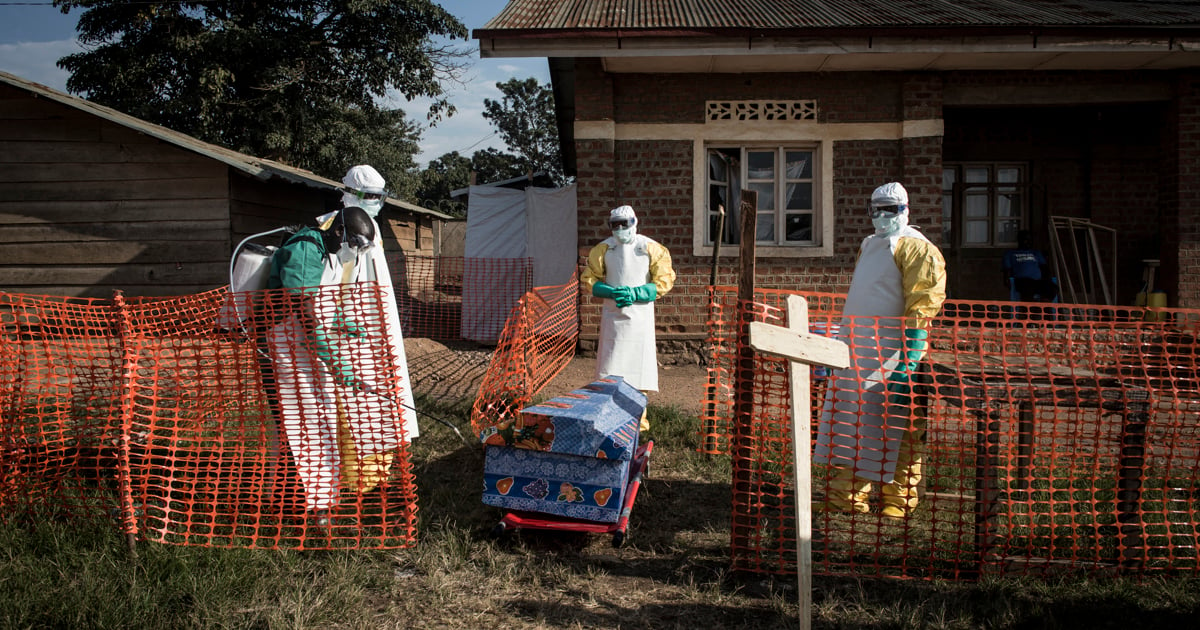
Genomic analysis of Nigeria's only confirmed Ebola case shows the virus is closely related to the strain detected in Kenya's index case, Nigeria's health minister said on Friday — the first genetic link between the two countries' outbreaks, and a finding that deepens rather than resolves the mystery of how the patient was infected.
Health Minister Muhammad Ali Pate said the analysis, carried out by the Nigeria Centre for Disease Control and Prevention (NCDC) together with the Institute of Genomics and Global Health at Redeemer's University, offers important scientific information — but stressed that genetic similarity alone does not establish a direct transmission link between the cases. Nigerian authorities said there is no evidence that Kenya's index case travelled to Nigeria or had any direct connection to the Nigerian patient.
The patient, a Ugandan-born woman married to a member of staff at the Swiss embassy in Abuja, is Nigeria's first Ebola case in more than a decade. She was confirmed positive on Tuesday after falling ill in the capital, and her case has turned into a test of how quickly African health systems can share information across borders as the outbreak spreads. Reuters
Two travel stories, one unresolved infection
The search for the source of the infection has been complicated by conflicting accounts of the woman's recent travels. Ugandan authorities said she had travelled to eastern DR Congo — where the current outbreak began in May — before passing through Uganda on her way back to Nigeria. Switzerland's foreign ministry, however, said the woman and her husband travelled to Uganda together but neither visited DR Congo, and that she is believed to have contracted the virus during her stay in Uganda.
The World Health Organization and the Africa Centres for Disease Control and Prevention said they had not received verified information confirming that the patient travelled to DR Congo, and that investigations were continuing to reconstruct her travel and exposure history. The WHO is also examining a possible connection with a patient in Kenya, after reports that both travelled through Uganda's Entebbe airport on 3 October — though experts cautioned that sharing an airport does not by itself establish a link between infections.
The discrepancy matters. If the infection occurred in Uganda — a country the WHO declared Ebola-free in August after an earlier cluster was contained — it would point to undetected transmission chains. If it occurred in DR Congo, it would show how far the virus can travel before detection. Either way, the patient reached Abuja, sought care at a private hospital with malaria-like symptoms, and was only tested for Ebola on 19 October, days after falling ill.
44 contacts traced as containment race continues
Nigerian authorities have identified at least 44 contacts of the patient, including many health workers, and are tracing, quarantining and testing them. Some results have come back negative, while others remain pending. Her husband has been placed in isolation but has shown no symptoms.
"We are trying to contain it so it doesn't go out to the communities. Hopefully, it won't get to that and we are working hard to ensure that," Pate said. Contacts linked to the case are being monitored daily, and officials say the number under surveillance may still rise as investigations continue.
Switzerland has said it is considering repatriating the woman, who has been hospitalised at a private clinic in Abuja for about a week. The case was first reported in our earlier coverage of Nigeria's first Ebola case in Abuja, when officials confirmed the infection as the rare Bundibugyo species — the same strain driving the outbreak in DR Congo.
An outbreak now spanning three regions
The current outbreak involves the rare Bundibugyo strain of Ebola, for which there is no approved vaccine and no specific treatment, and which kills roughly half of those infected. Since the first cases were confirmed in DR Congo in May, the disease has killed more than 4,690 people, with over 9,700 infections recorded across four countries: DR Congo, Uganda, Kenya and now Nigeria.
Kenya's outbreak, which has grown to at least eight confirmed cases, is itself a recent development — covered in our report on Kenya's eighth Ebola case. Uganda, which borders DR Congo and has battled Ebola before, said on Friday it remained Ebola-free but was tightening precautions: traveller locator forms have been reinstated for all arrivals, and travellers with a history of travel to DR Congo will not be permitted to transit the country.
Africa CDC Director General Jean Kaseya has called for urgent action and political leadership at the highest level, warning that the outbreak now affects three regions of the continent. Nigerian physician Ayoade Alakija, who co-chairs a G7 committee on investment in global health, put it more starkly: "My concern, now that this has spread from East Africa to West Africa, is that we now have a pan-African event, as opposed to a few at-risk countries."
Why the mystery matters
Ebola spreads through contact with the bodily fluids of infected people, and outbreaks are contained by finding every contact fast. When the source of an infection cannot be established, contact tracers cannot be sure they have found everyone at risk — and every missed contact is a potential new chain of transmission.
Health experts are urging faster information-sharing between African countries to prevent further spread, and warning that misinformation and funding shortfalls could fuel transmission across borders. The genomic link to Kenya's case is a scientific lead, not an answer: it tells investigators the viruses are related, but not how, where or through whom the infection travelled.
For now, Nigeria has one confirmed case and no evidence of community transmission. Whether it stays that way depends on the contact tracing now under way in Abuja — and on whether the conflicting travel accounts can be resolved before the virus writes its own answer.
Frequently Asked Questions
What is the Bundibugyo strain of Ebola?
Bundibugyo is a rare species of the Ebola virus, first identified in Uganda in 2007. Unlike the better-known Zaire species, there is no approved vaccine and no specific treatment for Bundibugyo, and it kills roughly half of those infected. It is the strain behind the current outbreak that began in DR Congo in May 2026.
How is Nigeria's Ebola case linked to Kenya's?
Genomic analysis by the NCDC and Redeemer's University found that the virus in Nigeria's patient is closely related to the strain detected in Kenya's index case. Health Minister Muhammad Ali Pate stressed, however, that genetic similarity alone does not prove a direct transmission link, and there is no evidence the Kenyan patient travelled to Nigeria or had direct contact with the Nigerian case.
Why is the source of the Nigerian infection still unknown?
Accounts of the patient's travels conflict: Ugandan authorities say she visited eastern DR Congo before passing through Uganda, while Switzerland's foreign ministry says she and her husband travelled only to Uganda and never visited DR Congo. The WHO and Africa CDC say they have not received verified information confirming a DR Congo trip, and investigations into her travel and exposure history are continuing.
How many people are being monitored in Nigeria?
Nigerian authorities have identified at least 44 contacts of the patient, including many health workers. They are being traced, quarantined and tested, with some results negative and others still pending. The number may rise as investigations continue.
Is there community transmission of Ebola in Nigeria?
No. Nigerian officials have reported only one confirmed case and no evidence of community transmission so far. Health Minister Muhammad Ali Pate said authorities are working to contain the case through contact tracing before it can spread into communities.