The United States' top diplomat has made an unusually public appeal for Cubans to cooperate with American intelligence, telling those who want political change on the island that "now is the time" — and President Donald Trump, speaking hours earlier at a rally in Florida, suggested that US warships could soon appear off Cuba's coast. The twin messages, delivered on Friday, mark the sharpest escalation yet in Washington's months-long campaign of pressure against Havana, and they drew a swift, mocking response from the Cuban government.
Secretary of State Marco Rubio, who has driven much of the administration's Cuba policy, wrote on X that Cubans frustrated by "the disappointment of failed promises, corruption, and the privileged lives of only a few" should "seize this opportunity to create the change you desire through a discrete partnership with the CIA," according to Al Jazeera. The post, addressed to "those who seek to create positive change in Cuba," was striking not only for its bluntness but for what it appeared to confirm: that the Central Intelligence Agency is actively operating on the island.
A public recruitment pitch — and Havana's reply
Governments rarely advertise their intelligence outreach. Rubio's message did exactly that, and the CIA followed it with a video posted on X offering instructions in Spanish for anyone who believes they hold information of interest to the agency, including advice to visit a US installation in person where that can be done safely, or to contact the agency online through a secure connection, a private browser and an email account unconnected to personal details, as reported by Free Malaysia Today.
Havana treated the episode with open contempt. Deputy Foreign Minister Carlos Fernandez de Cossio wrote on X that "now the United States is resorting to public recruitment for the CIA," adding: "There must be a great deal of desperation or misery within the agency for it to be forced to sell its services like a tube of toothpaste." Foreign Minister Bruno Rodríguez, meanwhile, denounced what he called imperialist US ambitions toward the island.
The exchange fits a long and bitter history. The CIA backed the disastrous Bay of Pigs invasion in 1961, and covert operations against Cuba's government have been a defining feature of the relationship ever since. What is new is the openness: rather than denying involvement, the administration is now publicly inviting it.
Trump's warship remarks in Florida
Rubio's post came after Trump renewed threats of military action against Cuba at a campaign rally in Fort Myers, in southern Florida, days before the US midterm elections. Answering a question from the crowd, Trump suggested that American warships returning from a confrontation with Iran could deploy off Cuba's coast, according to Business Today.
"We'll do a little stopover," Trump told the audience. "Actually, what we're going to do with Cuba is, we're going to come back from Iran. Those beautiful ships will pass Cuba. We'll have one of them stop about 50 yards off the coast. They'll raise up their hands. And then we're going to send [Secretary of State] Marco Rubio in to finish up the deal."
Trump added that the United States "may do another little Epic Fury" — a reference to the recent US operation against Iran — "or they'll agree," and said of Cuba's leaders: "If they're smart, they'll just say, 'Let's get down to business.' But, you know, I doubt they'll do that because perhaps they're not smart."
Trump had earlier told the same rally that Washington would "take care of Cuba" after dealing with Iran, as reported by The Economic Times. The administration has stated openly that its goal is to change Cuba's communist government, and for months Trump and senior officials have hinted at military intervention or a takeover.
An island under severe strain
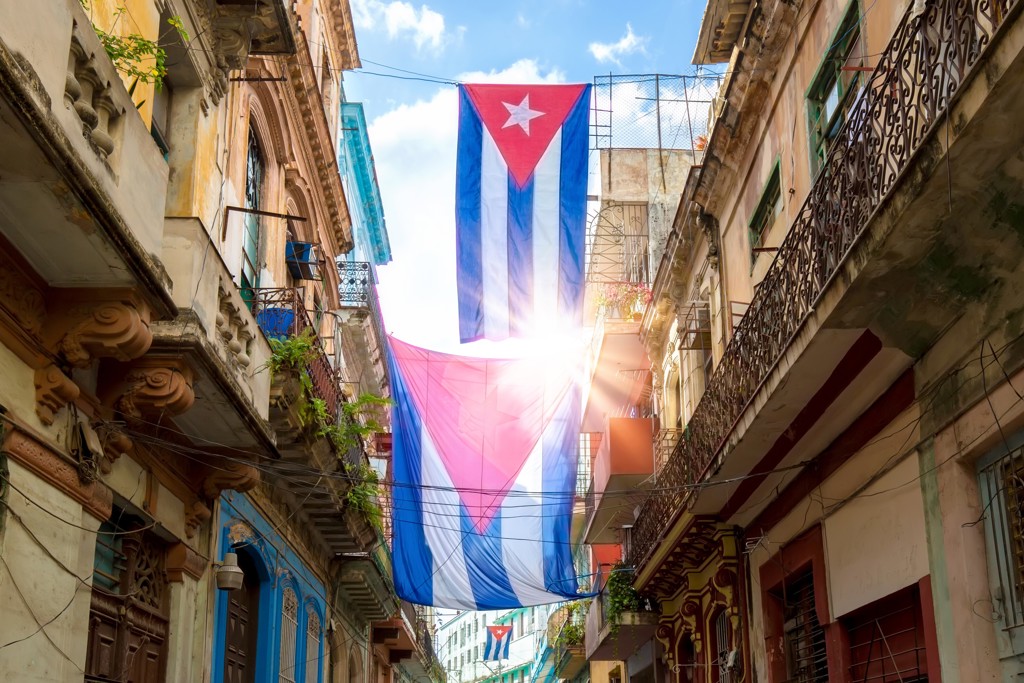
The rhetoric lands on an island already under extraordinary economic pressure. A US-imposed oil blockade introduced earlier this year has choked fuel supplies, compounding blackouts caused by failing infrastructure and deepening daily hardship for ordinary Cubans. The pressure campaign has also included the seizure of fuel shipments bound for the island, including the US Coast Guard's interception of a so-called "dark fleet" tanker en route to Cuba — a step covered in Chronicle's earlier reporting on the escalating oil blockade.
United Nations rights experts have condemned the oil blockade as a violation of international law, while rights advocates say the administration's threats echo an imperialist approach. Cuba's foreign minister told the UN General Assembly last month that Havana would always remain open to dialogue with Washington — an offer that sits uneasily alongside the latest threats.
The squeeze follows the US military's seizure of then-Venezuelan President Nicolas Maduro in a deadly raid in January, an operation that stripped Cuba of one of its closest regional allies and emboldened Washington's pressure strategy. The administration has also moved against Cuba's fuel lifelines in the Caribbean, and Trump has repeatedly linked Cuba's fate to the outcome of the confrontation with Iran — a connection he made explicit again in Florida.
For Havana, the calculation is grim but familiar: endure the blockade, denounce the threats, and wait for the political winds in Washington to change. For the administration, the calculation is the opposite — that economic strangulation, combined with open appeals to Cubans to cooperate with US intelligence, can force a political break that six decades of embargo could not.
What happens next
Three questions will determine whether this week's escalation is theatre or turning point. First, whether Washington follows its words with a visible naval presence near Cuban waters — a step that would transform rhetoric into a direct military signal. Second, whether Havana's defiance holds as fuel shortages bite deeper into daily life, or whether internal pressure builds in ways the government cannot easily dismiss. And third, whether the open CIA appeal produces any response at all inside Cuba, or simply hands Havana a propaganda gift: proof, in its telling, that Washington's campaign is not about Cuban welfare but about control.
For now, the lines are drawn in public, in unusually plain language, by both sides. Rubio says the moment for change has arrived. Havana says the appeal reeks of desperation. And somewhere between those two readings lies the reality for 11 million Cubans living through blackouts, shortages and a blockade — watching two governments argue over their future in posts and rally speeches.
Related coverage: Chronicle earlier reported on the US seizure of a fuel ship bound for Cuba in the escalating oil blockade, and on Trump's shifting rhetoric toward Iran in his remarks on a possible strike.
Frequently Asked Questions
What exactly did Marco Rubio say about Cuba and the CIA?
Rubio wrote on X on Friday: "To those who seek to create positive change in Cuba — now is the time. The disappointment of failed promises, corruption, and the privileged lives of only a few; seize this opportunity to create the change you desire through a discrete partnership with the CIA." The CIA then posted a video in Spanish explaining how people could contact the agency.
What did Donald Trump say about warships near Cuba?
At a rally in Fort Myers, Florida, Trump suggested US warships returning from a confrontation with Iran could stop off Cuba's coast, saying one ship could stop "about 50 yards off the coast" before Rubio would be sent in "to finish up the deal." He also hinted at possible military action if negotiations stall.
How did Cuba respond?
Cuban officials mocked the appeal. Deputy Foreign Minister Carlos Fernandez de Cossio said the US was "resorting to public recruitment for the CIA" and that there "must be a great deal of desperation" within the agency. Foreign Minister Bruno Rodríguez denounced what he called imperialist US ambitions.
Why is Cuba under such pressure right now?
A US-imposed oil blockade earlier this year has caused severe fuel shortages and blackouts, on top of a US embargo in place for more than 60 years. The pressure intensified after the US seized Venezuela's president Nicolas Maduro in January, removing one of Cuba's closest allies. UN rights experts have condemned the blockade as a violation of international law.