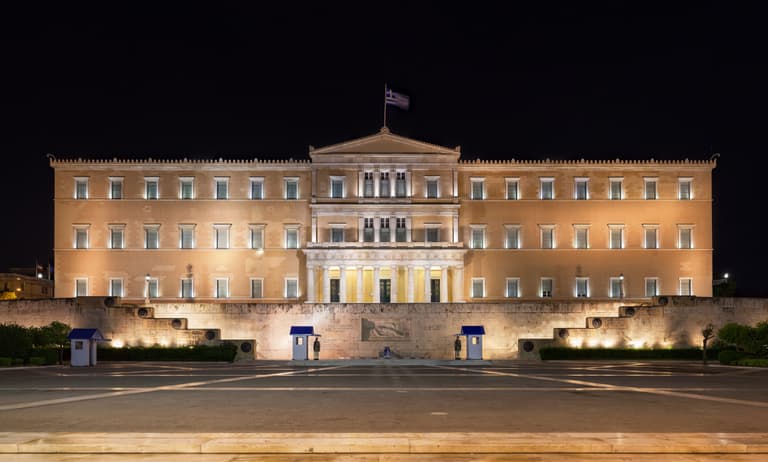
Greece's parliament on Friday approved a bill banning children under 15 from using social media platforms, making it the latest — and one of the strictest — European country to move against the apps that dominate young people's lives. The law takes effect on January 1, 2027, giving platforms just two and a half months to work out how to verify users' ages while protecting their privacy.
The vote, which followed a heated parliamentary debate that began Thursday and stretched into Friday, was carried by the conservative New Democracy party using its majority — no other party voted in favor, according to the ANA news agency, as reported by Agence France-Presse.
Table of Contents
- What the new law does
- A divided parliament
- Mitsotakis's deadline for platforms
- Greece's existing digital tools
- A global domino effect
- The skepticism: will it actually work?
- Key takeaways
- Frequently Asked Questions
- Sources
- Chronicle further reading
What the new law does
The bill restricts access to social media platforms for children under 15, imposing obligations on platform providers, parents or guardians, and the authorities tasked with enforcement. Platforms will have to introduce age-verification systems on their services and will face harsh penalties if they fail to comply. The law assigns oversight to Greece's National Council for Radio and Television and the Hellenic Data Protection Authority, underscoring how the ban sits at the intersection of media regulation and privacy law.
The government's argument, as laid out by the bill submitted earlier this month by Minister of State Akis Skertsos, is that platform algorithms — personalized recommendations and endless content feeds designed to maximize time online — encourage addictive behavior in children. Prime Minister Kyriakos Mitsotakis has framed the measure as the state standing beside parents to curb what he calls the "endless scrolling" that robs children of sleep, concentration, and time with friends.
Mitsotakis had announced the plan back in April — taking to TikTok, one of the most popular social networks among young Greeks, to explain what he called a "difficult but necessary" measure, according to AFP.
A divided parliament
The debate was fiercely partisan. New Democracy, Mitsotakis's conservative party, passed the bill with its own majority alone. The socialist Pasok party abstained after pushing for a softer alternative: banning social media only for under-13s, with parental controls for 13- and 14-year-olds. Other left-wing and nationalist parties voted against the bill outright.
That split reflects the broader European debate about where protection ends and paternalism begins — and whether bans target the actual harm or simply push children into harder-to-monitor corners of the internet.
Mitsotakis's deadline for platforms
Perhaps the most aggressive element of the Greek approach is the timeline. Mitsotakis told parliament that social media companies have two and a half months — until the January 1 enforcement date — to devise an age-verification method that also safeguards user privacy. That demand puts platforms in a bind: the most common age-verification tools either require users to upload identity documents or rely on biometric age estimation, both of which raise serious privacy concerns.
Greece is among seven European Union member states working with the European Commission on a common age-verification solution, so Athens's domestic deadline may ultimately converge with whatever Brussels designs.
Greece's existing digital tools
Greece is not starting from zero. The country already operates the Gov.gr Wallet and a KidsWallet app — digital identity and parental-control tools that could form the technical backbone of enforcement. The Gov.gr Wallet, which lets Greek citizens store official documents digitally, was originally rolled out as a digital ID system and could in theory provide verified age checks without forcing children to hand personal documents directly to foreign platforms.
Whether the infrastructure scales to the January deadline, and whether the Hellenic Data Protection Authority signs off on the privacy implications, remain open questions.
A global domino effect
Greece's vote lands in the middle of a fast-moving global trend. Australia was the first country to legislate a social media ban for minors, barring under-16s last year, and more than 20 countries have now passed similar laws, according to an AFP tally. Just weeks before the Greek vote, Turkey banned social media use for people under 15, citing the same concerns about children's mental health and safety.
In Europe, the picture is more mixed: a similar French law was struck down by the country's Constitutional Council in August — a story Chronicle covered earlier this month — and the EU's planned Kids Act, which proposes banning under-13s from social media and requiring platforms to prove their services are safe for minors, is still in public consultation.
The skepticism: will it actually work?
Critics raise two familiar objections. Free-speech advocates warn that blanket bans set dangerous precedents for state control over digital access. And technologists question whether the bans are enforceable at all: determined teenagers have historically evaded age gates with borrowed accounts, VPNs, and fake birth dates. Australia's experience, now a year in, is being watched closely as the first real-world test case.
The platforms themselves, which have lobbied against similar measures elsewhere, have yet to say publicly how — or whether — they will implement age verification in Greece by January 1.
Key takeaways
- Greece's parliament passed a law on Friday, October 23, 2026, banning under-15s from social media, effective January 1, 2027.
- The bill was carried by New Democracy's majority alone; Pasok abstained and other parties voted against.
- Prime Minister Mitsotakis gave platforms 2.5 months to build privacy-safe age verification; penalties apply for non-compliance.
- Greece is one of seven EU countries working with the European Commission on a common age-verification framework.
- More than 20 countries have now enacted similar bans, following Australia's pioneering under-16 law last year.
Frequently Asked Questions
When does Greece's social media ban take effect?
The ban comes into force on January 1, 2027. Greece's parliament approved the bill on Friday, October 23, 2026, giving social media platforms roughly two and a half months to implement age-verification systems.
Who is covered by the Greek ban?
Children under 15 will be barred from using social media platforms. The bill applies to minors, their parents or guardians, the platform providers themselves, and the authorities responsible for monitoring compliance.
How will platforms verify ages?
That is the central unresolved question. Prime Minister Kyriakos Mitsotakis has demanded an age-verification method that protects user privacy, and the government points to existing tools like the Gov.gr Wallet and KidsWallet apps. Oversight will fall to the National Council for Radio and Television and the Hellenic Data Protection Authority.
Which other countries have passed similar bans?
Australia was the first, barring under-16s last year. Turkey banned social media for under-15s just weeks before Greece's vote, and an AFP tally counts more than 20 countries with similar laws. A comparable French law was struck down by France's Constitutional Council in August.
What happens to companies that don't comply?
The bill imposes harsh penalties on platform providers that fail to implement age verification and comply with the ban. Specific penalty amounts and enforcement mechanisms will be detailed as the law's implementing regulations are drafted ahead of the January 1 deadline.
Sources
- Reuters — "Greece passes social media ban for children under 15"
- Channel NewsAsia — "Greece passes social media ban for children under 15"
- The Hindu — "Greece passes social media ban for children under 15"
- Express Tribune / AFP — "New Greece law bans social media for under-15s"