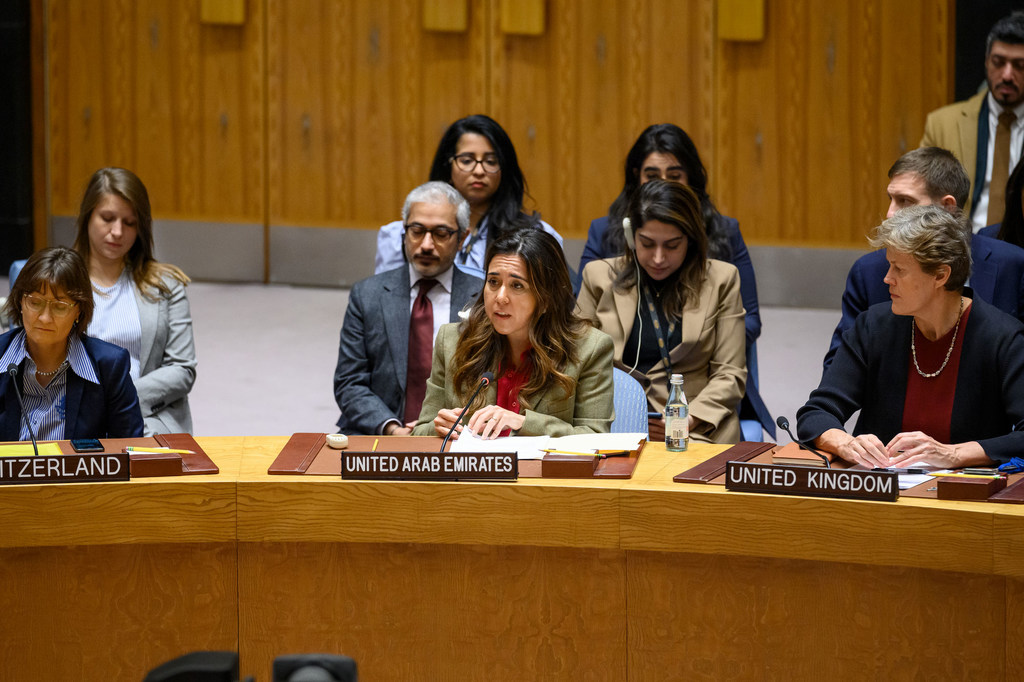
The United Arab Emirates has formally nominated veteran diplomat Lana Nusseibeh for the post of United Nations Secretary-General, injecting new energy into a leadership race that had stalled in the Security Council. Nusseibeh, who represented the UAE at the UN for more than a decade, becomes the seventh candidate vying to succeed António Guterres, whose second term ends on 31 December 2026. If elected, she would be the first woman ever to lead the world body — and only the second Secretary-General from the Middle East.
Table of Contents
- A late entry into a deadlocked race
- Who is Lana Nusseibeh
- The Gaza resolution and her diplomatic record
- Why the UAE thinks she can break the impasse
- The obstacles: human rights questions and the Sudan file
- What happens next
- Key takeaways
- Frequently Asked Questions
- Sources
- Chronicle further reading
A late entry into a deadlocked race
The nomination, announced on 21 October, came in a letter from UAE President Sheikh Mohamed bin Zayed Al Nahyan to the presidents of the General Assembly and the Security Council, according to Khaleej Times. Her candidacy arrives at a critical moment: the Security Council's latest straw poll on 16 October showed that none of the seven candidates enjoys the support of all five permanent members, each of which holds veto power over the choice.
Six rounds of voting have failed to produce a candidate acceptable to the P5, and US President Donald Trump's administration has reportedly opposed all seven contenders named so far. Nusseibeh's entry as the seventh name on the ballot reshapes the arithmetic — and Abu Dhabi is betting that her personal relationships across the permanent members can do what the others could not.
Who is Lana Nusseibeh
Nusseibeh is no outsider to the institution she hopes to lead. She served as the UAE's Permanent Representative to the United Nations from 2013 to 2024 — more than a decade in which she held some of the UN's most senior elected roles: vice president of the General Assembly, president of the UN Women executive board, and twice president of the Security Council during the UAE's 2022–2023 Council term, as Gulf News detailed.
She currently serves as Minister of State in the UAE's Ministry of Foreign Affairs and as the country's envoy to the UN and the EU. Launching her candidacy, she announced she has taken a leave of absence from her government role to campaign full-time.
In her vision statement, she framed her pitch around rebuilding trust in the institution. "I have spent much of my professional life working in and around the United Nations, and I have seen first-hand what determined diplomacy can achieve," she said. "I wish to offer myself to this office as I would serve it: speaking frankly with every government and answering to none."
The Gaza resolution and her diplomatic record
Nusseibeh's strongest calling card is arguably her handling of the Gaza war's humanitarian diplomacy. During the UAE's Security Council term, she secured the adoption of Resolution 2720, which paved the way for humanitarian aid deliveries to Gaza after the war began in 2023. According to Arab News, she got the resolution over the line by arranging for council members to visit the Rafah border crossing and see conditions on the ground themselves — an exercise in what she calls "creative entrepreneurial diplomacy."
She is of Palestinian descent and was long regarded as one of the most vocal Arab voices in New York for the Palestinian cause, a background that gives her credibility across the Global South — the constituencies whose votes in the General Assembly weigh heavily in the politics of the selection.
Why the UAE thinks she can break the impasse
The calculation in Abu Dhabi appears to be that the Emirates' unique diplomatic position can unlock what formal voting could not. The Times of Israel noted that Washington's close relationship with the UAE — combined with working ties the other permanent members, Russia, China, Britain and France, also maintain with Abu Dhabi — may be enough to produce a consensus candidate where none has emerged.
The Trump administration's reported opposition to all seven previous contenders makes the American angle decisive. The UAE is one of Washington's closest Arab partners, and Nusseibeh herself is well known to American diplomats from her decade at the UN. If the White House was looking for a candidate it could accept without losing face after vetoing the others, a late, high-credentialed Emirati nominee fits the bill.
The obstacles: human rights questions and the Sudan file
The candidacy will not be a smooth ride. Critics have already raised two uncomfortable questions. The first is human rights: the UAE's domestic record — restrictions on dissent, press freedoms and labour rights — sits awkwardly with the UN's human-rights mandate, and civil-society groups are likely to press her on how she would answer to such concerns as the UN's chief officer.
The second is the Sudan file. UN sanctions monitors have described as credible allegations that the UAE provided military support to Sudan's paramilitary Rapid Support Forces. The UAE denies the allegations. Asked how they might affect her candidacy, Nusseibeh said she had taken leave from her government post and would focus on Sudan's humanitarian crisis — a line of defence that may satisfy some delegations and none of the critics.
She has also pushed back on suggestions that she is running primarily as a symbolic choice. She would be the first woman to hold the job, but, as she told reporters: "I'm not running because I'm a woman; I'm running because I am stubbornly optimistic about the future of the United Nations."
What happens next
The selection process now moves back into the Security Council for further straw polls, with the Council expected to recommend a single candidate to the General Assembly, which then elects the Secretary-General. Guterres completes his second five-year term on 31 December, so a successor should ideally be agreed before year's end — though the process has slipped in past cycles when the Council was divided.
Nusseibeh's entry does not guarantee a breakthrough; it adds one more name to a field where every contender has so far fallen short of P5 consensus. But it changes the dynamics in one important way: for the first time, the race has a candidate who can plausibly claim the confidence of both Washington and the other veto-wielding capitals simultaneously.
Key takeaways
- The UAE formally nominated Lana Nusseibeh on 21 October, making her the seventh candidate for UN Secretary-General.
- She served as the UAE's UN ambassador from 2013 to 2024, including two stints as Security Council president, and has taken leave from her government role to campaign.
- Her signature achievement is Resolution 2720 on Gaza humanitarian aid, secured during the UAE's Security Council term.
- Six rounds of Council voting have failed to produce a P5 consensus, with the Trump administration reportedly opposing all previous contenders.
- If elected, she would be the first woman to lead the UN and the second Secretary-General from the Middle East after Egypt's Boutros Boutros-Ghali.
- Human-rights questions about the UAE and allegations over Sudan policy remain the main lines of criticism.
Frequently Asked Questions
Who is Lana Nusseibeh?
Lana Nusseibeh is a senior Emirati diplomat who served as the UAE's Permanent Representative to the United Nations from 2013 to 2024. She held senior UN elected roles including vice president of the General Assembly, president of the UN Women executive board, and twice president of the Security Council. She is currently a Minister of State in the UAE's Foreign Ministry and the country's envoy to the UN and the EU.
When does António Guterres' term end?
Guterres completes his second five-year term as UN Secretary-General on 31 December 2026. The selection process aims to have his successor agreed before that date, though Council divisions have caused delays in past cycles.
How is the UN Secretary-General chosen?
The UN Security Council holds straw polls to identify a candidate acceptable to all five permanent members (the US, UK, France, Russia and China), each of which holds veto power. The Council then formally recommends one candidate to the General Assembly, which elects the Secretary-General — a 10th in the UN's history when this round concludes.
Would Lana Nusseibeh be the first woman to lead the UN?
Yes. No woman has ever held the post of UN Secretary-General since the office was created in 1945. She would also be the second Secretary-General from the Middle East, after Egypt's Boutros Boutros-Ghali (1992–1996).
What are the main criticisms of her candidacy?
Critics cite the UAE's human-rights record and allegations — described by UN sanctions monitors as credible, and denied by Abu Dhabi — that the UAE supported Sudan's Rapid Support Forces. Nusseibeh says she has taken leave from her UAE government post and would focus on Sudan's humanitarian crisis.
Sources
- Khaleej Times — "Meet Lana Nusseibeh: From UAE diplomat to UN Secretary-General candidate"
- Gulf News — "UAE's Lana Nusseibeh enters race to become next UN Secretary-General"
- Arab News — "Senior UAE diplomat Lana Nusseibeh enters race for UN chief"
- The Jerusalem Post — "UAE's Lana Nusseibeh enters race for UN secretary-general candidate"
- The Times of Israel — "UAE nominates diplomat Lana Nusseibeh as UN secretary-general, potentially breaking deadlock"
Chronicle further reading
- Guterres on the October 7 anniversary: "Nothing justifies these atrocities" — the outgoing Secretary-General's message on the third anniversary of the Hamas attacks.
- Security Council extends Darfur arms embargo amid Russian and Chinese opposition — how Council divisions shape UN action, a preview of the dynamics in the succession race.