Judicial police in Guinea-Bissau have raided the offices of the Bandim Health Project — a research group repeatedly praised by US health secretary Robert F. Kennedy Jr. — and seized batches of hepatitis B vaccine, officials announced on Facebook. The raid escalates an already bitter dispute over a proposed clinical trial involving African newborns, one that has pitted the researchers against the World Health Organization, the country's transitional health ministry and a growing list of medical ethics critics.
The seizure was announced in a Portuguese-language social media post by the judicial police, who said the operation involved "investigative procedures to clarify the circumstances surrounding the vaccine batch." Officials were careful to note that the confiscation did not point to any irregularities in the quality, safety or effectiveness of the vaccines themselves. According to The Guardian, the targeted centre sits at the heart of a $3.2 million research programme — $1.6 million from the US Centers for Disease Control and Prevention, matched by the Pershing Square Foundation and the Bluebell Foundation.
The trial at the centre of the storm
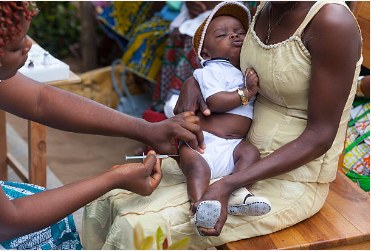
The dispute centres on a study of the hepatitis B birth dose — the vaccine routinely given to newborns within 24 hours of delivery. The researchers' plan would withhold that first dose from thousands of infants during their first weeks of life in order to compare outcomes, a design the World Health Organization has condemned as unethical.
That matters acutely in Guinea-Bissau, where roughly one in five adults carries the hepatitis B virus. Chronic infection kills 15% to 25% of those who carry it, through liver cancer and liver failure, and newborns are among the most vulnerable. Vaccination within 24 hours of birth is safe and highly effective at preventing infection — which is why the WHO, through its country office, has been advising the health ministry to introduce the birth dose and has objected strongly to any study that withholds it.
The researchers behind the project are no strangers to controversy. The Bandim Health Project was founded in 1978 by anthropologist Peter Aaby and is now co-led by his wife, epidemiologist Christine Stabell Benn, with Frederik Schaltz-Buchholzer as lead researcher on the newborn study. Kennedy has repeatedly praised the group's work, part of a broader pattern of his high-profile interventions in vaccine research debates. None of the researchers responded to questions about the study or the raid.
A minister who says the trial will never happen
Guinea-Bissau's transitional health minister, Quinhin Nantote, has disputed that the trial is even going ahead. "This is not even remotely true," he said of suggestions the study would proceed — a stance that contrasts sharply with documents the project recently published, including a July approval letter from the national ethics committee and an approval this month from a Danish ethics committee that had to adjust its own rules to consider the trial.
The contradiction goes to the heart of the fight: the project says it has the ethical permissions; the country's own health authorities say the trial is not happening. The raid now adds a law-enforcement dimension to what was already a political, scientific and ethical tangle.
Critics argue the country is no place for such an experiment. Guinea-Bissau experienced a military coup less than a year ago, and the political landscape remains unstable — the country has also faced repeated disruptions to its electoral process. Medical ethics specialists cited in the coverage say a post-coup state with weak institutions cannot adequately protect trial participants, and that local trust in the research organisation is already low.
What the science says
The stakes of the scientific question are real, but the ethical line is bright. The WHO considers the hepatitis B birth dose an essential public health intervention, and the proposed trial would ask vulnerable families in a fragile health system to forgo it. The Bandim Health Project's hepatitis B work has been the subject of scrutiny before, and the researchers' supporters argue that better evidence on timing and effectiveness is needed. The counter-argument, pressed by the WHO, is that randomised withholding of a proven, safe intervention from newborns in a high-burden country cannot be justified, whatever the research interest.
The project's funding adds another layer. With $1.6 million in US CDC money on the table — matched by two philanthropic foundations — the dispute has become a proxy battle over the influence of American research funding in West Africa, and over Kennedy's personal imprint on global vaccine policy since his confirmation as HHS secretary.
What happens next
The judicial police have given no timeline for their investigation, and it is unclear whether charges or further actions will follow. The health ministry's position — that the trial will not proceed — suggests the study is stalled regardless of the police probe. But with the researchers' documents showing ethics approvals already in hand, and a Danish committee changing its rules to accommodate the design, the standoff is far from settled.
For now, the seized vaccine doses remain in police custody, and one of the most controversial research projects in global health is under investigation by the country hosting it.
Frequently Asked Questions
Why did police raid the Bandim Health Project in Guinea-Bissau?
Judicial police raided the project's offices and seized batches of hepatitis B vaccine, saying the operation involved investigative procedures to clarify circumstances surrounding the vaccine batch. Officials stressed the seizure did not imply any problem with the quality, safety or effectiveness of the vaccines themselves.
What is the controversial trial about?
The proposed study would withhold the routine hepatitis B birth dose from thousands of newborns during their first weeks of life to compare outcomes. The World Health Organization has called the design unethical, warning that withholding vaccination at birth exposes infants to serious and potentially irreversible harm in a country where about one in five adults carries the virus.
Who funds the research?
The study is supported by $1.6 million from the US Centers for Disease Control and Prevention, matched by the Pershing Square Foundation and the Bluebell Foundation, for a total of $3.2 million.
Is the trial going ahead?
Guinea-Bissau's transitional health minister says it is "not even remotely true" that the trial will proceed. The project has, however, published a July approval letter from the national ethics committee and an approval this month from a Danish ethics committee — leaving the true status unclear.