Voters in Alberta have overwhelmingly rejected a proposal that could have set the oil-rich province on a path toward separation from Canada, delivering a decisive victory for national unity and for Prime Minister Mark Carney. With more than one million votes counted in the early hours of Tuesday, about 76 percent supported remaining in Canada, while roughly 23 percent backed beginning a legal process that could have led to a future binding referendum on independence, according to early results reported by Al Jazeera and projected by Canada's public broadcaster CBC.
The vote, held on Monday, October 19, was the first plebiscite of its kind in Canada since the 1995 Quebec referendum, when the predominantly French-speaking province voted against secession by a razor-thin margin. Its outcome lands a definitive blow to a fringe but loud separatist campaign that had sought encouragement — and, according to reporting, direct assistance — from across the United States border.
What Albertans actually voted on
The ballot question was narrower than many assumed. Albertans were not voting directly on independence. They were asked whether the province should remain in Canada or whether the provincial government should begin the legal process of holding a future binding referendum on separation. A "yes" to separation would not have made Alberta independent overnight; it would have started a constitutional journey whose end was uncertain.
The question was the tenth on the ballot. Premier Danielle Smith had announced the referendum in February with nine questions on immigration and the Constitution, then added the independence question in May under pressure from separatist factions inside her own United Conservative Party — even though she herself has never supported independence.
By 1 a.m. Mountain Time, Elections Alberta had counted 1,316,313 ballots: 1,005,641 for remaining in Canada, and 310,672 for the separation pathway. Results were delayed by more than three hours after late openings forced over 100 polling stations to extend their voting hours on Monday. Turnout was strong — more than 1.35 million Albertans, about 43 percent of eligible electors, had already cast advance or special ballots.
A victory for Carney — and for the "elbows up" Canada
Prime Minister Mark Carney, who had personally campaigned for unity and urged Albertans to deliver a decisive verdict against separation, claimed the result as a national mandate. "Albertans made a clear choice," he said. "They chose unity, to build together, and to take care of each other. Above all, Albertans chose Canada." In a statement posted to X in the early hours of Tuesday, he added that Albertans and all Canadians would "move forward together with renewed purpose and high ambition."
The result strengthens Carney's hand as his government confronts an unprecedented rupture with the United States. President Donald Trump has hit Canada with tariffs and has repeatedly mused about annexation — rhetoric that has triggered a wave of patriotism across the country and pushed even traditionally federal-sceptic Albertans toward the flag. Carney said the outcome would let Canada accelerate efforts to diversify trade, build major infrastructure projects, and make the country a global energy powerhouse with Alberta at its centre — a nod to the province's role as the engine of Canadian energy, producing more than four million barrels of oil a day.
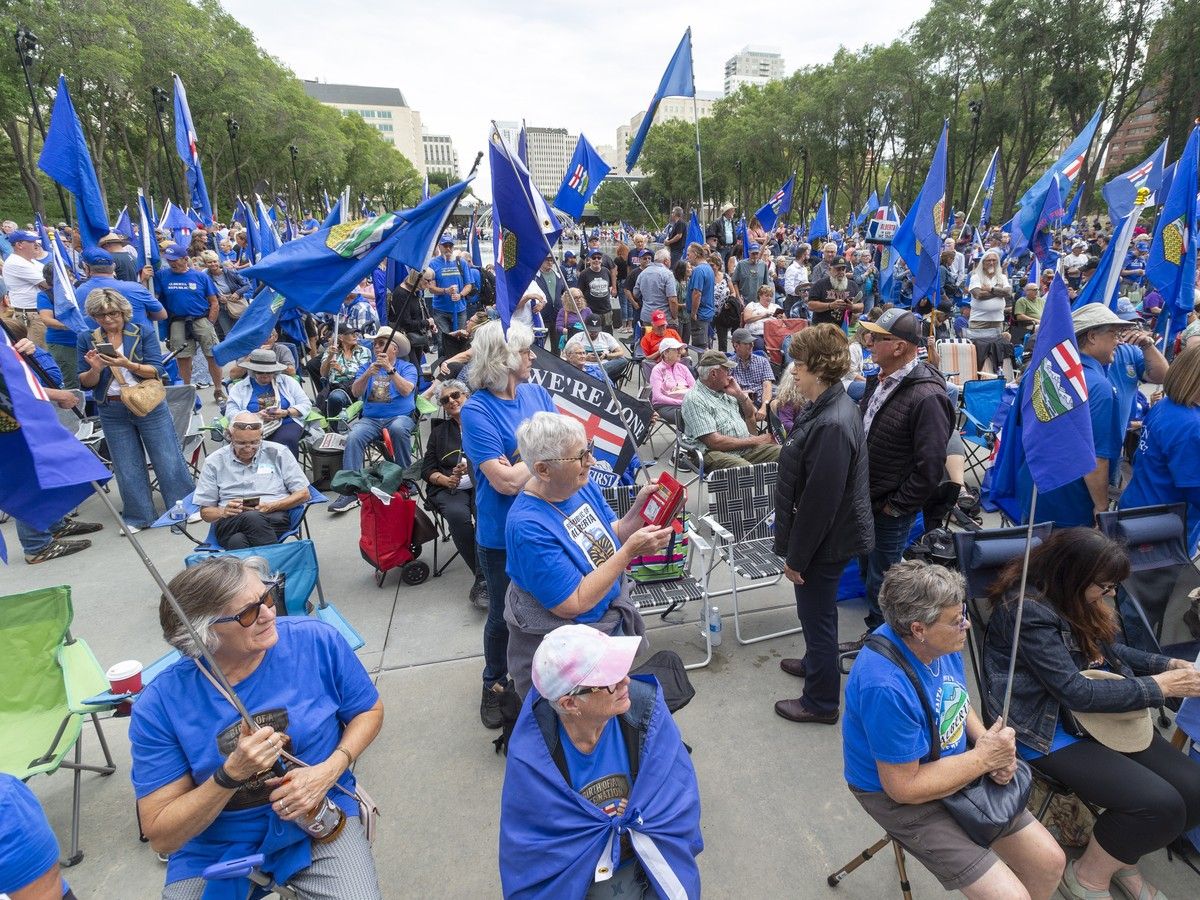
The grassroots "Forever Canadian" movement, which mobilised the pro-unity vote, framed the night as a message to Washington. "Canada is not up for grabs," its founder, former Alberta deputy premier Thomas Lukaszuk, told cheering supporters as the results came in. "We are a solid country that is united from coast to coast to coast and we stick up for each other."
The separatist campaign — and the American connection
The independence push was led by a small group of vocal separatists, but it was amplified far beyond its size. Some of its leaders had met with members of the Trump administration, and the Globe and Mail reported that Republican political operatives had assisted top separatist figures with their campaign — raising concerns about foreign interference in a domestic constitutional question.
Even in defeat, separatist leaders claimed a moral victory of sorts. Keith Wilson, a leader of the separatist movement, said that "at least a quarter of Albertans feel that Alberta needs to be treated better" — a figure closer to the 23 percent the separation option secured, and a reminder that the grievances driving the campaign have not vanished.
Those grievances are real and deep. Alberta — cowboy country, a conservative stronghold whose political culture has more in common with the American West than with much of Canada — is home to the world's fourth-largest proven oil reserves, yet has long felt mistreated by Ottawa. "Alberta has essentially been treated as a colony," one voter, Dustin Degenhardt, said after casting his ballot in Wainwright. "They want to take and take and take from us and not return anything." Others, like voter Taylor MacIsaac, backed separation outright, calling it good for a conservative province.
What the result means for Canada's future
The clearest short-term consequence is political breathing room for Carney. The referendum's rejection of separation takes the most dramatic option off the table and lets Ottawa pivot to the economic agenda: trade diversification, energy corridors, and new investment in Alberta's oil and gas sector. Premier Smith, welcoming the early results, said Albertans had voted "for a stronger Alberta in a united Canada" — a formula designed to satisfy both unity supporters and the separatist wing she has been managing.
But the 23 percent cannot be ignored. In a province where resentment of federal power is a constant, the result is less a final verdict than a snapshot: unity won decisively, yet nearly one in four voters endorsed at least exploring the exit. How Ottawa answers that quarter — with concrete concessions on energy policy and fiscal transfers, or with business as usual — will determine whether this referendum settles the question or merely postpones it.
The parallel with Quebec is instructive. In 1995, the "Non" side won by barely one percentage point, and the question dominated Canadian politics for a generation. Alberta's 76-to-23 margin is a landslide by comparison — and it arrives at a moment when external pressure from Washington has done more for Canadian unity than any federal campaign could.
For readers following Canada's constitutional debates, see our coverage of Quebec's separatist election victory and Carney's unity appeal ahead of the Alberta vote.
Table of Contents
- What Albertans actually voted on
- A victory for Carney — and for the "elbows up" Canada
- The separatist campaign — and the American connection
- What the result means for Canada's future
- Key takeaways
- Frequently Asked Questions
Key takeaways
- Alberta rejected the pathway to secession by about 76% to 23%, with over 1.3 million ballots counted — the first Canadian plebiscite of its kind since Quebec 1995.
- The ballot was not a direct independence vote but a decision on whether to begin a legal process toward a future binding referendum.
- Prime Minister Mark Carney claimed the result as a unity mandate as Canada confronts Trump's tariffs and annexation threats.
- The separatist campaign had sought US support, with some leaders meeting Trump administration members and Republican operatives reportedly assisting the bid.
- Nearly one in four voters backed separation — a reminder that Alberta's grievances against Ottawa remain politically alive.
Frequently Asked Questions
Did Alberta vote for independence?
No. Albertans voted on whether the province should remain in Canada or begin a legal process toward a future binding referendum on separation. About 76% chose to remain in Canada outright, rejecting even that preliminary step.
When were the results announced?
Voting took place on Monday, October 19, 2026. Results began being released late Monday night and into the early hours of Tuesday, October 20, after delays caused by late openings at polling stations.
Why was there a referendum on Alberta separation?
Premier Danielle Smith added the independence question to a referendum she had announced in February, under pressure from separatist factions within her ruling United Conservative Party. She has said she does not herself support independence.
What does the result mean for Mark Carney?
It is a significant political victory. Carney had campaigned for a decisive unity vote and can now claim a mandate to pursue trade diversification, major infrastructure projects, and expanded energy development with Alberta at the centre of that plan.
Has Canada faced a secession referendum before?
Yes — Quebec voted on secession in 1980 and again in 1995, when the "Non" side won by a razor-thin margin. The Alberta vote was the first such plebiscite in Canada since 1995.
Sources: Al Jazeera, CNN, The Business Standard, Republic World.