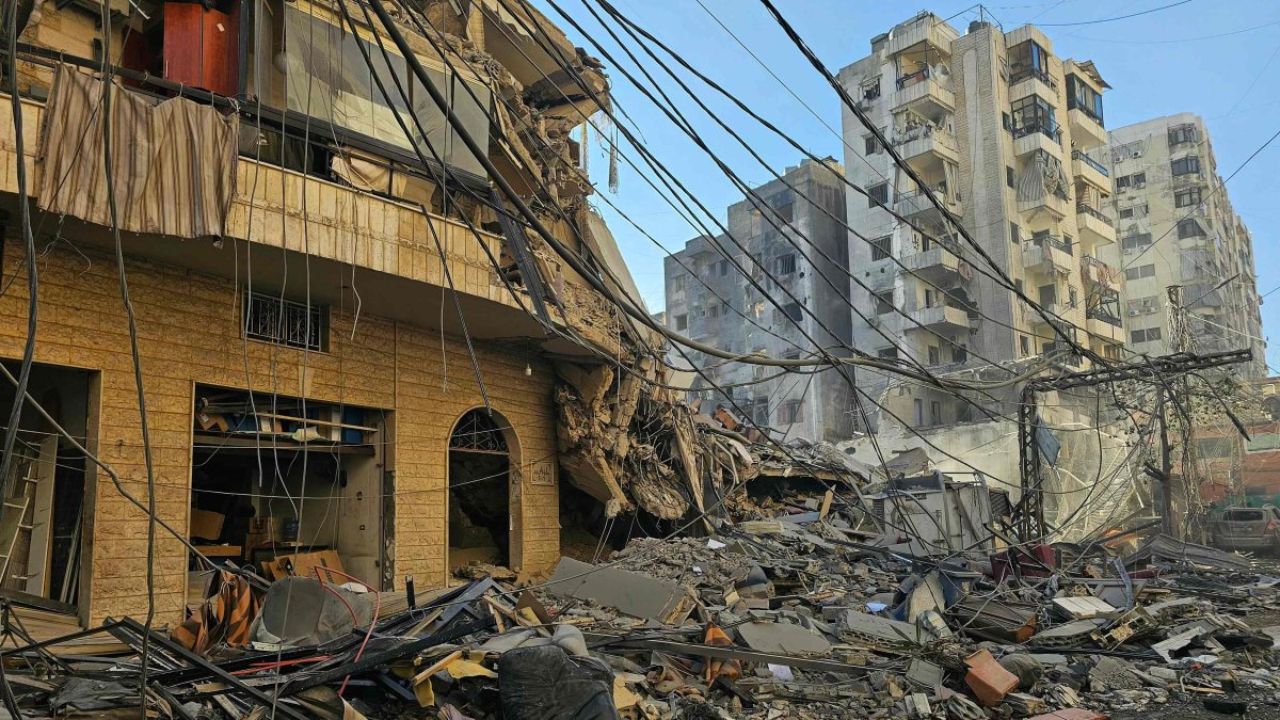
Hezbollah is paying to rebuild what the war destroyed — and in doing so, it is testing how much power Lebanon's government can really exercise over a movement that operates as a state within a state. Last week the group's Executive Council chief, Ali Damoush, unveiled a year-long financial assistance programme for families whose homes were destroyed or rendered uninhabitable by the 2026 war with Israel, offering up to $14,000 per household. The announcement, made on October 13 at a municipal centre in Beirut's southern suburbs, has quickly become a political fault line: a lifeline for hundreds of thousands of displaced people, and a provocation to a government under intense American pressure to disarm the group and choke off its money.
What the plan promises
Under the scheme, families in Beirut and its southern suburbs — Hezbollah's historic heartland — will receive up to $14,000, split into $8,000 to replace furniture and $6,000 for rent. Households elsewhere in Lebanon are eligible for up to $12,000 ($8,000 for furniture, $4,000 for rent). The payments will be disbursed in four instalments over the course of a year, starting at $3,500 in Beirut and $3,000 elsewhere.
The rates are not new: they mirror the assistance Hezbollah paid after the 2024 war, when it distributed some $77 million — described at the time as "a gift from the Iranian people and Hezbollah" — to displaced families. Eligibility is restricted to families who used the affected property as their primary residence; second homes, summer homes and abandoned properties are excluded. The programme also covers residents displaced from areas in the south now occupied by Israel, according to details reported by Reuters.
"This is out of our religious and moral responsibility," Damoush said, adding that the scheme would be open to "everyone who has suffered harm in our country, regardless of their political position."
Where the money comes from
Hezbollah did not name the source of the funds. But last week Reuters, citing two people with direct knowledge of the transfers, reported that the group had received $200 million from Iran to assist displaced Lebanese families. The United States has publicly disputed Tehran's ability to provide financial assistance on that scale, as Iran's own economy strains under sanctions and a war that has expanded across the region.
The figure is politically explosive regardless of its precision. For Washington and its allies, the transfer — if confirmed — would show that sanctions are not severing the financial artery between Tehran and Beirut. For Hezbollah, the aid programme revives a strategy it has used for decades: stepping in where the Lebanese state cannot, cementing loyalty among its Shia constituency and presenting itself as the reliable protector of communities the government has left waiting.
A government caught in the middle
Lebanon's government is walking a line that gets thinner by the week. Prime Minister Nawaf Salam recently met separately with Hezbollah and allied Amal Movement lawmakers to discuss government-administered reconstruction projects in southern Lebanon and Beirut's southern suburbs — an attempt to put the state, not the party, at the centre of rebuilding.
At the same time, the government is under heavy pressure from the United States to address Hezbollah's military presence and its financial networks. The group's announcement puts that pressure into sharp relief: the state has so far failed to deliver its own compensation mechanism for displaced families, a failure Damoush did not hesitate to highlight at the unveiling, accusing the authorities of inaction and defending Hezbollah's continued armed role.
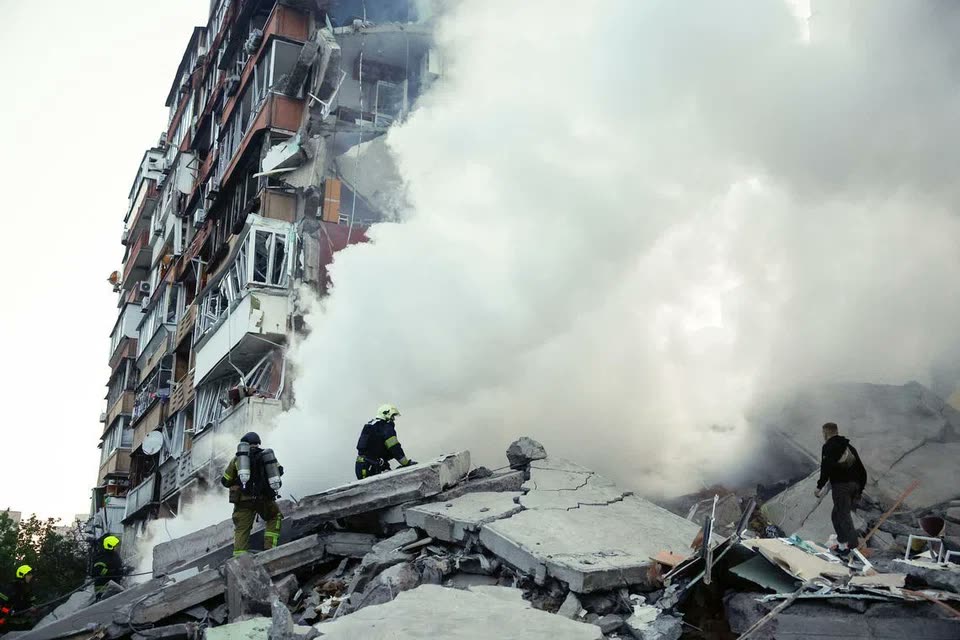
The dynamic is not new, but the stakes are higher than they have been in years. Israel's bombardment and invasion of Lebanon has uprooted hundreds of thousands of people and, according to Lebanon's health ministry, killed more than 4,300 — a toll that does not distinguish between civilians and combatants. The war began on March 2, when Hezbollah entered a regional conflict in support of Iran, days after the US and Israel began attacks on Iranian targets. Rebuilding the south has become both a humanitarian necessity and the main theatre of Lebanon's sovereignty struggle.
Why this matters now
Analysts cited by Al Jazeera describe the funding plan as a fresh test for the Lebanese government as it tries to curb the group's influence while delivering for war-ravaged communities. The dilemma is stark: blocking or obstructing Hezbollah's money risks leaving hundreds of thousands of displaced families without help — a humanitarian failure the state cannot afford. Allowing the programme to proceed unchallenged cements a parallel welfare system run by an armed group that the US designates as a terrorist organisation.
For context on how the conflict has battered Lebanese communities, see our earlier coverage of deadly violence during this year's olive harvest in the south and the ongoing Israel–Lebanon ceasefire situation. On Iran's broader financial web, our reporting on Iran's oil intermediaries shows how money keeps moving despite sanctions.
Frequently Asked Questions
What is Hezbollah's new aid programme?
It is a year-long assistance plan announced October 13 by Executive Council chief Ali Damoush, offering up to $14,000 per household to families whose primary homes were destroyed or made uninhabitable by the 2026 war with Israel. The funds cover rent and furniture replacement, paid in four instalments.
Where is the money reportedly coming from?
Reuters reported, citing sources with direct knowledge, that Hezbollah received $200 million from Iran to help displaced families. The US has disputed that Iran can provide such sums. Hezbollah itself did not specify the source.
Why does this challenge Lebanon's government?
The government is under US pressure to curb Hezbollah's military presence and finances, while it has failed to deliver its own compensation for displaced families. Letting the group's programme run unchallenged undermines state authority; blocking it leaves hundreds of thousands without help.
How many people were displaced by the war?
Israel's bombardment and invasion of Lebanon uprooted hundreds of thousands of people — largely Hezbollah's Shia constituents in the south and Beirut's southern suburbs — and killed more than 4,300, according to Lebanon's health ministry.
Sources: Al Jazeera, Reuters, The Hindu, Foundation for Defense of Democracies.