North Korea has tested ballistic missiles more than 10 times this year, and the tempo is accelerating. The latest launch — an intermediate-range missile fired from the Wonsan area on October 3, overseen by Kim Jong Un — arrived with an unusual new claim: that the missile was guided by artificial intelligence and flew an untrackable "wave-like trajectory." Seoul immediately pushed back, saying its radars followed the whole flight. This tracker gathers everything we know about the 2026 launches so far: the missiles being tested, the dates, the claims, and the international reaction.
Table of Contents
- Latest developments (updated October 5, 2026)
- October 3: the AI-guided intermediate-range launch
- September 20: the hypersonic Hwasong-11M-1 test
- September 12: the joint strike drill with drones
- October 2: the unidentified projectile
- The missile types in Pyongyang's arsenal
- Why the launches are escalating
- International reactions
- Key Takeaways
- Frequently Asked Questions
- Sources
- Read Next on Chronicle
Latest developments (updated October 5, 2026)
As of this writing, there have been no new launches since the October 3 test, but the peninsula remains on edge:
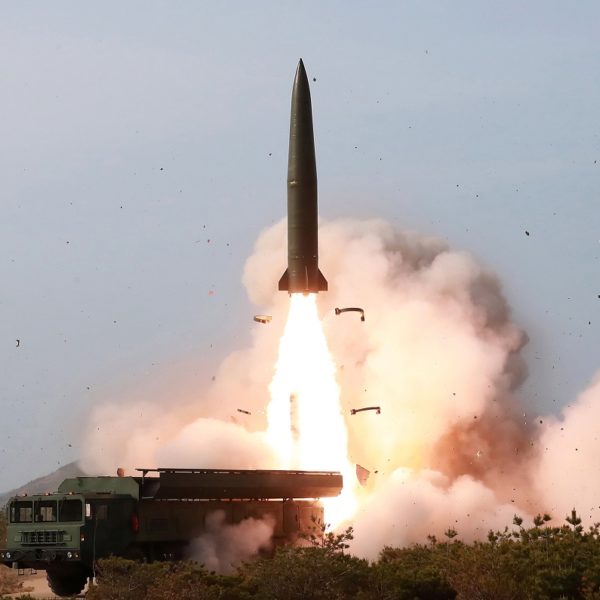
- October 3: North Korea fired an intermediate-range missile from the Wonsan area at around 6:30 a.m., which flew more than 700 km toward the sea off the east coast, according to South Korea's military. Kim Jong Un personally oversaw the drill, and his sister Kim Yo Jong claimed the weapon used AI guidance and a "wave-like trajectory mode" that she said defeated South Korean and Japanese tracking — a claim Seoul immediately denied. State media KCNA said the missile hit a target 1,000 km away and described the drill as training for troops operating a "hypersonic strategic weapon system," per Reuters via GMA News Online.
- October 2: One day earlier, North Korea fired an unidentified projectile toward the East Sea, a launch Seoul said it was still analyzing. Chronicle's earlier report covers the details: North Korea Fires Unidentified Projectile Toward East Sea.
- Diplomatic chill: Kim Yo Jong on October 2 rejected Seoul's demand for an apology over the September 21 landmine blast in the Demilitarized Zone that seriously wounded South Korean soldiers, calling the accusation "despicable," per Reuters.
October 3: the AI-guided intermediate-range launch
The October 3 launch is the centerpiece of the current escalation. South Korea's military said the missile flew more than 700 km toward the sea off its eastern coast, while Japan's coast guard, citing the defence ministry, said the object may have been a ballistic missile and warned ships to take precautions, per The Jerusalem Post. South Korea's presidential national security council convened an emergency meeting.
Pyongyang framed the launch as a drill intended to train troops operating a hypersonic strategic weapon system and to assess the "reliability, efficiency and mobility" of the country's war deterrent. KCNA quoted Kim as saying the North must continue efforts to make its enemies recognize the "reliability and fatality" of its strategic offensive weapons, reaffirming that developing its nuclear war deterrent remained essential for national security, per Reuters.
The claim of AI guidance is being treated with skepticism. South Korea's military said it had detected and tracked the full flight — directly contradicting Kim Yo Jong's assertion that South Korea and Japan failed to track the weapon. For a full account of that dispute, see Chronicle's report: North Korea's AI-Guided Missile Claim, Kim's Oversight, and Seoul's Rebuttal.
September 20: the hypersonic Hwasong-11M-1 test
Two weeks earlier, North Korea publicly confirmed the test of the "Hwasong-11M-1," believed to be a short-range hypersonic missile, on September 20, Aju Press reported. Kim Jong Un and his daughter Ju Ae attended. Photos released by state media showed Kim examining a monitor displaying a flight trajectory with figures claiming a 908.2 km range, 35.8 km altitude and speed of 2,146 meters per second — materially different from the 440–600 km ranges reported by South Korea and Japan.
The Hwasong-11M is assessed to combine a hypersonic glide vehicle with a KN-23-style short-range ballistic missile booster — the North Korean analogue of Russia's Iskander — giving it low-altitude maneuverability designed to complicate missile defence, according to Defence Security Asia. Aju Press counted the test as North Korea's 14th ballistic missile launch of 2026.
September 12: the joint strike drill with drones
On September 12, North Korea conducted a joint firepower strike drill involving artillery and missile units — assessed as the country's 13th ballistic missile launch of the year, per Nation Press. The drill featured Hwasong-11 short-range ballistic missiles, 600mm super-large multiple rocket launchers, tactical cruise missiles and two types of attack drones. It came days after South Korea, the United States and Japan concluded a five-day trilateral military exercise near the Korean Peninsula.
Analysts at the Institute for the Study of War noted this was the first time North Korea had combined four different munition types — ballistic missiles, rocket launchers, cruise missiles and drones — in a single strike exercise, suggesting the regime is learning from Russian-style combined strike packages used in Ukraine to overwhelm missile defences.
October 2: the unidentified projectile
The October 2 launch remains something of a blank: South Korea's Joint Chiefs of Staff announced the firing of an "unidentified projectile" toward the East Sea and said it was analyzing the specifications, range and type. Chronicle's earlier reporting covers this launch and its context — the DMZ landmine dispute and President Lee Jae Myung's dual strategy of seeking dialogue while accelerating South Korea's military buildup, including nuclear-powered submarine plans: North Korea Fires Unidentified Projectile Toward East Sea.
The missile types in Pyongyang's arsenal
The 2026 tests show North Korea widening its toolkit across the full range spectrum:
- Short-range ballistic missiles (Hwasong-11 series): the workhorses of the 2026 tests, used in the September 12 drill; TEL-launched, aimed at South Korea and US bases.
- Hypersonic glide vehicles (Hwasong-11M-1): a newer development that pairs a maneuvering glide vehicle with a short-range booster, tested on September 20 with low-altitude skip-glide characteristics meant to evade tracking, per Aju Press.
- Intermediate-range / "hypersonic strategic weapon system": the October 3 launch; KCNA described the drill as training troops on this system.
- Cruise missiles and large-calibre rocket launchers: featured in the September 12 exercise alongside strike drones.
- Attack drones: North Korea's inclusion of long-range strike drones — one variant resembling drones used in Ukraine — marks a new layer in its strike packages, per the ISW.
Why the launches are escalating
The immediate trigger is the September 21 landmine blast in the Demilitarized Zone that seriously wounded South Korean soldiers on a reconnaissance mission inside the border area. Seoul blamed North Korean mines and demanded an apology; Pyongyang denied responsibility and Kim Yo Jong dismissed the demand as "despicable," per Reuters.
Underlying that is a deeper dynamic. North Korea has sharply increased test frequency: Japan's Defense Minister Shinjiro Koizumi said North Korea had launched at least 15 ballistic missiles and other projectiles on nine occasions since the start of 2026, compared with five missiles on four occasions in all of last year, per USNI News. Kim Jong Un has said he could return to negotiations only if the United States abandons its "hostile policy" and recognizes North Korea's nuclear status — which Pyongyang has legislated as "permanent and irreversible."
International reactions
- South Korea: The military raised monitoring of further tests, pledged intelligence-sharing with the US and Japan, and said it maintains the capability to "respond overwhelmingly to any provocation," per USNI News. President Lee's government is simultaneously pursuing dialogue and a military buildup including nuclear-powered submarines.
- Japan: Koizumi lodged a strong protest and condemnation through North Korea's embassy in Beijing, per USNI News. The launches are one reason Tokyo is building up its intelligence apparatus — see Chronicle's analysis: Japan's New National Intelligence Bureau.
- United States: Seoul and Washington are jointly analyzing the tests' specifications; the launch came against the backdrop of the Trump administration's drawdown of joint drills with South Korea, which Pyongyang dismissed as insufficient.
Key Takeaways
- North Korea has conducted missile launches on more than 10 occasions in 2026 — at least 15 missiles/projectiles on nine occasions by mid-September, versus five missiles on four occasions in all of 2025, according to Japan's defense minister.
- The October 3 test introduced an unprecedented claim of AI guidance and a "wave-like trajectory mode"; South Korea says it tracked the entire flight.
- The September 20 Hwasong-11M-1 test demonstrated a short-range hypersonic glide vehicle aimed at defeating missile defences.
- The September 12 drill was the first to combine ballistic missiles, rocket artillery, cruise missiles and drones in one exercise — a Russian-style strike package.
- Pyongyang's stated condition for talks is US recognition of its nuclear status, which Seoul and Washington reject.
Frequently Asked Questions
How many missiles has North Korea launched in 2026?
Counting methods differ. South Korean and regional media counted the September 12 drill as the 13th ballistic launch of the year and the September 20 test as the 14th. Japan's defense minister counted at least 15 missiles and projectiles on nine occasions through mid-September — versus five missiles on four occasions in all of 2025. The numbers depend on whether multi-missile events and projectiles of unconfirmed type are counted.
What is the Hwasong-11M-1?
It is a short-range ballistic missile believed to carry a hypersonic glide vehicle, tested on September 20, 2026. State media claims it flew 908.2 km at up to Mach 6+; South Korea and Japan measured 440–600 km. Its low-altitude, maneuvering flight is designed to complicate interception by existing missile defences.
Did South Korea and Japan really fail to track the October 3 missile, as Kim Yo Jong claimed?
Seoul says no. South Korea's military announced it had detected the launch and tracked the full 700 km flight, directly rebutting Kim Yo Jong's claim of a "wave-like trajectory mode" that exposed allied tracking limitations.
What is the DMZ landmine incident?
On September 21, an explosion in the Demilitarized Zone seriously wounded South Korean soldiers. Seoul and the UN Command concluded North Korean mines caused the blast, in violation of the 1953 armistice; Pyongyang denied it and rejected Seoul's demand for an apology, and the dispute has fueled the current round of launches.
Will North Korea return to nuclear talks?
Kim Jong Un has said he could return to negotiations if the US drops its "hostile policy" and recognizes the North's nuclear status. Neither Washington nor Seoul accepts that precondition, so analysts see little prospect of talks in the near term.
Sources
- The Straits Times — "North Korea says it conducted intermediate-range strategic missile drill" (October 4, 2026).
- Reuters via GMA News Online — "North Korea says it conducted intermediate-range strategic missile drill" (October 4, 2026).
- Reuters via GMA News Online — "North Korea fires ballistic missile toward sea, South Korea and Japan say" (October 3, 2026).
- The Jerusalem Post — "North Korea launches ballistic missile 700 km. as hostilities heat up" (October 4, 2026).
- Aju Press — "North Korea Reveals Test of Hypersonic Missile 'Hwasong-11M-1'" (September 22, 2026).
- USNI News — "North Korea Tests New Hypersonic Missile" (September 23, 2026).
- Institute for the Study of War — "Korean Peninsula Update, September 16, 2026."
- Nation Press — "North Korea's 13th missile launch of 2026" (September 14, 2026).