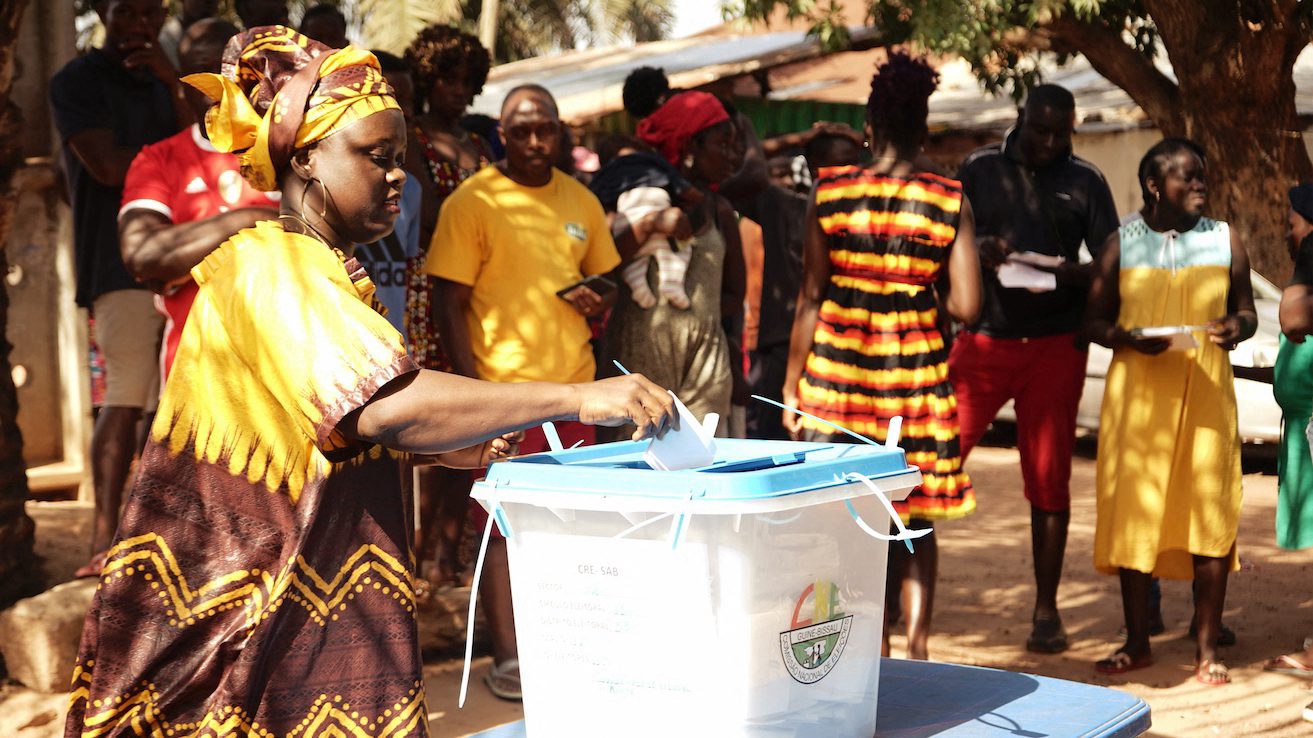
Guinea-Bissau will not hold its presidential and legislative elections as scheduled on December 6, the country's interim prime minister announced on Thursday, deepening uncertainty over how and when the small West African nation returns to civilian rule after soldiers overthrew its government last year.
Prime Minister Ilidio Vieira Te told reporters that "there are no conditions" for holding the vote on the planned date, Reuters reported. He set no new date.
Table of Contents
- Why the vote cannot go ahead
- The coup that started it all
- A constitution that enlarged presidential powers
- Embalo blocked from returning
- A climate of fear
- Key takeaways
- Frequently Asked Questions
- Sources
- Read more
Why the vote cannot go ahead
The immediate reason for the delay is logistical, according to Vieira Te: political parties have not held the congresses needed to choose their leaders, and prospective candidates missed the October 6 deadline for submitting their bids to the Supreme Court. Without candidates, there is no ballot.
The announcement means a nation of roughly two million people, already governed by soldiers for nearly a year, will now wait even longer for a democratic roadmap. Regional mediators and international partners have repeatedly pressed Bissau's authorities for a credible timetable back to constitutional rule, and the delay is likely to renew that pressure.
The coup that started it all
Guinea-Bissau held a presidential election last November, but soldiers toppled the civilian government before the results could be announced. The military moved in as the country waited for the outcome of a tense contest, plunging the former Portuguese colony back into the instability that has defined much of its post-independence history.
The country has endured a string of coups and attempted coups since independence in 1974, and its strategic location on West Africa's Atlantic coast has made it a notorious transit point for drug trafficking — a factor analysts say has repeatedly poisoned civilian politics.
A constitution that enlarged presidential powers
In August, voters approved a new constitution that expanded presidential powers, Reuters reported. The referendum took place under the military government, and critics questioned both its legitimacy and its timing: rewriting the rules of the game while soldiers hold the guns rarely produces a level playing field.
Whatever its substance, the new charter now governs a contest whose date remains unknown — and whose contestants are barred from even registering on time.
Embalo blocked from returning
In a sign of how tight the military's grip remains, the government last week blocked former president Umaro Sissoco Embalo from returning to the country, citing national security concerns. Embalo had planned to come back last Sunday and contest the presidential election.
The move drew sharp criticism from opposition figures, who described it as a deliberate effort to keep the strongest potential challenger out of the race. Whether Embalo would have won remains unknown; that he was not allowed to try is now part of the record.
A climate of fear
Civil society activists say the interim government has used fear to crush political dissent. They point to the unsolved murder of Vigario Luis Balanta, a popular rapper and founder of a political movement, as a high-profile example of the atmosphere in which opposition now operates.
The government denies any role in Balanta's killing and says it is investigating to find those responsible. But the case has become a symbol for critics who argue that Guinea-Bissau's transition is not a transition at all — merely a coup consolidating itself behind legal formalities.
Key takeaways
- Guinea-Bissau's December 6 elections are delayed indefinitely; no new date has been announced.
- The official reason is administrative: parties missed candidate registration deadlines.
- Former president Embalo was blocked from returning to contest the vote.
- Activists accuse the military government of using fear, including an unsolved murder of an opposition figure, to suppress dissent.
Frequently Asked Questions
When were Guinea-Bissau's elections supposed to be held?
The presidential and legislative elections were scheduled for December 6, 2026. Prime Minister Ilidio Vieira Te announced on October 8 that they will have to be postponed, without giving a new date.
Why was the vote delayed?
The interim government says political parties failed to hold congresses to choose leaders and that candidates missed the October 6 deadline to submit their bids to the Supreme Court.
What happened in last year's coup?
Soldiers toppled the civilian government during the November 2025 presidential election, before results could be announced. The military has governed Guinea-Bissau ever since.
Who is Umaro Sissoco Embalo?
Embalo was Guinea-Bissau's president at the time of the coup. Last week the military government blocked him from returning to the country to contest the December election, citing national security concerns.
Why does Guinea-Bissau matter?
Despite its small size, the country sits on a key Atlantic drug-trafficking route to Europe, and its chronic instability is a persistent concern for West Africa's regional bloc ECOWAS.
Sources
- Reuters, "Guinea-Bissau to delay elections following last year's coup," October 8, 2026 — https://www.reuters.com/world/africa/guinea-bissau-delay-elections-following-last-years-coup-2026-10-08/