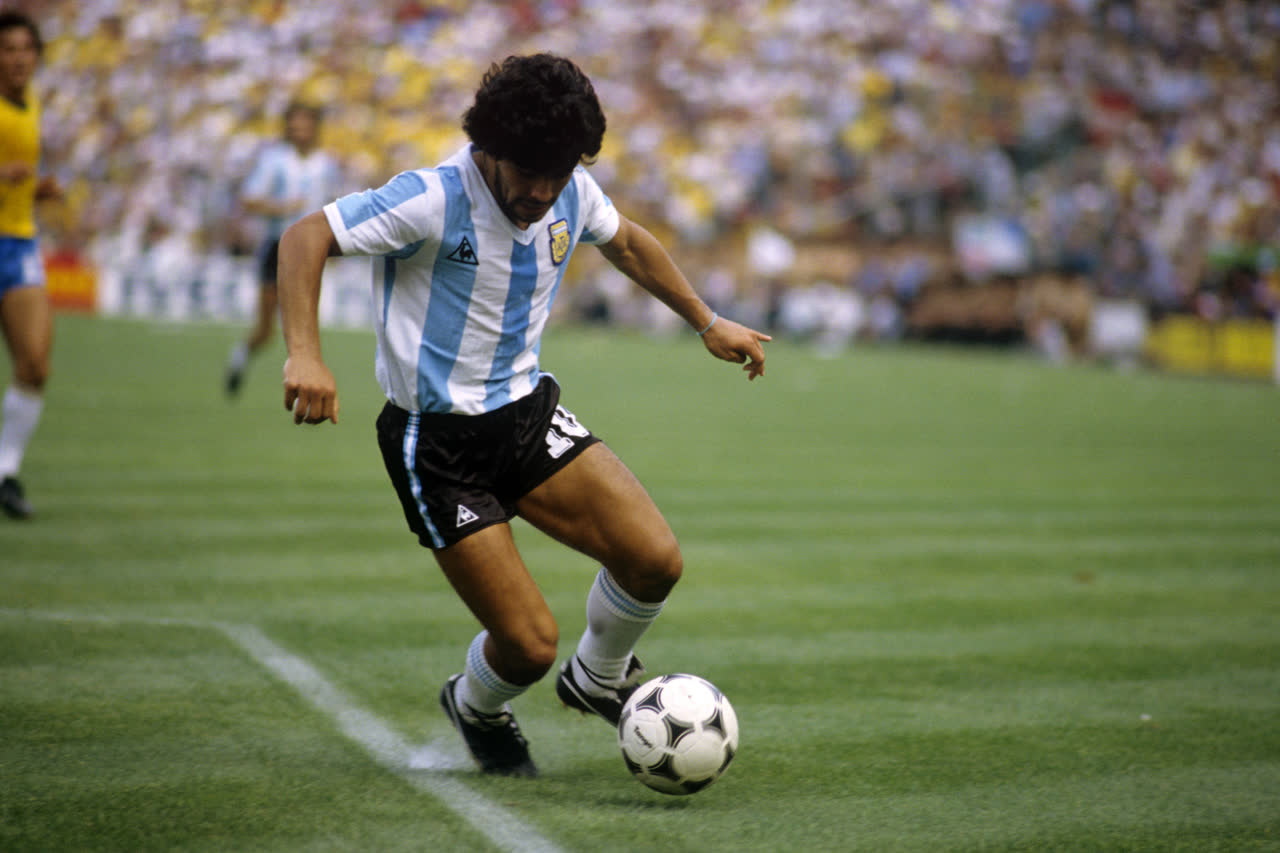
Argentine prosecutors have asked for prison sentences of up to 12 years for Diego Maradona's personal doctor and other members of the football legend's medical team, telling a Buenos Aires court that their "chaotic organisation" abandoned the ailing star to die, in closing arguments that brought the long-running trial into its final phase.
The prosecution closed its case on Thursday in the trial of seven medical professionals over Maradona's death on November 25, 2020 — nearly six years after the 1986 World Cup hero died at a rented home in the Tigre suburb of Buenos Aires.
What prosecutors are asking
The highest sentence sought — 12 years — is for Maradona's personal physician, neurosurgeon Leopoldo Luque. Other members of the team, including psychiatrist Agustina Cosachov, psychologist Carlos Díaz, nurses and coordinators, face requested sentences ranging from four to 10 years, according to Al Jazeera and the Buenos Aires Times.
The defendants are charged with "dolo eventual" — a legal concept meaning they were aware their actions could cause harm but persisted anyway. All have pleaded not guilty, arguing Maradona's death could not have been foreseen and that they did their jobs.
In his closing argument, prosecutor Patricio Ferrari said the defendants had "breached their duties, performed actions contrary to the art of healing" and left the patient "in a helpless situation, abandoning him to his fate." Assistant prosecutor Cosme Iribarren told the court: "Diego Armando Maradona's death clearly did not come out of nowhere: the signs of this fatal outcome began to appear long beforehand."
The heart of the case
Maradona, 60, died of heart failure and acute pulmonary oedema — fluid accumulating in the lungs — two weeks after undergoing surgery for a brain clot. The central question of the trial has been whether his doctors were negligent in allowing him to convalesce in a private home rather than a hospital.
Prosecutors pointed to the near-total absence of basic medical equipment: no hospital bed, no defibrillator, no resuscitation bag, and no ambulance stationed outside the property. Ferrari described the home-care arrangements as "pitiful." Medical experts testified that the team failed to react to key warning signs — oedema, tachycardia and breathing difficulties — in the days before his death.
The prosecution maintains Maradona suffered for around 12 hours in agony before dying from acute pulmonary oedema linked to aggravated congestive heart failure and dilated cardiomyopathy. The defence counters that he suffered an acute, sudden and unforeseeable cardiac event. The prosecution again showed the court photographs of the former footballer lying dead in bed — images that had caused a sensation when first presented.
A trial reborn from scandal
This is the second oral trial over Maradona's death. The first, which began in March 2025, was annulled after a scandal involving a judge who appeared to be cooperating with a documentary about the case. The new trial began in April 2026 in San Isidro and has now heard months of testimony from more than 100 witnesses and defendants.
An eighth defendant, nurse Dahiana Madrid, requested a jury trial and will be tried separately. If convicted, the defendants could face between eight and 25 years in prison under Argentine law — prosecutors' requests sit at the lower end of that range.
The football world continues to watch the case closely. Maradona, who had a long history of substance abuse, remains an icon in Argentina and beyond, and his death provoked days of national mourning. His daughters' complaints helped drive the original 2021 investigation, which concluded his medical team acted in an "inappropriate, deficient and reckless" manner.
What happens next
Closing arguments for the prosecution and civil parties are scheduled for October 8, 13 and 14, with defence arguments set for October 20, 21 and 22. Judges could deliver a verdict later this year — a decision that would shape accountability and oversight of private home-care practices in Argentina.
Few sporting trials have commanded as much attention. Whatever the verdict, the case has already cemented its place as one of the most scrutinised medical-neglect trials in football history — though unlike the transfer-market stories that usually dominate football headlines, this one is about the death of the game's most beloved figure.
Key takeaways
- Prosecutors seek up to 12 years in prison for Maradona's personal doctor Leopoldo Luque; 4–10 years for six other medical staff.
- The defendants are accused of "dolo eventual" — knowing their neglect could cause harm but persisting.
- The case centres on the decision to treat Maradona at home rather than in a hospital, with no defibrillator, hospital bed or ambulance on site.
- The defence argues his death was a sudden, unforeseeable cardiac event.
- Defence closing arguments are scheduled for October 20–22, with a verdict possible later this year.
Frequently Asked Questions
What are the defendants accused of?
Seven medical professionals — including Maradona's personal doctor, psychiatrist, psychologist, nurses and coordinators — are accused of providing grossly inadequate home care that led to his death on November 25, 2020. All deny the charges.
What sentences are prosecutors seeking?
Up to 12 years for neurosurgeon Leopoldo Luque, and between four and 10 years for the other defendants. Under Argentine law, convictions could carry eight to 25 years.
Why is this the second trial?
The first trial, which began in March 2025, was annulled after a scandal involving a judge who appeared to be cooperating with a documentary about the case. The retrial began in April 2026.
When will the verdict come?
Defence closing arguments are set for October 20–22, after which judges will deliberate. A verdict could come later this year.
Sources
- Al Jazeera — aljazeera.com — Prosecutors in Maradona death trial seek sentences up to 12 years, October 8, 2026.
- Buenos Aires Times — batimes.com.ar — Closing arguments begin as Maradona death trial enters final weeks, October 8, 2026.