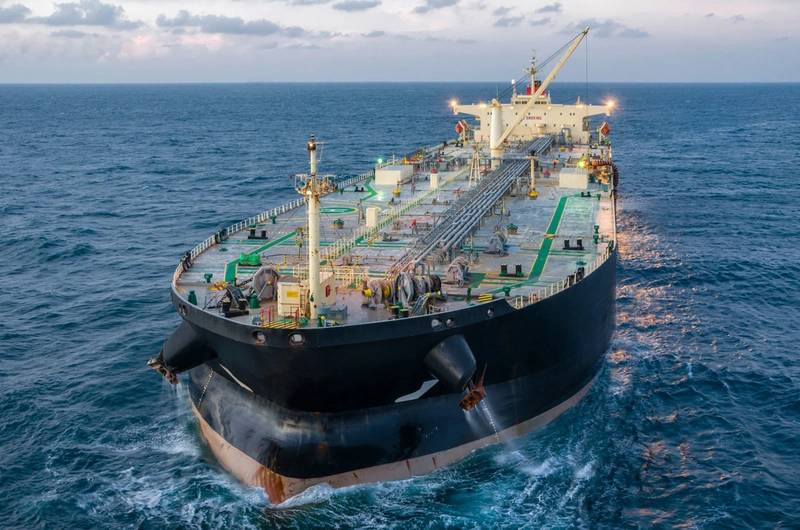
A tanker sailing off the north coast of Qatar reported being struck "by multiple projectiles," with casualties aboard, Britain's maritime trade agency said on Wednesday — capping the most intense week of attacks on Gulf shipping since the war between the United States and Iran began in February. The United Kingdom Maritime Trade Operations (UKMTO) said the incident occurred 51 nautical miles off Madinat ash Shamal, on Qatar's northern coast, and that authorities were investigating. It did not identify the vessel or disclose the extent of the damage.
The agency said it received the report at around 19:00 GMT on Wednesday. "Vessels are advised to transit with caution and report any suspicious activity to UKMTO," the agency said in its alert. The number and nationalities of the casualties were not disclosed.
The worst week yet
The Qatar incident is the latest in an escalating campaign against shipping in the Gulf and the Strait of Hormuz. Attacks and attempted attacks on oil, liquefied natural gas (LNG) and liquefied petroleum gas (LPG) tankers reached their highest weekly level since the conflict began, according to a Reuters analysis of data from three maritime security sources, as first detailed in Reuters reporting on Thursday.
At least 12 attacks, attempted attacks and harassment incidents were recorded between September 28 and October 5. The incidents ranged from strikes on vessels to drone overflights, surveillance and radio challenges to ships over VHF by Iran's Revolutionary Guards. Separately, the UN's International Maritime Organization (IMO) recorded nine incidents in the same week; maritime sources note the IMO generally takes longer to verify and officially log incidents.
The US Navy-led Joint Maritime Information Center (JMIC) said on Sunday that the harassment continued into this week, adding: "These actions continue to demonstrate Iran's intent to assert presence along key transit lanes and maintain pressure on transiting vessels." The Strait of Hormuz carried shipments equal to about 20 percent of global oil and fuel before the war.
This is not the first time commercial shipping has come under fire this month — projectiles also struck two oil tankers near the strait earlier in October, as covered in Chronicle's earlier report — but the Qatar strike, with reported casualties, marks a further escalation.
Oil markets react
Oil prices rose on Thursday on the renewed supply fears. Brent crude futures climbed $1.33, or 1.33 percent, to $101.53 a barrel, while US West Texas Intermediate gained $1.11 to $89.39, CNA reported.
Prices had settled lower on Wednesday after the International Energy Agency agreed to accelerate the release of oil stocks and to prioritize diesel supplies under a plan launched in March, as governments seek to tackle record fuel prices and supply disruptions caused by the Iran war. Daniel Hynes, senior commodity strategist at bank ANZ, said in a note Thursday that the IEA release would likely consist of barrels already earmarked under the group's original 400-million-barrel plan — meaning it does not appear to represent an additional draw on strategic inventories.
"In the past, such attacks have resulted in a reduction in shipments from the Persian Gulf. This time around, producers appear to be willing to take the risk of their vessels being damaged, as there is no alternative way to get their oil to international markets," Hynes said. The increase in attacks is occurring even as more crude is flowing out of the Gulf — at higher costs and greater risk to cargoes and crews, as Chronicle reported during last week's market sell-off.
A widening war at sea
The eighth month of the US-Israeli conflict with Iran has turned the world's most important energy chokepoint into a front line. Earlier this year, Aramco's chief executive warned that global oil stockpiles could take years to rebuild once the conflict ends — a warning covered in Chronicle's business desk.
With no end to the war in sight and maritime incidents climbing to record levels, shipping insurers, oil traders and Gulf energy importers are bracing for more disruption. The US-Iran naval confrontation in and around the strait — examined in Chronicle's analysis of the oil blockade — now runs from attempted interdictions to direct strikes with crew casualties.
For the crews transiting the Gulf, the warning from UKMTO is stark and immediate: proceed with caution, and report everything suspicious.
Frequently Asked Questions
Where did the attack happen?
UKMTO said the tanker was struck 51 nautical miles (about 94 kilometres) off Madinat ash Shamal, on the north coast of Qatar, in the Persian Gulf.
Were there casualties?
Yes. UKMTO reported that casualties had been reported aboard the tanker, but did not specify a number or the nationalities involved, nor the extent of damage to the vessel.
How many shipping attacks happened this week?
At least 12 attacks, attempted attacks and harassment incidents on oil, LNG and LPG tankers were recorded between September 28 and October 5 — the highest weekly total since the US-Iran war began in February, according to maritime security data analysed by Reuters. The IMO officially recorded nine incidents in the same period.
How did oil markets respond?
Brent crude rose to $101.53 a barrel on Thursday, up 1.33 percent, and US crude climbed to $89.39, as traders priced in persistent supply risks from the key Middle East producing region.