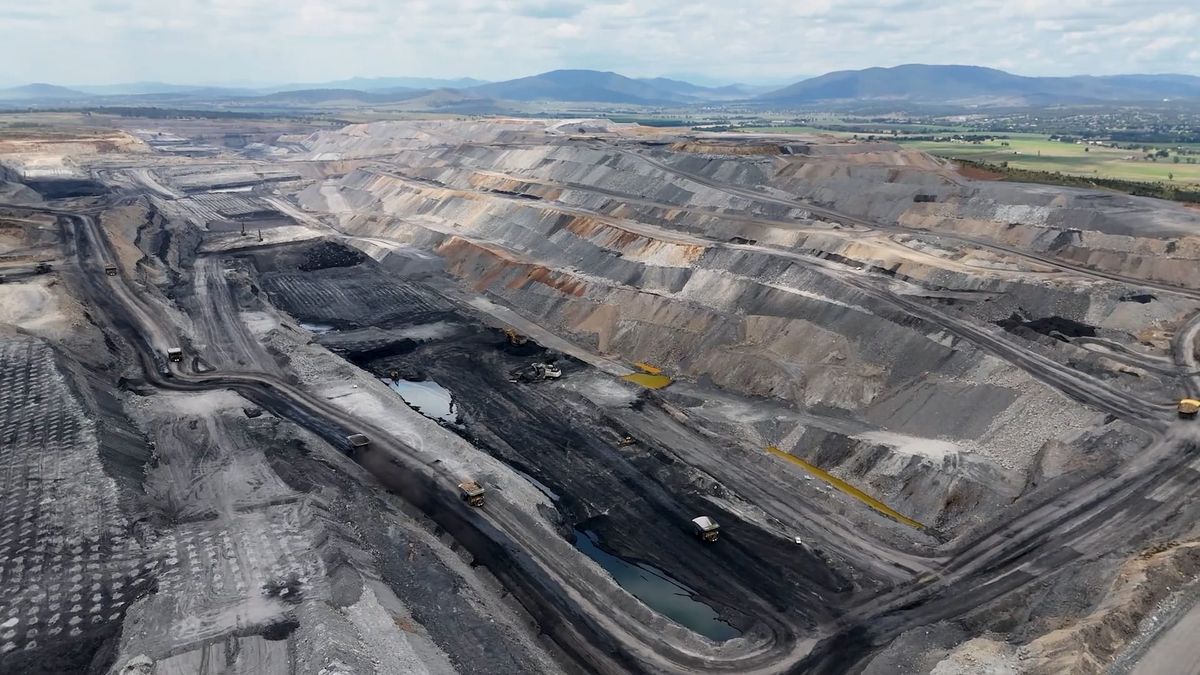
A group of Hunter Valley farmers and residents has beaten one of Australia's biggest coal companies in the nation's highest court. The High Court of Australia on Wednesday dismissed MACH Energy's appeal with costs, upholding the decision to block a two-decade extension of the Mount Pleasant coal mine in New South Wales — the first time the country's top court has ever ruled on a climate change case.
The mine at the centre of it all
MACH Energy had sought to extend the life of Mount Pleasant, which is due to end operations this December, until 2048 — and to double its coal production in the process. The expansion would have allowed the company to extract an additional 406 million tons of coal, making it the largest open-cut coal mine in New South Wales.
But the New South Wales Independent Planning Commission's 2022 approval of the extension had a fatal flaw, the court found: it failed to properly consider imposing rules to mitigate the project's climate footprint. So-called scope 3 emissions — the greenhouse gases released when the exported coal is burned overseas — made up 98% of the mine's total emissions. The commission did not consider rules to address them, on the reasoning that the vast majority would be generated abroad.
Justice James Edelman was blunt: "By focusing only upon 2% of the project's emissions, the Commission failed in its reasons to consider whether conditions should be imposed to ensure that greenhouse gas emissions are minimised to the greatest extent practicable."
The farmers who took on a coal giant
The case was brought by the Denman Aberdeen Muswellbrook Scone Healthy Environment Group, an organisation of local residents in the Hunter Valley, northwest of Sydney. The group challenged the commission's approval and won in the New South Wales Court of Appeal before MACH Energy dragged the fight to the High Court.
The ruling arrives at a remarkable moment in climate law. Just a year ago, in July 2025, the International Court of Justice in The Hague delivered its own landmark advisory opinion finding that fossil fuel-exporting nations bear legal responsibility under international law for the climate harm their exports cause — rejecting Australia's long-standing argument that emissions from its coal and gas exports are not its problem.
What this means for future projects
Advocates say the decision will reshape fossil fuel approvals across the state. By establishing that planning authorities must consider downstream, overseas emissions — not just the fraction released at the mine itself — the ruling sets a binding precedent that could complicate every major coal and gas project seeking approval in New South Wales.
The practical fallout is already visible. While the litigation dragged on, the NSW government granted MACH Energy a shorter six-year extension to the end of 2032 as an interim measure. With the High Court now siding with the community group, the company's long-term expansion plans are in tatters.
Frequently Asked Questions
What did Australia's High Court decide?
It dismissed MACH Energy's appeal with costs, upholding the NSW Court of Appeal's finding that the Independent Planning Commission unlawfully approved a 22-year extension of the Mount Pleasant coal mine without properly considering its climate impact — the first climate case ever decided by Australia's highest court.
Why did the approval fail?
The commission focused only on the 2% of emissions released at the mine itself and ignored "scope 3" emissions — the 98% generated overseas when the exported coal is burned. The court ruled the commission was legally required to consider whether conditions should be imposed to minimise those emissions.
Who brought the case?
The Denman Aberdeen Muswellbrook Scone Healthy Environment Group, a grassroots organisation of farmers and residents in the Hunter Valley region near the mine.
Does this affect other fossil fuel projects?
Very likely. Advocates say the binding precedent means all future fossil fuel project assessments in NSW must address downstream climate impacts as a mandatory consideration — a standard that will be hard for many coal and gas expansions to meet.