Yemen's Iran-backed Houthi movement said on Monday evening that it had launched a wave of drone and missile attacks against targets across Saudi Arabia, including King Khalid International Airport in Riyadh and an Aramco refinery in Rabigh. Loud explosions were heard over the Saudi capital shortly after the announcement, and flights to and from Riyadh were cancelled or diverted as commercial airlines avoided the city's airspace.
Houthi military spokesman Yahya Saree said the operation involved ballistic and cruise missiles as well as drones, according to The Hindu, which reported the claim via AFP. Saree said the strikes targeted the airport in Riyadh, the Aramco refinery in Rabigh, and military installations and smaller airports in southern Saudi Arabia. A more detailed Houthi statement carried by Anadolu named Abha Airport, the Khamis Mushait base and Akfa camp in the southern Asir region among the targets, along with sites in Najran and Jazan.
Saudi authorities had not immediately confirmed the claims or commented on whether any damage was caused.
Contents
- What the Houthis say they hit
- Aviation disruption over the Saudi capital
- The coalition hits back in Hodeidah
- Pakistan and Turkey pledge troops under the Mecca pact
- Tanker hit in the Strait of Hormuz
- FAQ
- Sources
- Chronicle related coverage
What the Houthis say they hit
According to Saree's statement, the group carried out three separate operations on Monday evening. The first was directed at King Khalid International Airport in Riyadh, where he claimed air traffic had been disrupted. The second targeted the Aramco refinery in Rabigh, in the Mecca region, with the Houthis claiming a fire broke out at the facility. The third was aimed at military sites and airports in the south of the kingdom.
Saree said the strikes were a response to 60 Saudi airstrikes and missile attacks in the preceding 24 hours against Sanaa and the Yemeni provinces of Al-Jawf, Taiz, Hajjah, Saada and Marib. He put the total number of strikes since the current escalation began at 1,576, and warned international airlines against using Saudi airspace — except over Mecca and Medina — saying it now fell within the group's area of operations.
The claim came just two days after the Houthis had already claimed a strike on a Saudi energy facility near Riyadh that left it burning, an incident witnessed by AFP journalists on the ground. Monday's announcement marks a sharp escalation in the group's stated ambition: hitting the capital's main civilian airport directly.
Aviation disruption over the Saudi capital
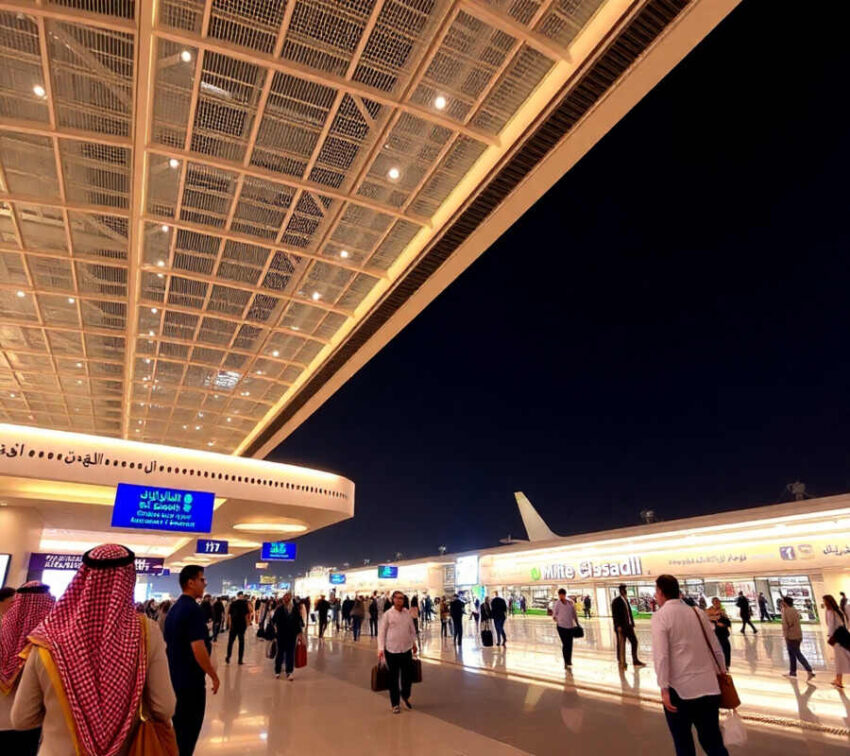
Whatever the truth of the Houthi claims, the evening's events unsettled Riyadh's aviation network. Reports from the city described grounded aircraft, closed gates and diverted flights, with some commercial airlines steering clear of airspace over the Saudi capital. The disruption underscores how quickly the conflict can translate into pressure on civilian infrastructure — and on the tens of thousands of passengers who transit King Khalid airport each day.
The warning to airlines is also significant. The Houthis have spent months demonstrating an ability to threaten Red Sea shipping; extending that threat to the airspace over one of the Middle East's busiest hubs raises the stakes for regional aviation and for Saudi Arabia's tourism and investment plans.
The coalition hits back in Hodeidah
The Saudi-led coalition supporting Yemen's internationally recognised government was striking back in parallel. Its spokesman, Turki Al-Malki, said on X that coalition naval forces had carried out an operation in Yemen's Hodeidah governorate on the Red Sea coast, destroying weapons depots, facilities storing booby-trapped boats and naval mines, and thwarting what he described as a planned attack on shipping lanes in the southern Red Sea.
On the ground, Yemen's military said it had carried out more than 1,000 strikes and launched a major offensive against Houthi-held territory, with the Saudi-led coalition saying 100 warplanes flew sorties at dawn. The push follows Sunday's declaration by Yemen's government of the goal of retaking all Houthi-held territory — home to most of Yemen's population and largely controlled by the group for more than a decade.
The Houthis, for their part, seized swathes of Red Sea coastline and the Bab al-Mandab Strait last month in Yemen's deadliest fighting in years, according to the Indian Express live updates.
Pakistan and Turkey pledge troops under the Mecca pact
In a significant regional development, Pakistan and Turkey pledged on Monday to deploy troops to Saudi Arabia under the new mutual defence pact signed in August, committing members to come to each other's aid in the event of an attack. Representatives of Saudi Arabia, Pakistan and Turkey held an emergency meeting in Riyadh on Monday and agreed to take "the necessary measures to provide the agreed military forces and capabilities and ensure their rapid deployment in the Kingdom".
The pledge follows the activation of the Mecca defence pact after weeks of Houthi attacks, a development Chronicle covered in detail as Pakistan and Turkey began moving forces toward Saudi Arabia. Monday's announcement turns that framework from paper into an emerging military deployment — with foreign troops heading to the kingdom even as missiles fall on its capital.
Tanker hit in the Strait of Hormuz
Separately, the UK Maritime Trade Operations office reported that a tanker had been hit by a projectile in the Strait of Hormuz, adding another thread to the region's widening energy-security crisis. The strait is a chokepoint for global oil shipments, and crude prices have already been soaring as the wider regional war disrupted flows — a context explored in Chronicle's earlier reporting on attacks in the strait.
A source in the Saudi energy sector told AFP that a Houthi attack on Sunday had again halted pumping through the East-West pipeline to the Red Sea, a key conduit for the kingdom's exports since Iran blockaded the Strait of Hormuz at the start of the wider regional war.
A spokesman for UN Secretary-General Antonio Guterres said the UN chief was "deeply concerned by the sharp escalation in fighting" and condemned the continued Houthi cross-border attacks on Saudi Arabia.
Frequently Asked Questions
What did the Houthis claim on Monday evening?
Houthi military spokesman Yahya Saree claimed three operations using drones, ballistic and cruise missiles against King Khalid International Airport in Riyadh, an Aramco refinery in Rabigh, and military sites and airports in southern Saudi Arabia.
Were flights disrupted at Riyadh airport?
Yes. Reports from Riyadh described cancelled or delayed flights, grounded aircraft, closed gates and diverted incoming flights, with some airlines avoiding airspace over the Saudi capital.
How did the Saudi-led coalition respond?
The coalition's spokesman said naval forces destroyed Houthi military targets in Hodeidah, including weapons depots and booby-trapped boat facilities. Yemen's military also said it carried out more than 1,000 strikes, with 100 coalition warplanes flying dawn sorties.
Which countries pledged troops to Saudi Arabia?
Pakistan and Turkey pledged to deploy troops to Saudi Arabia under the mutual defence pact signed in August, following an emergency meeting in Riyadh on Monday.
What happened in the Strait of Hormuz?
The UK Maritime Trade Operations office reported that a tanker had been hit by a projectile in the strait, a vital route for global oil shipments that has seen repeated attacks since the regional war began.
Sources
- The Hindu (via AFP): Yemen's Houthis say struck Riyadh airport, other Saudi sites
- The Indian Express: World News Today live updates, October 6, 2026
- France24: Yemen's Houthis claim attack on Riyadh airport