President Donald Trump has approved the execution by U.S. Army firing squad of former Army Major Nidal Malik Hasan, the psychiatrist convicted of killing 13 people in the 2009 mass shooting at Fort Hood, Texas. The decision, announced by the Pentagon on Monday, October 5, clears the way for the first execution by the United States military since 1961 — ending a 65-year hiatus that stretches back to the hanging of an Army private in Kansas.
Table of Contents
- The decision and how it was announced
- Why a firing squad?
- The 2009 attack that shocked America
- A death sentence 13 years in the waiting
- Frequently Asked Questions
The decision and how it was announced
The approval came at the recommendation of Defense Secretary Pete Hegseth — who holds the newly restored title of Secretary of War — and was announced by Pentagon chief spokesperson Sean Parnell in a post on X.
"Secretary of War Pete Hegseth has recommended — and President Donald J. Trump has approved — death by U.S. Army firing squad for convicted terrorist Nidal Malik Hasan," Parnell wrote (Reuters). "The Secretary of the Army will set the time and place of the execution. Judgement day for Hasan has finally come."
Hegseth himself summed up the administration's position in a single word on social media: "Justice" (USA Today).
The execution, once scheduled by Secretary of the Army Adam Telle, would be the first carried out by the U.S. armed forces since 1961, when Army Private John Bennett was hanged at Fort Leavenworth, Kansas, for the rape and attempted murder of an 11-year-old girl, according to data kept by the nonprofit Death Penalty Information Center (USA Today).
Why a firing squad?
Death by firing squad was one of several execution methods the Trump administration recently added to the list of permissible forms of capital punishment for the gravest federal crimes, alongside electrocution and gas asphyxiation (Reuters). The expansion was driven in part by the growing difficulty of obtaining the drugs used for lethal injections — the standard method in most U.S. jurisdictions — and by the technical problems that have plagued recent lethal-injection executions.
That problem was thrown into stark relief only last week, when Tennessee prison personnel botched an attempt to execute Christa Pike, a woman on death row for the first time in more than 200 years. Two doses of the sedative pentobarbital failed to kill her on September 30, leaving her alive but unconscious and hospitalized on life support — the failed execution that has since reignited the national debate over execution methods.
Pike's lawyers had previously urged the Tennessee Department of Correction to consider an alternative to lethal injection, such as hanging or a firing squad, anticipating exactly the kind of trouble executioners faced in establishing a sound intravenous line. Columbia Law School's Bernard Harcourt, who is writing a book about a botched lethal injection in Alabama, told reporters that Pike's failed execution may have helped sway federal officials toward the firing squad for Hasan.
Hasan is one of only four inmates on the U.S. military's death row, all held at the U.S. Disciplinary Barracks at Fort Leavenworth, Kansas. Earlier this year, Army officials reportedly circulated a plan — dubbed "Operation Resolute Justice" — to coordinate with the Federal Bureau of Prisons to carry out the executions of Hasan and the military's three other death-row inmates, with prisoners transferred to a facility in Indiana (New York Post).
The 2009 attack that shocked America
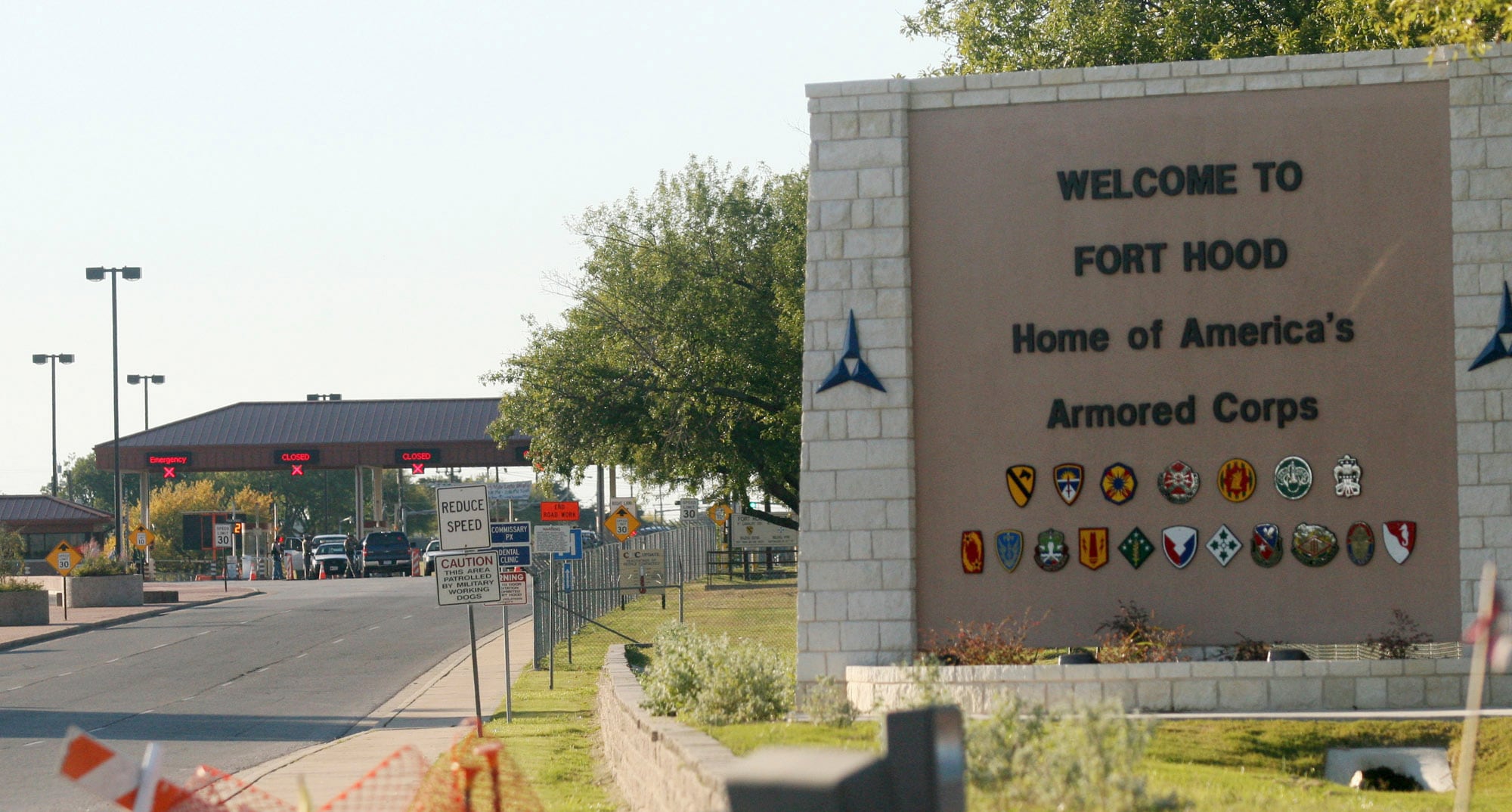
On November 5, 2009, Hasan — then an Army major serving as a psychiatrist — walked into the Soldier Readiness Processing Center at Fort Hood and opened fire on unarmed soldiers preparing to deploy to Iraq and Afghanistan (Free Malaysia Today). The attack, carried out with a semi-automatic pistol, killed 12 active-duty soldiers and a retired serviceman, and wounded 32 others.
Twelve of the dead and 30 of the wounded were soldiers. Among the victims was a pregnant private who pleaded for the life of her baby to be spared, according to trial accounts (The Times). Hasan, who was shot and partially paralyzed by a civilian police officer responding to the attack, shouted "Allahu Akbar" — "God is greatest" — during the rampage, according to Pentagon spokesman Parnell.
Investigators found that Hasan, a U.S.-born Muslim of Palestinian descent, had become radicalized in opposition to the U.S. military's operations in Iraq and Afghanistan, and had corresponded online with Anwar al-Awlaki, the American-born radical cleric later killed in a U.S. drone strike in Yemen. The Army had deployed Hasan as a psychiatrist treating soldiers returning from combat zones — a role investigators believe deepened his ideological opposition to the wars.
A death sentence 13 years in the waiting
Hasan was court-martialed in 2013. He chose to conduct his own defense but called no witnesses, gave no testimony, and made no attempt to deny the charges — a posture his court-appointed standby attorneys said suggested he was actively seeking the death penalty. A military jury found him guilty of 13 counts of premeditated murder and 32 counts of attempted premeditated murder, and sentenced him to death.
"It wasn't done under the heat of sudden passion," Hasan told the court of his attack. "There was adequate provocation — that these were deploying soldiers that were going to engage in an illegal war" (The Times).
He has been on military death row at Fort Leavenworth ever since, and completed his final legal appeals in early 2025 — leaving the case subject only to executive review before an execution could be scheduled (Firstpost). According to Army policy, the execution must take place within 150 days of the president's approval, but no sooner than 60 days (The Times) — though a presidential approval is widely expected to open a further, potentially lengthy post-appellate legal process.
Frequently Asked Questions
Who is Nidal Hasan?
Nidal Malik Hasan is a former U.S. Army major and psychiatrist, a U.S.-born Muslim of Palestinian descent, who carried out the November 5, 2009 mass shooting at Fort Hood, Texas, killing 13 people and wounding 32. He was convicted by a military court in 2013 and has been on military death row ever since.
How many people died in the Fort Hood attack?
Thirteen people were killed: 12 unarmed active-duty soldiers and one retired serviceman. Thirty-two others were wounded. The attack targeted troops at the base's Soldier Readiness Processing Center, where soldiers were preparing to deploy to combat zones in Iraq and Afghanistan.
Why will he be executed by firing squad?
Firing squads were recently added by the Trump administration to the permissible forms of federal and military capital punishment, alongside electrocution and gas asphyxiation. The expansion was partly driven by growing difficulties in obtaining lethal-injection drugs and recent botched lethal injections — including the failed execution of Christa Pike in Tennessee just last week.
When was the last U.S. military execution?
1961, when Army Private John Bennett was hanged at Fort Leavenworth, Kansas, for the rape and attempted murder of an 11-year-old girl. No service member has been executed by the armed forces since then.
When will the execution happen?
Secretary of the Army Adam Telle will set the time and place. Under Army policy, it must occur within 150 days of the president's approval but no sooner than 60 days — though legal experts expect further post-appellate proceedings to follow.