A monumental "Book of the Apocalypse" designed by Spanish surrealist Salvador Dalí was stolen overnight between October 4 and 5 from the contemporary art centre in Issoire, a town in central France's Auvergne region. The prosecutor's office in Clermont-Ferrand confirmed the theft on Monday, describing the piece as "highly valuable" (AFP).
A 210-kilogram work of art
The book was created by publisher Joseph Faure between 1958 and 1961, based on the Book of Revelation of St. John, and illustrated on parchment by 14 artists and writers of the 20th century. Its cover alone — a Dalí creation of bronze inlaid with gold, precious stones and seashells — weighs roughly 150 kilograms; the complete work tips the scales at about 210 kilograms, making this one of the heaviest art heists in recent memory.
"The work of a lifetime"
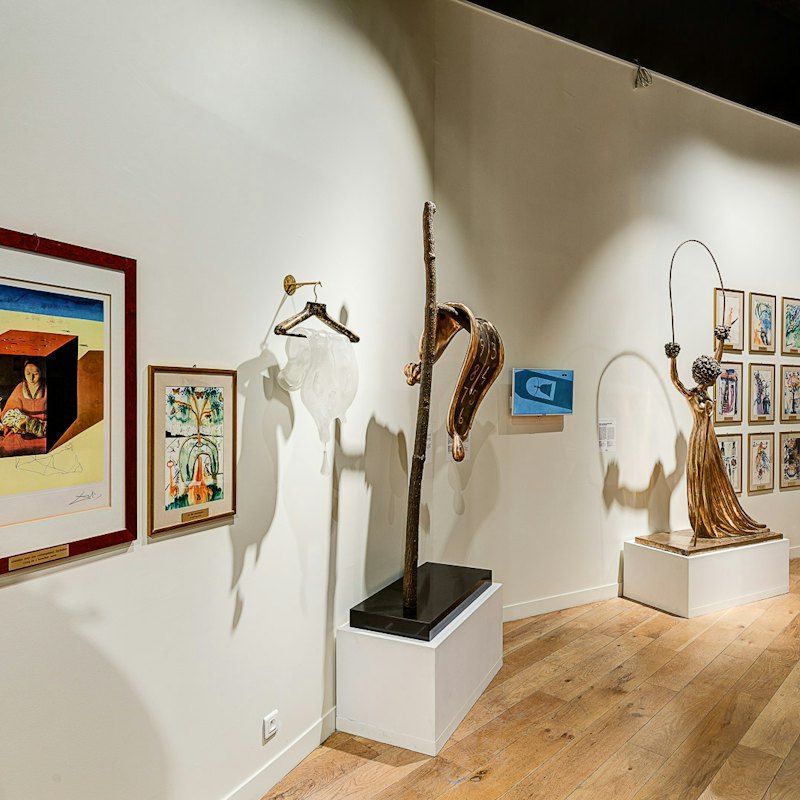
The piece belonged to a private collector who maintained a small private contemporary art museum in Issoire housing other, lesser-value works. Issoire mayor Bertrand Barraud told AFP the loss was "incalculable" and "the work of a lifetime," adding that the owner was "deeply distressed and says that it is part of France's heritage that has been stolen." Barraud could not say whether the thieves had to force their way in, and the investigation has been assigned to the Clermont-Ferrand gendarmerie.
According to prosecutors, the owner purchased the book in 2003 after it had been stored in Switzerland and offered to buyers from Japan.
Dalí and the art of the monumental book
The theft also spotlights an often-overlooked corner of Dalí's output: his lifelong fascination with the artist's book. Between the 1930s and the 1970s, the surrealist illustrated or designed dozens of volumes, treating the book as a sculptural and theatrical object rather than a mere text carrier. The "Apocalypse" — realised when Faure commissioned him — is among the most extreme examples of that obsession: a book that can barely be lifted by four people, with a cover closer to a bronze relief than to a binding. For scholars of 20th-century book arts, it is considered a landmark of post-war French luxury publishing, a tradition in which publishers like Faure treated the printed volume as a total work of art.
The piece's sheer mass complicates any theory of an opportunistic theft. Moving a 210-kilogram object out of a museum overnight without attracting attention suggests planning, equipment and probably a vehicle waiting nearby — facts the gendarmerie investigation will now have to untangle, along with the question of where such an instantly recognisable object could ever be fenced or resold.
A troubling pattern
The theft is the latest in a long series of art heists from museums across France, and it will intensify concerns about the protection of the country's cultural assets. In recent years, French institutions — large and small — have repeatedly been targeted by thieves exploiting gaps in security at regional museums, fuelling a national debate over how to safeguard France's heritage outside the heavily guarded national collections.
Frequently Asked Questions
What exactly was stolen in Issoire?
The "Book of the Apocalypse" (L'Apocalypse), a monumental art book produced by Joseph Faure in 1958–1961 from the Book of Revelation. It weighs about 210 kg in total, with a bronze cover designed by Salvador Dalí — inlaid with gold, gemstones and seashells — weighing 150 kg alone. Its parchment pages carry illustrations by 14 prominent 20th-century artists and writers.
Who owned the book?
A private collector who ran a small private contemporary art museum in Issoire, in central France. He bought the piece in 2003 after it was kept in Switzerland and offered to Japanese buyers.
Is this part of a wider trend in France?
Yes. Prosecutors and the town's mayor noted that the heist follows a long series of art thefts from museums around France, raising concerns about the security of the country's cultural assets — particularly at smaller regional institutions.
Further reading
- France's archival reckoning: the Ustica investigation
- Heritage disputes in Europe: remains of Tsar Samuel returned to Bulgaria