On October 2, a Rome investigating judge refused to let Italy's most infamous aviation case die. Judge Livio Sabatini sent the files on the Ustica disaster back to the Public Prosecutor's Office and ordered further investigations — a ruling made possible by a dramatic turn weeks earlier, when France agreed to hand over all of its documentation on the 1980 crash that killed all 81 people aboard Itavia Flight 870. After 46 years of dead ends, military cover-ups and shattered theories, the strage di Ustica — the Ustica massacre — is suddenly, unexpectedly alive again.
Table of Contents
- The judge who said no
- What France is offering
- The night of June 27, 1980
- Three official stories, none conclusive
- The Gaddafi theory
- What the courts have actually settled
- Why this moment matters
- Key takeaways
- Sources
- Read also
The judge who said no
The case had been heading for the archives. The Rome Public Prosecutor's Office had requested the dismissal of the proceedings concerning the Ustica disaster — the standard move after decades without a breakthrough. But at a hearing on September 30 before the investigating magistrate at Piazzale Clodio, chief prosecutor Francesco Lo Voi withdrew his own request.
The reason, LaPresse reported: France's willingness to transfer its full documentation on the disaster to Italy. Days later, on October 2, Judge Sabatini made it official, returning the case files and ordering the magistrates to investigate further. For the victims' families, who have waited nearly half a century for answers, it was the most hopeful development in years.
What France is offering
The French Embassy sent a note to Italy's Ministry of Foreign Affairs proposing the transfer of the files, including documents from the French Ministry of Defence that may relate to previous Italian letters rogatory — the formal cross-border judicial requests that had gone largely unanswered for years.
The dossier, covering a period up to the 1990s, was forwarded by the Prime Minister's Office to the Ministry of Justice and then on to the Roman magistrates. Defence documents are precisely what investigators have been missing: the leading theories about the crash all point to military aircraft — French, Libyan, possibly American — operating in the Tyrrhenian sky that night. Whatever Paris knows about its own air forces on June 27, 1980 could prove decisive.
The night of June 27, 1980
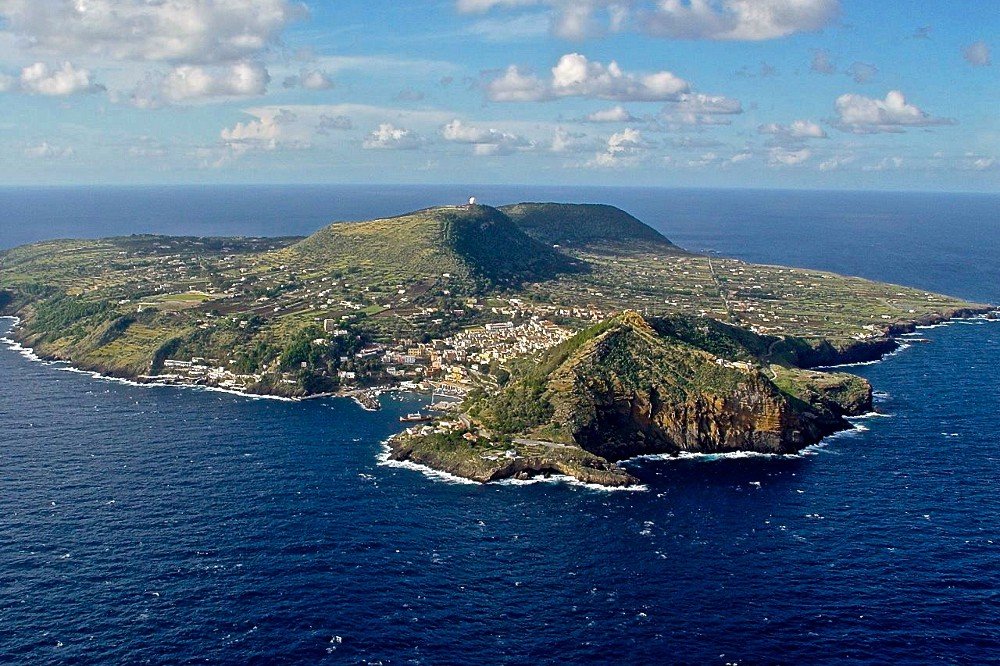
The facts of the evening are not disputed. Itavia Flight 870 (IH870) — a Douglas DC-9-15 registered I-TIGI, operated by the Italian carrier Itavia — was flying the domestic route from Bologna to Palermo with 77 passengers and 4 crew aboard, including 11 children. At 20:59 CEST, the aircraft vanished from radar over the Tyrrhenian Sea between the islands of Ponza and Ustica.
All 81 people died. None survived. The wreckage, which broke apart in flight, eventually sank to the seabed and was only recovered years later; its painstakingly reassembled remains now sit in the Museum for the Memory of Ustica in Bologna — a monument as much as an exhibit.
Three official stories, none conclusive
In 46 years, the official explanations have cycled through three incompatible versions. First came structural failure — the plane simply broke apart. Then the technical commission concluded that a bomb hidden in the rear lavatory had destroyed the aircraft. But that finding remains bitterly contested.
The third version — a missile strike during a military dogfight — is the one the evidence kept pushing toward. Missing radar traces. Incomplete tapes handed over by military authorities. Witnesses in uniform who changed their stories. Documents found years later in cupboards that had already been searched. Several military personnel connected to the investigation died in circumstances that deepened suspicion. Every thread investigators pulled seemed to lead back to the same question: whose military aircraft were over the Tyrrhenian Sea that night, and what did they do?
The Gaddafi theory
The most explosive answer came from the very top of the Italian state. In 2008, Francesco Cossiga — prime minister at the time of the crash — declared on television and then to judges that Italy's intelligence service had informed him it was the French, operating from an aircraft carrier, that had launched a missile at what they believed was a Libyan MiG carrying Muammar Gaddafi.
The hypothesis sharpened in September 2023, when former prime minister Giuliano Amato told La Repubblica that the most credible version was a simulated NATO military exercise used as cover for an attempt to shoot down Gaddafi's aircraft, with a French fighter launching the missile with American complicity. According to Amato, Gaddafi had been warned — by the late socialist leader Bettino Craxi, he said — and never boarded his plane. The missile, fired at the wrong target, instead hit the Itavia DC-9, which the Libyan MiG may have been flying close to.
Both accounts point the same way: a French missile, launched in error, in a covert operation against the Libyan leader. France has never confirmed it — but now Paris is opening its files, and the Defence Ministry documents may finally show whether there is paper to match the testimony.
What the courts have actually settled
Strangely for a case with no convictions, the Italian courts have said more than they are usually given credit for. On the criminal side, the military officials accused of high treason for obstructing the investigation were acquitted. But on the civil side, the Court of Palermo in 2011 ordered the Defence and Transport Ministries to compensate the victims' families for failing to ensure the safety of the skies that night and for withholding the truth — a verdict Italy's Supreme Court confirmed.
The legal translation is stark: no one was punished for bringing the plane down, but the state was punished for covering it up.
Why this moment matters
Timing is everything here. The State Attorney's Office had been expected to oppose the prosecutor's withdrawal — the institutional machinery of Italy has resisted this case at every step. And documents, however sensitive, have a way of being incomplete after four decades. But the French files up to the 1990s include the very period when Italian magistrates were filing their letters rogatory and being stonewalled.
Eighty-one families buried their dead without answers. Italy's own courts have already ruled that the state hid the truth from them. If the French Defence Ministry documents can fill the missing pages, the Ustica massacre may finally stop being a mystery — and become, at last, a history.
Key takeaways
- Case reopened: A Rome judge ordered new investigations on October 2, 2026, after the chief prosecutor withdrew his request to dismiss the case.
- French files incoming: Paris has agreed to transfer all its documentation, including Defence Ministry papers up to the 1990s.
- The disaster: Itavia Flight 870, a DC-9 flying Bologna–Palermo, crashed into the Tyrrhenian Sea on June 27, 1980; all 81 aboard died.
- The leading theory: A French missile, fired at Gaddafi's aircraft during a covert operation, hit the civilian jet by mistake — claimed by two former Italian prime ministers, never confirmed by France.
- What courts settled: No criminal convictions, but the Italian state was ordered to compensate families for obstructing the truth.
Sources
- LaPresse — "Ustica: Rome investigating judge overturns request to dismiss case and orders further investigations"
- LaPresse — "Ustica: following collaboration with France, Rome's public prosecutor set to withdraw request to dismiss the case"
- Wikipedia — Itavia Flight 870 — aircraft details and investigation history