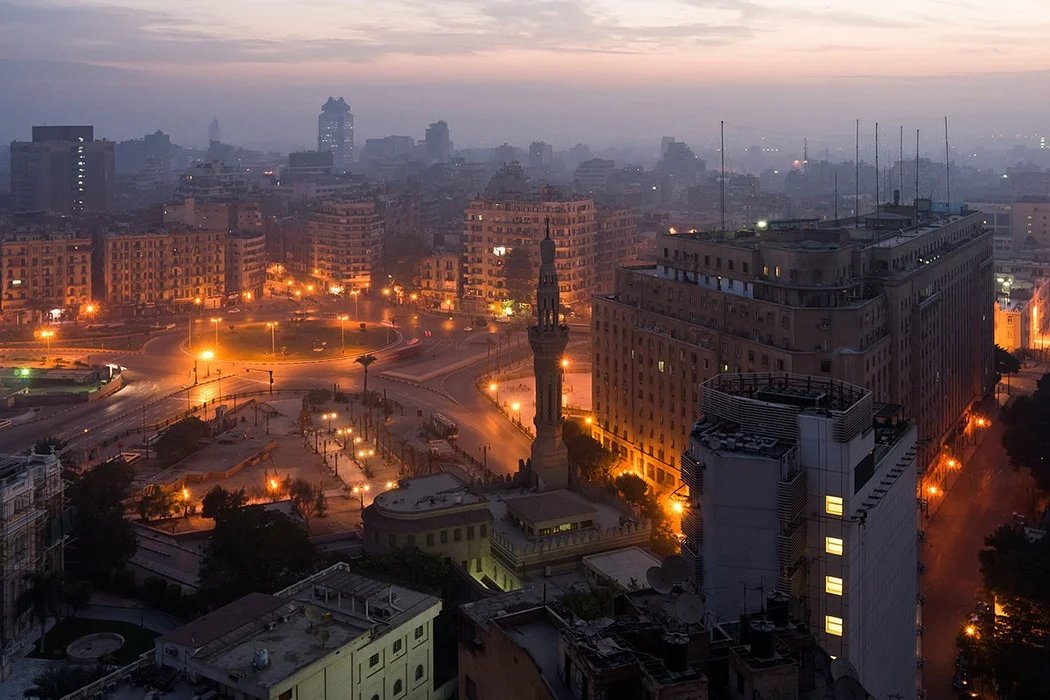
It was meant to be a gift to a visiting dignitary: a 66-metre-long mural in the heart of Cairo, painted by young volunteers with the help of artificial intelligence, celebrating Egypt's most famous pharaoh and queen. Instead, it lasted only hours. On the eve of Chinese President Xi Jinping's state visit, city authorities ordered the mural in Tahrir Square painted over — because Tutankhamun and Nefertiti looked, to many Egyptians, too dark.
Table of Contents
- A mural for a president
- Painted with AI, finished in five days
- The backlash: "Have they even seen what Nefertiti looked like?"
- Vanished hours before Xi landed
- The artist's defence: "a shadow at night"
- Zahi Hawass weighs in
- A debate that never really ends
- Key takeaways
- FAQ
- Sources
- Read more on Chronicle
A mural for a president
Cairo wanted to look its best. Ahead of Xi Jinping's state visit, the city commissioned 40 murals to beautify its streets and squares — public art as diplomacy, rolled out along the routes the Chinese president's motorcade would travel. One of them, in the symbolic heart of the capital, Tahrir Square, depicted the boy king Tutankhamun and Queen Nefertiti, two of the most recognisable faces of ancient Egypt.
But the painting drew a furious reaction for depicting the two historical figures with dark skin. To a large and vocal segment of Egyptian opinion, the mural did not look like artistic licence — it looked like an endorsement of Afrocentrism, the political movement asserting that ancient Egyptian civilisation was black African in origin and population. As The Guardian reported from Cairo, the artwork vanished under fresh paint just hours before Xi landed.
Painted with AI, finished in five days
The mural was the work of Rasmet Basma, a volunteer youth group. In a striking collision of ancient heritage and modern technology, the team used ChatGPT to generate the design concepts, which volunteers then painted onto the wall. The whole thing — one of the square's largest murals — was prepared in just five days in late August.
The group's founder, 22-year-old Ahmed Moussa, later told The Guardian that the Cairo governorate had initially approved the design. According to Moussa, Cairo's deputy governor and the head of the district visited the site throughout the process and were impressed by the murals — until the controversy began building on social media.
The backlash: "Have they even seen what Nefertiti looked like?"
The anger came fast. Online, Egyptians accused the mural of reviving Afrocentric claims about the pharaohs' origins. One user asked whether anyone involved had "even seen what Nefertiti actually looked like", while others accused Afrocentric groups of appropriating the images to claim Egyptians endorsed their theories.
The sensitivity is real and longstanding. Egypt sits at the crossroads of Africa and the Middle East, and the question of how to depict the ancient Egyptians — and who gets to claim them — has been fought over for more than a century, in scholarship, in popular culture, and increasingly on social media.
Vanished hours before Xi landed
With the controversy escalating and the Chinese president's arrival imminent, the city's calculus changed. The Cairo governorate asked Rasmet Basma to paint over its own work. The 66-metre mural disappeared under a coat of fresh paint — one of the most prominent of the 40 commissioned pieces, erased from the distinguished guest's line of sight.
The timing was not lost on observers: a beautification project for a state visit had itself become the embarrassment it was meant to prevent.
The artist's defence: "a shadow at night"
Moussa has offered a technical explanation for the dark complexions. "We used a golden-bronze tone that cast a kind of shadow on the faces at night, so they appeared dark-skinned," he said. It was a lighting effect, he argued — not an ideological statement.
Still, he conceded the deeper failure: "We acknowledge our mistake in not consulting specialists in archaeology and art." For a project invoking 3,000-year-old icons, five days and an AI prompt had not been enough.
Zahi Hawass weighs in
Few voices carry more weight on such matters in Egypt than Zahi Hawass, the former antiquities minister. Hawass criticised the mural's creation without expert oversight and dismissed the underlying claims. He argued that claims linking ancient Egyptian civilisation to sub-Saharan Africa are unfounded, pointing to temple carvings from the late period showing Egyptian kings depicted alongside captives from parts of Africa, Libya, Syria and Palestine — with the kings themselves not depicted as dark-skinned.
His intervention framed the episode not as a simple artistic misstep but as part of a battle over historical truth, in which Egypt's heritage is a prize contested by rival narratives.
A debate that never really ends
This is the latest episode in a controversy that refuses to die. In 2023, a Netflix documentary dramatising the life of Queen Cleopatra sparked a similar firestorm, with Egyptian scholars and officials objecting to the casting and the framing of the Ptolemaic queen.
What makes the Tahrir Square episode distinctive is the technology. An AI image generator, trained on the internet's vast and contested visual archive, produced the faces that humans then faithfully reproduced at monumental scale. The machine did not invent the debate over the pharaohs' skin — but it gave the debate a 66-metre canvas in the middle of Cairo, on the eve of a presidential visit.
As Egypt grapples with how to accurately depict its rich history, the controversy highlights a modern dilemma: when anyone with an AI tool can generate the past, who gets to decide what it looked like?
Key takeaways
- A 66-metre mural of Tutankhamun and Nefertiti in Cairo's Tahrir Square was painted over hours before Chinese President Xi Jinping's state visit.
- The mural, one of 40 commissioned to beautify the city, was painted by volunteer youth group Rasmet Basma using AI-generated designs, completed in five days in late August.
- Critics said the dark-skinned depiction of the pharaoh and queen revived Afrocentric claims about ancient Egypt's origins.
- Founder Ahmed Moussa, 22, said the Cairo governorate — which had initially approved the design — asked the group to paint over it; he blamed a "golden-bronze tone" that looked dark at night and admitted the team should have consulted archaeology and art specialists.
- Former antiquities minister Zahi Hawass criticised the lack of expert oversight and rejected claims linking ancient Egyptian civilisation to sub-Saharan Africa.
- The episode echoes the 2023 Netflix Cleopatra controversy and spotlights AI's growing role in public art and historical representation.
FAQ
Why was the Cairo mural painted over?
The 66-metre mural in Tahrir Square depicted Tutankhamun and Nefertiti with dark skin, sparking a furious reaction from Egyptians who saw it as reviving Afrocentric claims about the pharaohs' origins. The Cairo governorate asked the artists to paint over it hours before Xi Jinping's state visit.
Who painted the mural?
Rasmet Basma, a volunteer youth group led by 22-year-old founder Ahmed Moussa. The team generated the designs using ChatGPT and painted them onto the wall in five days in late August.
What did the artists say in their defence?
Moussa said the team used a "golden-bronze tone that cast a kind of shadow on the faces at night, so they appeared dark-skinned" — a lighting effect, not an ideological statement. He acknowledged the mistake of not consulting archaeology and art specialists.
What is Afrocentrism?
Afrocentrism is a political and intellectual movement asserting that ancient Egyptian civilisation was black African in origin and population. Its claims about Egypt are fiercely contested by many Egyptian scholars, including former antiquities minister Zahi Hawass.
Has this kind of controversy happened before?
Yes. A 2023 Netflix documentary about Queen Cleopatra triggered a similar debate in Egypt over the depiction of ancient Egyptian figures, making the Tahrir Square mural the latest chapter in a long-running dispute.
Sources
- The Guardian (Hanaa Hammad in Cairo) — 2 October 2026: "Row erupts over Cairo mural depicting Tutankhamun and Nefertiti with dark skin."
- ARTnews Morning Links — 2 October 2026: roundup noting the mural was painted over following backlash.