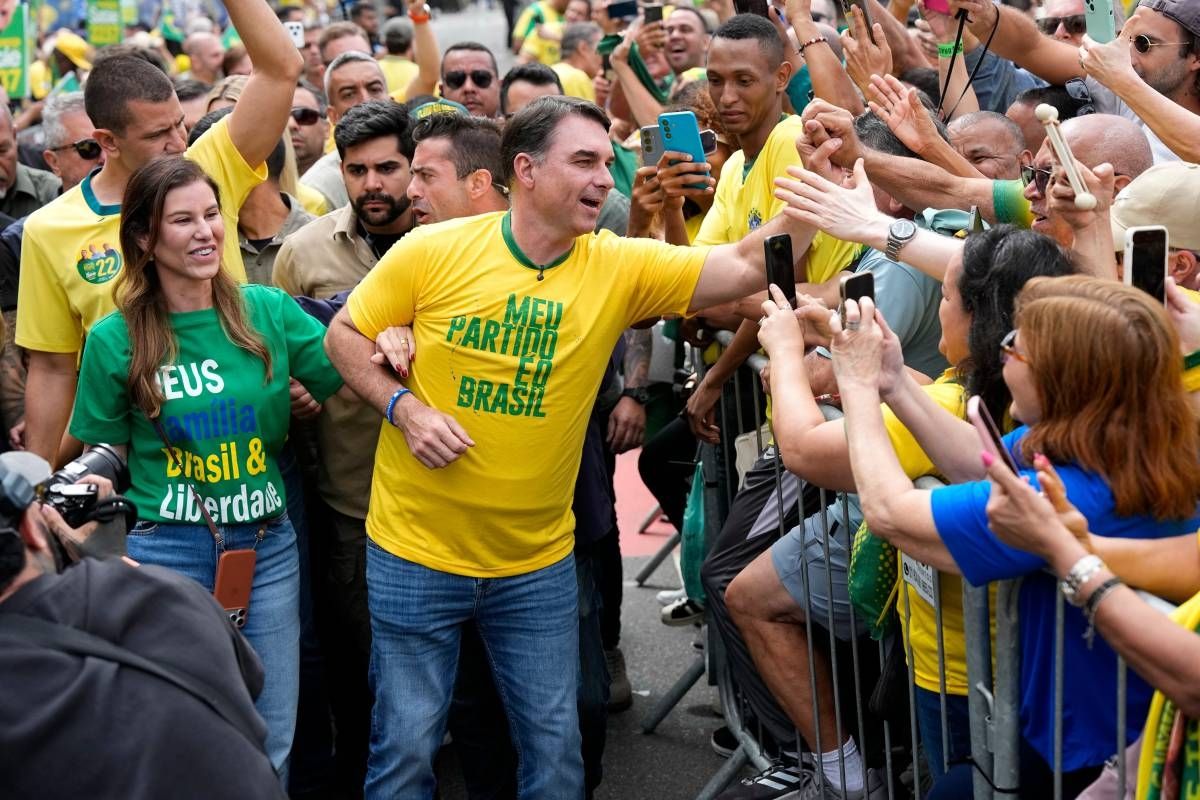
Brazil's presidential election has produced a genuine shock. Right-wing Senator Flávio Bolsonaro, the 45-year-old son of the country's imprisoned former president, finished first in Sunday's first round with roughly 47% of the vote, ahead of incumbent Luiz Inácio Lula da Silva at 44.9%. Because neither candidate cleared the 50% threshold required to win outright, the two will meet again in a runoff on October 25 — three weeks that will now decide the future of Latin America's largest economy.
The result reversed the order predicted by nearly every major opinion poll, which had placed Lula modestly ahead just days before voting. With more than 99% of ballots counted, Bolsonaro led by about 2.5 million votes — roughly 55.8 million to 53.2 million for Lula.
How the Upset Happened
Bolsonaro's strength was broad and geographically decisive. He swept Brazil's three largest states by comfortable margins: São Paulo, the country's most populous state, 52% to 38%; Rio de Janeiro, his political home, 53% to 39%; and Minas Gerais, the traditional bellwether that has backed the winner of every presidential election since 1985, 48% to 43%.
The right also dominated down the ballot. São Paulo Governor Tarcísio de Freitas won re-election in the first round, Bolsonaro's Liberal Party took at least five governorships outright, and the allied Republicanos party captured three more, including in São Paulo and Minas Gerais.
Speaking to supporters after the results, Flávio Bolsonaro framed the night as a turning point: "The end of the PT era has been confirmed," he declared, referencing Lula's Workers' Party, before repeating his signature campaign proposal — ending presidential re-election. "I only need one term."
The political inheritance matters. Flávio entered the race with the explicit endorsement of his father, Jair Bolsonaro, who is serving a 27-year prison sentence after his conviction for plotting to overturn the 2022 election he lost to Lula. The younger Bolsonaro has campaigned as an ally of U.S. President Donald Trump and on a platform of tougher crime policy, tighter spending control, and closer ties with Washington — themes that, according to The Statesman, ranked at the very top of voters' concerns alongside corruption and the economy.
Lula's Confession and the Road Ahead
Lula, 80, did not hide his surprise. "I confess I was convinced I would win the election in the first round," he told supporters at a São Paulo hotel late Sunday. "Starting tomorrow, we begin a new campaign."
His path to the runoff runs through the record 30 million eligible voters who did not vote — a 21% abstention rate that his campaign says represents more than enough ballots to close the gap. "We are going to make an appeal so that people understand that at this historic moment for Brazil, it is essential to vote to decide the future of the country," he said, according to Le Monde.
The stakes extend well beyond Brazil. As Brian Winter of the Americas Society/Council of the Americas told CNN, the runoff offers "two competing visions of what the country should look like and what Latin America should look like." A Bolsonaro victory would extend a rightward wave across South America — where Argentina's Javier Milei, Chile's José Antonio Kast, Ecuador's Daniel Noboa, Paraguay's Santiago Peña, Bolivia's Rodrigo Paz, Peru's Keiko Fujimori and Colombia's Abelardo de la Espriella already govern — to the country that holds roughly half the continent's people and its largest economy.
The Polling Miss
The most immediate political question is how the pollsters got it so wrong. Polling also underestimated Jair Bolsonaro's support in 2018 and 2022, though by much smaller margins than this year's gap. The result will almost certainly fuel the Brazilian right's longstanding accusations that major polling firms lean toward Lula's camp — a claim that, true or not, now carries far more weight.
Concerns about foreign influence also hang over the contest, with reports noting worries that U.S. interference could weigh on the vote, adding another layer of volatility to the three-week campaign ahead.
Table of Contents
- How the Upset Happened
- Lula's Confession and the Road Ahead
- The Polling Miss
- Key Takeaways
- Frequently Asked Questions
- Sources
- Read Next on Chronicle
Key Takeaways
- Flávio Bolsonaro won Brazil's October 4 first round with about 47% of the vote, ahead of Lula's 44.9%.
- Neither candidate reached 50%, so a runoff will be held on October 25.
- The result defied nearly all pre-election polling, which had Lula leading.
- Bolsonaro swept São Paulo, Rio de Janeiro and bellwether Minas Gerais; his Liberal Party also won several governorships.
- A victory for Bolsonaro would add Brazil to South America's growing list of right-leaning governments.
Frequently Asked Questions
Who won the first round of Brazil's 2026 presidential election?
Senator Flávio Bolsonaro finished first with roughly 47% of the vote, ahead of incumbent President Luiz Inácio Lula da Silva, who received about 44.9%. Neither cleared the 50% threshold, so the election goes to a runoff on October 25.
When is the runoff, and what is at stake?
The second round takes place on October 25, 2026. It will decide whether Lula wins an unprecedented fourth non-consecutive term or whether the Bolsonaro family returns to the presidency, potentially reshaping Brazil's domestic policies and its role in Latin America.
Why was the result a surprise?
Nearly all major opinion polls in the days before the vote showed Lula modestly ahead. Bolsonaro outperformed those surveys by a wide margin, winning about 55.8 million votes to Lula's 53.2 million — a gap of roughly 2.5 million votes.
Who is Flávio Bolsonaro?
The 45-year-old senator from Rio de Janeiro is the eldest son of former President Jair Bolsonaro, who is serving a 27-year prison sentence for plotting to overturn the 2022 election. Flávio represents the Liberal Party, campaigned as an ally of U.S. President Donald Trump, and has proposed ending presidential re-election in Brazil.
What does the result mean for Latin America?
A Bolsonaro victory in the runoff would extend a regional shift to the right: Argentina, Chile, Ecuador, Paraguay, Bolivia, Peru and Colombia already have right-leaning governments. Brazil alone accounts for roughly half of South America's population and its largest economy.
Sources
- CNN — "Brazil election heads to runoff after campaign dominated by crime, corruption and Trump"
- Le Monde — "'Lula paid the price for voters' discontent': Flavio Bolsonaro leads in first round of Brazil election"
- The Statesman — "Brazil election 2026: Flávio Bolsonaro springs surprise, finishes ahead of Lula as October 25 runoff looms"