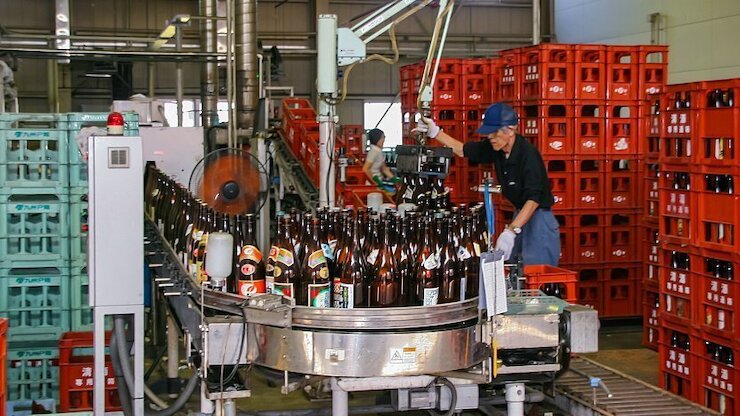
Japan's antitrust watchdog has raided the offices of the country's four largest beer makers, opening what officials describe as a compulsory investigation into a suspected wholesale price cartel. The Japan Fair Trade Commission (JFTC) carried out on-site inspections on October 7 of Asahi Breweries, Kirin Brewery, Sapporo Breweries and Suntory Spirits — four giants that together control more than 90% of the domestic beer market, worth over ¥1 trillion a year. The Japan Times reports the probe is the first of its kind aimed at a wholesale beer-pricing cartel.
All four companies confirmed the inspections and said they intend to cooperate fully.
What the watchdog suspects
The JFTC believes sales executives from the four brewers coordinated the timing and scale of wholesale price increases — the prices charged to wholesalers — over several years, covering beer, low-malt beer and other beer-like beverages. According to domestic media reports cited by The Japan Times, company representatives allegedly met separately after the monthly meetings of the Brewers Association of Japan, an industry body, to align on pricing calculated per litre and by container type.
The commission is investigating whether the arrangement inflated prices for retailers and restaurants, with the higher costs ultimately passed on to consumers. Under Japan's Antimonopoly Act, companies found guilty of illegal price fixing can face financial surcharges and orders to prevent further violations.
Unlike routine administrative inspections, a compulsory investigation allows authorities to search premises and seize evidence under court warrants — a tool the watchdog typically reserves for cases it considers particularly serious or damaging to consumers.
A pattern of coordinated hikes
The investigation focuses in part on price increases the brewers imposed in April 2025 and October 2022, which they publicly attributed to rising raw-material and logistics costs. Broadcaster NHK reported that the JFTC is examining whether those hikes were in fact the product of a cartel.
An AFP report noted that the alleged coordination has "likely been unfolding over the past few years, during which representatives from the four companies are believed to have met up periodically to discuss pricing and the timing of the hike." Suntory confirmed it was "undergoing an on-site inspection by the Fair Trade Commission on suspicion of breaching the anti-monopoly act in relation to its alcohol trading activities."
The watchdog is expected to continue its investigation and could file criminal complaints with prosecutors, a source familiar with the matter told AFP.
Markets react
Investors did not wait for the legal outcome. Shares of the listed brewers fell on October 7: Sapporo dropped as much as 3.73%, Kirin briefly shed a little over 3% to hit its lowest level in more than three months, and Asahi fell nearly 2.5% before recouping some losses, according to Channel News Asia.
The sell-off reflects more than the immediate prospect of fines. A criminal referral would mark an unusually aggressive escalation by the JFTC, and any order to unwind pricing practices could compress margins across an industry already squeezed by input costs.
A tougher watchdog
The beer raid fits a broader pattern of sharper JFTC enforcement. In June, the commission raided six major ice-cream makers, including Morinaga Milk Industry and Meiji Holdings, on allegations of operating a cartel — that probe also followed price increases the companies said were driven by ingredient costs.
The approach mirrors enforcement trends elsewhere: regulators globally have been scrutinising how companies in concentrated markets set prices during inflationary cycles. Price-fixing enforcement has returned to corporate boardrooms worldwide, as seen in recent cases such as the McDonald's AI price-fixing class action in the United States — a reminder that competition authorities are watching both traditional industries and algorithm-driven pricing.
What happens next
The JFTC declined to elaborate on the investigation. For the brewers, the immediate risk is operational disruption and reputational damage; the longer-term risk is the statutory machinery of the Antimonopoly Act — surcharges calculated on affected sales, mandatory compliance orders, and the possibility of criminal prosecution of executives.
For Japanese consumers, the case will answer a straightforward question: when beer got more expensive, was it inflation — or collusion?
Frequently Asked Questions
Which companies were raided?
The Japan Fair Trade Commission carried out on-site inspections of Asahi Breweries, Kirin Brewery, Sapporo Breweries and Suntory Spirits on October 7, 2026. Together they hold more than 90% of Japan's beer market.
What is a compulsory investigation?
Unlike a routine administrative inspection, a compulsory investigation allows Japanese authorities to search premises and seize evidence under court warrants. It is typically reserved for cases considered particularly serious or harmful to consumers.
What prices are at issue?
The JFTC suspects the brewers coordinated the timing and scale of increases in wholesale prices — the prices charged to wholesalers — for beer, low-malt beer and other beer-like beverages over several years, including hikes in October 2022 and April 2025.
What penalties could the companies face?
Under Japan's Antimonopoly Act, companies found guilty of illegal price fixing can face financial surcharges and orders to prevent further violations. The commission may also file criminal complaints with prosecutors.
Have similar probes happened before?
Yes. In June 2026, the JFTC raided six major Japanese ice-cream makers, including Morinaga Milk Industry and Meiji Holdings, over allegations of a price cartel following ingredient-cost-driven price hikes.