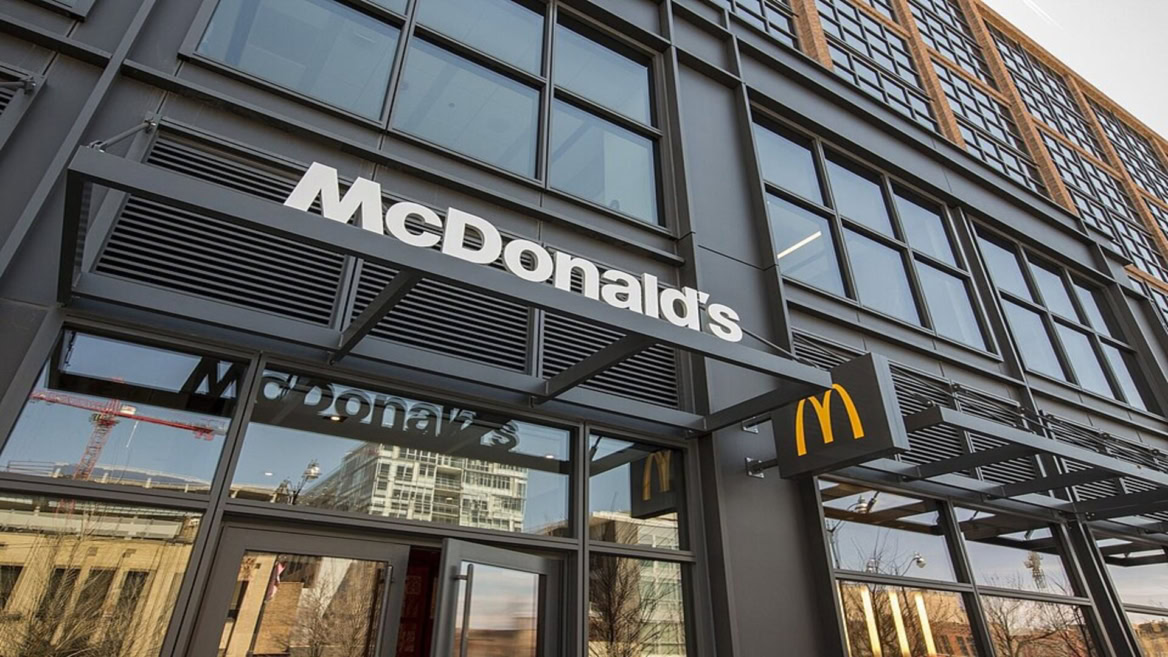
McDonald's has been sued in federal court in Chicago in a proposed nationwide class action alleging the fast-food giant illegally coordinates menu prices across its franchises and company-owned restaurants through an artificial intelligence-powered pricing system. The lawsuit, filed on October 2, accuses the company of violating US antitrust law by conspiring with independent franchisees to fix prices using algorithms trained on nonpublic data.
The complaint is the latest in a wave of US lawsuits alleging companies used algorithms or AI to illegally coordinate prices for hotel rooms, apartment rentals and other purchases — and it puts one of the world's most recognisable brands at the centre of the debate over algorithmic pricing.
Table of Contents
- The allegations
- "AI does not set the price of a Big Mac"
- The growing war on algorithmic price-fixing
- What happens next
- Frequently Asked Questions
The allegations
According to the lawsuit, McDonald's built and deployed its own information-sharing pricing platform that draws on data from millions of daily transactions to set menu prices across thousands of US restaurants. The complaint argues that the AI-enhanced tool collects data that competing franchisees would not normally share — such as store-level sales — and effectively turns independent businesses into a coordinated pricing bloc.
"Independent businesses must set their prices independently," the lawsuit states, adding that the result is "algorithmic price-fixing aimed at customers who are already stretched thin."
Reuters reported last week that McDonald's pricing engine uses machine-learning algorithms to continually analyse data from millions of daily transactions across its nearly 14,000 restaurants. The lawsuit cited that reporting, which noted other fast-food companies are also turning to AI for pricing and operations.
The plaintiff, Michael Thomas of DeKalb, Illinois, is seeking to represent a class of potentially millions of McDonald's customers. His lawyer, Lark Turner, said in a statement that McDonald's is "leveraging its troves of data and its franchised system to nickel-and-dime consumers down to the last French fry."
"AI does not set the price of a Big Mac"
McDonald's rejected the claims. In a statement, the company called the allegations "speculative and uninformed" and insisted that franchisees make their own pricing decisions.
"AI does not set the price of a Big Mac or any other menu item," the company said, adding that the use of pricing recommendation tools and analytics is widespread across industries. McDonald's has said the tool has been available to US franchisees for more than a decade and determines optimal menu prices based on a store's sales, location, competitors' prices and other factors.
The company says the tools are optional — available to help franchisees make the best decisions for their businesses — and do not automate, coordinate or fix pricing in any way.
The growing war on algorithmic price-fixing
The McDonald's case lands amid intensifying scrutiny of AI-driven pricing across the US economy. Regulators and private plaintiffs have increasingly argued that algorithms fed with competitors' nonpublic data can function as a modern form of price-fixing, even without executives ever meeting in a smoke-filled room.
US plaintiffs have filed similar class actions in recent years over rental housing software, hotel room pricing and other sectors. Competition authorities are also circling: regulators have been examining how AI agents and pricing tools could facilitate coordination at machine speed, as our earlier reporting on the FTC's probe into AI agents outlined.
The outcome of the McDonald's case could set an important precedent for how far antitrust law reaches into everyday algorithmic business tools — and how much data-sharing inside a franchise system the courts will tolerate.
What happens next
The case is in its earliest stages. The plaintiff will need to convince the Chicago court to certify the proposed class — potentially covering millions of US customers — before the core antitrust questions are litigated. McDonald's has vowed to vigorously defend itself, and the company's deep legal resources suggest a long fight ahead.
For consumers, the stakes are tangible: if the plaintiffs succeed, it could reshape how the world's largest fast-food chain — and the broader franchise industry — prices everything from a Quarter Pounder to a Coke.
Also read: on how AI is reshaping the labour market, see AI tops US job cuts, and on regulators' growing interest in AI tools, FTC probes AI agents.
Sources: Reuters via Channel News Asia · Reuters via The Straits Times · Reuters via WNCY
Frequently Asked Questions
What is McDonald's accused of in the class action?
The lawsuit alleges McDonald's violated US antitrust law by conspiring with independent franchisees to fix menu prices using an AI-powered pricing engine trained on nonpublic data from millions of daily transactions.
When was the lawsuit filed?
The proposed nationwide class action was filed on Friday, October 2, 2026, in federal court in Chicago, Illinois.
How has McDonald's responded?
The company called the allegations "speculative and uninformed," saying "AI does not set the price of a Big Mac or any other menu item," and insisting franchisees make their own pricing decisions while the tools are merely optional recommendations.
Why does this case matter beyond fast food?
It could set a major precedent for algorithmic price-fixing law, testing whether AI tools fed with competitors' nonpublic data amount to illegal coordination — an issue regulators and plaintiffs are also pursuing in housing, hotels and other sectors.